
Business
Qatar Warns Of ‘Industrial Catastrophe’ As Hormuz Crisis Deepens Amid Houthi Attacks On Saudi Arabia


DOHA, Qatar — Qatar’s Foreign Ministry has warned that reopening the Strait of Hormuz to normal shipping traffic must become an international priority, cautioning that the world faces an “industrial catastrophe” if the ongoing crisis in one of the world’s most vital maritime chokepoints continues unresolved.
Foreign Ministry spokesperson Majed Al-Ansari delivered the warning to U.S. media Monday, as new data from maritime analytics firm Kpler showed an average of just 10 commodity ships transited the strait per day over the past 10 days, the lowest level recorded since May, following continued U.S. and Iranian strikes on tankers moving through the waterway.
The strait, through which roughly a fifth of the world’s oil and gas supply normally passes, has remained under an effective Iranian blockade since the outbreak of war between the United States and Iran earlier this year. Full-scale military hostilities between the two countries had eased in June following a Memorandum of Understanding, but tensions have escalated sharply again since that agreement expired last month, with Iran resuming attacks on tankers attempting to evade the blockade in recent weeks.
Qatari Prime Minister Sheikh Mohammed bin Abdulrahman bin Jassim Al Thani, who also serves as the country’s foreign minister, met with Chinese Foreign Minister Wang Yi in Beijing to discuss regional developments, including freedom of navigation through the strait, according to a statement posted by Qatar’s Foreign Ministry on X. Sheikh Mohammed affirmed Qatar’s support for diplomatic efforts aimed at securing maritime navigation and “paving the way for a comprehensive agreement,” describing the Beijing talks as “fruitful.”
Separately, the United States and European Union have pushed to refer Iran to the United Nations Security Council through the International Atomic Energy Agency, though analysts say the move is unlikely to meaningfully pressure Tehran. Cyrus Schayegh, a professor of international history and politics at the Geneva Graduate Institute, told Al Jazeera that Iran currently has little incentive to engage diplomatically with Washington.
“Iran is not interested in engaging with the US on the nuclear front until the US starts to engage with Iran,” Schayegh said. “If the Europeans and the US are going to refer Iran to the UN, there is not much Iran can do at this point,” he added, noting Tehran can rely on continued backing from Russia and China. “I don’t think Iran will be particularly afraid.”
Schayegh said Iranian leadership appears increasingly willing to escalate the confrontation rather than de-escalate it, calculating that approaching U.S. midterm elections could increase political pressure on Washington to relent.
“They can push the Americans more, as the political cost for the US will become too high and maybe Trump will then cave,” Schayegh said, adding that growing international criticism of the U.S. position has bolstered Tehran’s confidence. “The Iranians feel that the international scene is moving in their way, so this makes them feel they can escalate and feel confident enough that this will work for them.”
The regional crisis widened further Monday when Yemen’s Houthi militia launched a wave of attacks on southern Saudi Arabia, wounding more than 70 people and striking several oil facilities. Saudi political analyst Khaled Batarfi told Al Jazeera the attacks would likely prompt a Saudi response but not trigger a prolonged conflict.
“This is an escalation of course,” Batarfi said, noting Saudi Arabia had previously sought to avoid direct engagement in Yemen’s civil war. “But now this is too much,” he said, adding that any Saudi retaliation would target the specific Yemeni faction responsible for the attack. “But I don’t see a prolonged war, not with Iran and not with the Houthi.”
Kuwait’s Foreign Ministry condemned the Houthi attacks in a statement, calling them “a blatant violation of the kingdom’s sovereignty and a direct threat to the security and safety of its citizens.” The Gulf Cooperation Council issued its own condemnation, describing the strikes as an “extremist criminal approach” that reveals “the malicious intentions” of the Houthis and their rejection of peace and stability in Yemen.
Fighting inside Yemen itself has continued across multiple fronts between Houthi forces and the internationally recognized government, with key battlegrounds including western Taiz, the Red Sea port of al-Makha near the strategic Bab-el-Mandeb Strait, southern Hodeidah’s vital port infrastructure, and Marib, home to some of Yemen’s most significant oil and gas fields.
Elsewhere in the region, Israeli forces raided the southern Lebanese town of Kfarchouba at dawn Monday and raised the Israeli flag on a nearby hill, according to Lebanese outlet Lebanon 24, following overnight artillery shelling of the al-Salouqi and al-Hujeir valleys in southern Lebanon. Separately, Israeli forces killed a 29-year-old Palestinian man, identified as Abdul Karim Muhammad Salem Khader, in the West Bank town of Aqraba south of Nablus, according to the Palestinian news agency Wafa, which said Israeli forces besieged and partially demolished his home before withholding his body.
Amid the broader deterioration, the United Kingdom moved to announce a trade ban on goods produced in Israeli settlements in the occupied West Bank. UK Pensions Minister Pat McFadden confirmed the move to Times Radio, saying Britain’s foreign secretary would deliver a formal statement to Parliament.
“The foreign secretary will make a statement to Parliament later today, and at the heart of the statement is the idea that the UK, along with many other countries, does not want to see the possibility of a two-state solution in Israel and Palestine being erased,” McFadden said.
Diplomatic efforts to address the region’s overlapping crises continued elsewhere, with Iraqi Foreign Minister Fuad Hussein meeting his Lebanese counterpart, Youssef Rajji, in Cairo on the sidelines of an Arab League ministerial session. Hussein emphasized “the importance of dialogue between the United States of America and the Islamic Republic of Iran,” while Rajji thanked Iraq for its continued support of Lebanon’s security and stability.
With the Strait of Hormuz crisis now stretching well past six months and showing renewed signs of escalation on multiple regional fronts simultaneously, Qatar’s warning of a looming “industrial catastrophe” underscores the mounting economic stakes tied to a resolution that, according to analysts tracking the conflict, remains elusive for now.

Business
Egyptian TV Presenter Sarah Khalifa, 11 Others Sentenced To Death In Major Drug Trafficking Case In Cairo

CAIRO — Egyptian television presenter Sarah Khalifa and 11 other defendants have been sentenced to death by hanging after being convicted on drug trafficking charges tied to a criminal network accused of importing chemical ingredients used to manufacture illegal narcotics.
According to state-owned newspaper al-Ahram, the defendants were found to be part of a criminal gang that imported raw materials used to produce drugs with the intent to sell them. The group was also found to have possessed illegal firearms and munitions as part of the same operation.
Khalifa, 39, is best known in Egypt for hosting the television program “Mission Impossible,” a show that focused on crime-related issues. She has denied the charges against her throughout the legal proceedings. Nine additional co-defendants were sentenced to life imprisonment, while seven others were acquitted entirely.
The formal verdict was first announced last month but was only confirmed roughly a month later, after the court obtained a required religious opinion from the grand mufti of Egypt, a legal step mandated in all death sentence cases under Egyptian law.
Khalifa’s legal team has already signaled its intent to challenge the sentence. Her lawyer said she would appeal the death sentence following the court’s confirmation of the ruling.
During the trial, prosecutors presented evidence that authorities had seized more than 750 kilograms of narcotics, along with the imported raw materials used to manufacture them. According to al-Ahram, prosecutors also relied on statements from 20 witnesses, in addition to electronic evidence that included recorded conversations and video clips connected to the case.
Khalifa addressed her alleged role directly during a court appearance last September, according to the state-run newspaper Akhbar al-Yom. When questioned by the judge about her connection to the case, Khalifa said she had never seen any drugs prior to being photographed with them inside the offices of Egypt’s anti-narcotics authority, an account that formed part of her defense against the charges.
The case adds to Egypt’s continued use of capital punishment in drug-related prosecutions, a practice that has drawn scrutiny from international human rights organizations. According to a 2025 Amnesty International report, Egypt issued 492 death sentences over the course of that year, with 23 of those sentences actually carried out.
Amnesty International’s report specifically flagged concerns about the use of capital punishment in cases involving drug trafficking and rape convictions, noting that such offenses constitute “crimes that did not amount to ‘intentional killing’ to which the use of the death penalty must be restricted under international law and standards.” The organization’s broader position holds that international human rights law and standards generally call for capital punishment to be reserved specifically for the most serious crimes, typically defined as those involving intentional killing.
Egypt has continued to carry out executions and issue death sentences at a notable pace in recent years, positioning the country among a smaller group of nations that continue applying capital punishment to a relatively broad range of offenses, including drug-related crimes, despite ongoing international criticism of that approach from human rights monitoring organizations.
The case against Khalifa and her co-defendants unfolded amid a broader pattern of drug trafficking-related prosecutions and law enforcement actions reported across multiple countries in recent weeks. In Vietnam, 11 people were separately sentenced to death in a drug trafficking case involving more than 200 individuals convicted over a network accused of smuggling narcotics into the country concealed inside toothpaste tubes and other everyday consumer products. In Ireland, authorities in Dublin seized roughly €2.3 million worth of drugs, including 18 kilograms of suspected cocaine with an estimated street value of approximately €1.8 million, resulting in charges against two individuals. A separate cross-border drug bust led to charges after investigators uncovered 119 kilograms of cannabis in Dundalk, County Louth, along with an additional 45 kilograms of cannabis, cash and suspected cocaine recovered in Newtownabbey, County Antrim.
Elsewhere, Brussels has continued grappling with a significant surge in drug-related violence, with more than 65 shootings reported in the Belgian capital so far this year as rival drug gangs have escalated conflicts across the city, according to reporting on the broader trend. In a separate development tied to international efforts to address drug-related violence, Colombia’s president approved the extradition of rebel leaders to the United States, a move described as part of a broader effort to end violence tied to negotiations with rebel and criminal organizations operating within the country.
Khalifa’s case has drawn particular attention within Egypt given her public profile as a television host whose own program focused on crime coverage, a dynamic that has added to public interest in the proceedings beyond the underlying drug trafficking allegations themselves. Egyptian media coverage of the case has continued closely following developments, including detailed accounts of courtroom testimony and the specific evidence presented by prosecutors throughout the trial.
With Khalifa’s legal team now preparing to pursue an appeal against the death sentence, the case is expected to continue working its way through Egypt’s judicial system in the coming months. The nine co-defendants sentenced to life imprisonment, along with the broader circumstances surrounding the case’s evidentiary record, including the seized narcotics, raw materials and electronic communications presented at trial, are likely to remain central to any subsequent appellate proceedings as Khalifa and her legal representatives seek to challenge the death sentence handed down by the court.

Almost half of UK small business owners are now using artificial intelligence tools, according to research released on 8 September by the insurance provider Simply Business, which found adoption has more than doubled from 22 per cent in 2025 to 47 per cent.
A further 13 per cent of owners plan to start using AI within the next six to 12 months, meaning 61 per cent are either using the technology already or expect to be soon, according to the company’s 2026 SME Insights Report. The report draws on a survey of UK small business owners carried out between 30 July and 7 August 2026, alongside earlier studies conducted this year, Simply Business said.
Among businesses using AI, the most common applications are creating content, cited by 63 per cent, problem solving on 53 per cent and generating ideas on 50 per cent. Some 46 per cent say the technology is helping them save time on administration.
Research published in March by the Centre for Economics and Business Research for HSBC UK found that 55 per cent of mid-sized companies were using AI in some form by the end of 2025, up from about 35 per cent two years earlier.
Confidence gap
Confidence has not kept pace with adoption, the report found. Just 19 per cent of small business owners describe themselves as “very confident” using AI day to day, and 33 per cent say they use it only for routine administrative tasks.
Security and privacy concerns are the most commonly cited barrier, mentioned by 44 per cent of owners. Not seeing a clear use for AI is second on 39 per cent, ahead of concerns about accuracy on 36 per cent. Simply Business said the findings indicated that for many small businesses the obstacle was not access to the technology itself but a lack of clarity about its practical application.
Nearly one in three owners, 31 per cent, say they do not understand how to use AI or are wary of integrating it into their work, which the insurer said pointed to a wider skills gap. A Business Matters analysis published in June identified thin margins, scarce digital skills and a shortage of time to experiment among the reasons AI adoption is not spread evenly across the economy.
Calls for guidance
Julie Fisher, chief executive of Simply Business, said: “Adaptability and resilience are central to the DNA of small business owners and time and again they have proven they are drivers of innovation, finding new ways to grow even in the face of challenging trading conditions.”
She said the rise in AI adoption was one of the most significant shifts tracked in this year’s report, but that many owners remained wary of security and privacy around AI tools and unsure how the technology could be useful to them.
“To help unlock even greater levels of innovation and productivity, small businesses need tailored guidance on how AI can be used, accessible tools, and time to discover how it can work for them on their terms,” Fisher said.
Google launched its AI Works for Business programme of free workshops for small firms with the Department for Business & Trade and NatWest in 2025, after its research found UK small businesses lagging US counterparts on adoption.
Fay Phillips-Jones, founder and HR career coach at Coaching With Fay, said: “AI has played an important role in accelerating my business. As a sole founder, I use it to challenge my thinking, support business planning, organise information and develop more efficient systems. However, I treat AI as a thinking partner, not a substitute for thinking.”
She added: “I would welcome greater access to practical, funded education on responsible AI adoption. The opportunity for sole traders and microbusinesses is enormous, but the technology is evolving at an extraordinary pace.”
Ideja Bajra, founder of Edvance AI, said: “The biggest benefit to using AI is speed and efficiency; automating your processes means you can reach clients faster and more consistently. It’s also been a huge help in personal workload for me. There are already some encouraging government initiatives focusing on upskilling and AI integration, but from the perspective of a small specialist advisory firm, the support can sometimes feel fragmented.”

Jamie Young
Jamie Young is Senior Reporter at Business Matters, covering SME finance, employment law and Westminster policy since 2016. He has reported on every Budget and Autumn Statement since 2018, helped make sense of the ‘covid era’ and the bounce-back loan scheme from launch through the fraud investigations, and broke the magazine’s coverage of the 2024 late-payment reforms. He joined Business Matters straight from completing his BA in Administration from Exeter University and is NCTJ-qualified. Reach him at jyoung@cbmeg.co.uk
Business
LIC, HDFC Life, other stocks rise up to 3% as Aug new business premium jumps 33% YoY. What Nuvama, others are saying

HDFC Life Insurance Company shares jumped nearly 3% to trade at Rs 547.80 apiece on Tuesday morning, while those of insurance behemoth LIC rose nearly 1%. ICICI Prudential Life Insurance Company shares rose nearly 2% but SBI Life shares slipped into the red.
While total new business premium recorded a sharp growth, the underlying retail business expanded at less than half the speed of total income, as the industry depended on single-premium and group business for growth. Retail-weighted premium, calculated by giving full weight to individual non-single premium and 10% weight to individual single premium, grew around 14% last month, according to data released by the Life Insurance Council.
Also read | Life insurers’ new business premium up 33% in August
The August surge was mostly driven by group single-premium business, which jumped over 56% YoY to Rs 23,887 crore. Individual non-single premium, which shows growth in regular retail business, meanwhile rose more than 13% YoY to Rs 10,349 crore, while individual single premium increased around 35% to Rs 5,512 crore.

Insurance behemoth Life Insurance Corporation of India (LIC) reported more than 45% YoY jump in total new business premium to Rs 23,275 crore in August. The increase was largely driven by group single-premium business, which rose more than 70% to Rs 17,141 crore. LIC’s retail-weighted premium increased around 13% YoY in August. For April-August, its total new business premium increased 19%, while retail-weighted premium grew 15.3%.
Among the large listed private insurers, SBI Life reported around 3% YoY growth in its total new business premium in August, while retail-weighted premium increased around 22% YoY. For April-August, SBI Life’s total new business premium grew 12.73%, with retail-weighted premium up 16%.HDFC Life also recorded a strong numbers for August, with total new business premium rising nearly 18% and retail-weighted premium increasing by more than 17%. However, its April-August income was lower, with total premium up 14% and retail-weighted premium also around 6%.
Also read | Indians opt for higher life insurance cover as average premium rises 43%
Nuvama on life insurers
Nuvama noted that LIC’s 13% growth in retail-weighted premium has outpaced private peers, but total APE growth slowed sharply to 3% YoY. It maintained its ‘Buy’ ratings on shares of SBI Life, HDFC Life, Axis Max Life and ICICI Prudential Life.
For SBI Life, Nuvama has a target price of Rs 2,600 apiece, implying more than 50% upside potential from the stock’s previous closing price of Rs 1,732 apiece. For HDFC Life, it has a target price of Rs 790 apiece, implying over 48% upside.
Nuvama has a target price of Rs 1,870 apiece for Axis Max Life, and Rs 700 apiece for ICICI Prudential Life Insurance.
Motilal Oswal on life insurers
Motilal Oswal Financial Services expects the growth momentum to be largely stable going forward, supported by a continued focus on traditional products, improved affordability from GST exemptions, and expanded geographical reach by private insurers.
SBI Life and LIC are the domestic brokerage’s top picks within the sector.
Also read | Festive stock picks: 10 stocks to buy ahead of the festive season. Do you own any?
Disclosure: This article is written by Debaroti Adhikary, who is not a SEBI-registered Research Analyst or an Investment Adviser. Debaroti Adhikary and her ‘relative(s)’ (as defined under Section 2(77) of the Companies Act, 2013) do not hold any financial interest in the companies mentioned in this article as of the date of publication. The views/recommendations mentioned in this article, wherever applicable, are those of the respective SEBI-registered Research Analyst/brokerage and have been reproduced/reported with due attribution. They should not be construed as the views or recommendations of The EconomicTimes Digital or the journalist. Readers are advised to consider the original research report and make their investment decisions based on their own assessment.

Kendall Jenner, the American model and reality television star, has acquired a minority stake in Trip, the London-based drinks and supplements company best known for its cannabidiol (CBD) soft drinks, and will become the face of the brand’s new global campaign.
Jenner, 30, from Los Angeles, has one of the largest social media followings in the world, with 277 million followers on Instagram. She launched her own tequila brand, 818, in 2021, and had been a long-time fan of Trip before the deal, according to Olivia Ferdi, the company’s co-founder.
Trip was founded in 2019 by Ferdi and her husband, Daniel Khoury, and launched in the UK with a range of CBD soft drinks. Its bestselling range, Mindful Blend, combines lion’s mane, an extract of non-psychedelic mushrooms, with magnesium, camomile and L-theanine, a compound associated with relaxation.
Ferdi, 36, said Jenner’s investment was significant for Trip’s next chapter. “Her followers obviously outweigh a lot of countries’ populations … and she has a ton of credibility,” she said. Because Jenner was a “genuine customer [it will] make it more meaningful when she’s speaking to her audience”, Ferdi added.
Jenner said: “When I met Liv and Dan, I instantly connected with what they’re building. I love their vision for the brand and their mission to help more people find calm in their everyday lives. I’m so excited to be part of their journey.”
Celebrity backers
Jenner joins a group of celebrities who have invested in Trip, including the Brazilian model Alessandra Ambrosio and the American musician Joe Jonas. Other backers and ambassadors include the model Ashley Graham and Rosie Huntington-Whiteley, a partner at The Equity Studio, an investment firm that took a stake in the company in 2025.
Other well-known names have put money into drinks businesses: Beyoncé has bought out LVMH’s stake in her SirDavis whisky brand, while Virtue, a UK energy drinks maker, raised £2m from the BrewDog co-founder James Watt and the England footballer Eberechi Eze in 2024.
Ferdi, a former associate at the City law firm Allen & Overy, and her family remain the majority shareholders in Trip. Coefficient Capital, the New York-based venture capital group that has previously backed the British wellness start-up Zoe and is an investor in the cereal brand Magic Spoon, led a $40m investment round in Trip in November 2025, valuing the company at more than $300m.
Ferdi said the business “has sort of doubled since then and is due to double again in 2027”.
Sales and distribution
In the year to the end of February, Trip recorded net revenues of £50.9m, a 132 per cent increase on the year before, on the back of further distribution gains in the UK and new listings in large American retailers including Walmart and Target. The company says revenues are on track to reach $200m (£147m) in 2026.
Trip’s pastel-coloured cans and supplements are sold in 70,000 shops globally, including 25,000 in the United States, according to the company. Only Coca-Cola, Red Bull and Monster had won more shelf space faster than Trip in the UK in the past year, it said.
Ferdi played down fears of growing competition in the healthy drinks market, saying a strong category “endorses that we have created something meaningful”. She added that Trip “fits into a lot of strategic wish lists when you are thinking about health and wellness”.
In August 2026 Nichols, the owner of the soft drinks brand Vimto, announced the €75m acquisition of VitHit, the low-calorie drinks brand founded by the former professional rugby player Gary Lavin. In its announcement, Nichols put the UK functional drinks market at £5.8bn, saying it had grown by 10 per cent between 2025 and 2026.
Jamie Young
Jamie Young is Senior Reporter at Business Matters, covering SME finance, employment law and Westminster policy since 2016. He has reported on every Budget and Autumn Statement since 2018, helped make sense of the ‘covid era’ and the bounce-back loan scheme from launch through the fraud investigations, and broke the magazine’s coverage of the 2024 late-payment reforms. He joined Business Matters straight from completing his BA in Administration from Exeter University and is NCTJ-qualified. Reach him at jyoung@cbmeg.co.uk
Business
Anthropic Targets IPO to Match or Beat SpaceX’s Record $86 Billion Public Offering Ahead of Rival OpenAI

Anthropic PBC, the maker of the Claude AI assistant, is preparing an initial public offering that the company hopes will match or exceed the record set by SpaceX earlier this year, according to Bloomberg, in what would mark one of the largest share sales in Wall Street history.
The company confidentially submitted a draft registration statement on Form S-1 to the Securities and Exchange Commission, and could file publicly as soon as the end of August, according to people familiar with the matter cited by Bloomberg. Discussions surrounding the offering, including its ultimate size, remain ongoing and could still change.
SpaceX’s June debut set the current record for a first-time share sale, raising $75 billion in its initial offering, a figure that climbed to approximately $86.2 billion once the deal’s overallotment option was exercised. SpaceX priced its shares at $135 each, offering 555.6 million shares and valuing the company at roughly $1.78 trillion at the time of pricing. The stock opened around $150 on its first trading day, climbed as high as $225 intraday before settling back, and has more recently traded in the $142 to $146 range, giving the company a market capitalization of approximately $1.93 trillion.
At recent investor briefings led by Chief Financial Officer Krishna Rao, Anthropic executives declined to commit to a specific valuation figure for the planned offering, according to Bloomberg’s reporting. The company is working with Morgan Stanley, Goldman Sachs and JPMorgan Chase on the IPO, with additional banks potentially being added to the underwriting roster.
Anthropic’s financial profile has shifted rapidly in recent months. According to Bloomberg, the company’s annualized revenue run rate reached $47 billion as of May 2026 and had climbed further, toward a pace exceeding $65 billion, according to a separate report cited by Yahoo Finance. Internal projections cited in earlier reporting pointed toward revenue reaching $100 billion to $120 billion by the end of the year. Despite that rapid revenue growth, Anthropic posted a net loss of almost $42 billion in 2025, according to documents reviewed by Bloomberg, a roughly fivefold increase from a loss of about $8.3 billion the year before, though the company reported positive adjusted operating income for the second quarter of this year.
Anthropic’s most recent private funding round, completed in May 2026, valued the company at approximately $965 billion, according to CryptoBriefing. To surpass SpaceX’s IPO valuation, Anthropic’s public offering would need to value the company at more than $2 trillion, roughly double that May figure, reflecting the scale of investor appetite the company and its bankers appear to be betting on as they prepare the offering.
The company is separately finalizing a revolving credit facility expected to come in above its roughly $10 billion target, according to Benzinga, expanding on financing efforts the company pursued earlier in July. Anthropic has also reportedly explored issuing super-voting shares ahead of the offering, a structure that would give Chief Executive Dario Amodei and other co-founders greater control over the company even as their overall ownership stakes remain comparatively small, according to reporting from The Information cited by Bloomberg.
Anthropic appears to be racing to reach the public markets ahead of rival OpenAI, according to SiliconANGLE’s reporting. Both companies have filed confidentially with the SEC, but OpenAI Chief Executive Sam Altman is reportedly considering delaying that company’s own listing until 2027, due in part to his stated goal of reaching a $1 trillion valuation that is not yet considered feasible under current market conditions. According to Yahoo Finance’s private markets data cited in earlier coverage, Anthropic was valued at roughly $1 trillion, compared with $894 billion for OpenAI, underscoring how closely matched the two companies’ private valuations have become even as they pursue different public-market timelines.
Prediction markets have taken notice of the increasingly competitive race between Anthropic and SpaceX for the title of the year’s largest IPO. According to CryptoBriefing, Polymarket currently prices SpaceX as the favorite to retain that distinction, with roughly 55% odds, while Anthropic sits close behind at 44% to 45%. That gap has narrowed dramatically in recent months; as recently as a few months ago, SpaceX commanded roughly 94% odds of holding the record, according to the same report. Anthropic’s odds are also subject to a hard deadline: if the company’s IPO slips past Dec. 31, 2026, prediction markets would resolve automatically in SpaceX’s favor regardless of the eventual size of Anthropic’s offering.
If Anthropic’s IPO does surpass SpaceX’s record, the milestone would push 2026 to the highest annual volume of U.S. IPO activity on record. According to Quartz, companies that debuted on public markets had already raised $160.6 billion as of Aug. 19, putting the year within striking distance of the previous record of $195.2 billion, set in 2021.
Anthropic and SpaceX also share a significant commercial relationship independent of their competing IPO ambitions. According to SiliconANGLE, Anthropic recently agreed to a three-year deal to purchase computing resources from SpaceX potentially worth tens of billions of dollars, reflecting the enormous computing costs both companies face as they continue training and operating large-scale AI models.
As of this report, neither Anthropic nor SpaceX has issued a formal public comment addressing the specific comparisons between their respective offerings, and the size, timing and structure of Anthropic’s planned IPO remain subject to change as the company finalizes its preparations for a public filing expected before the end of the month. Given how quickly the details surrounding Anthropic’s offering have evolved in recent weeks, investors and market observers are likely to continue closely watching for the company’s formal S-1 filing for confirmation of the specific terms under consideration.

Realty Income: European Growth Engine Backs This Monthly Dividend Payer
Business
(VIDEO) Charter Plane Crash Near Remote Alaska Radar Site Kills All 8 Aboard, Military Confirms
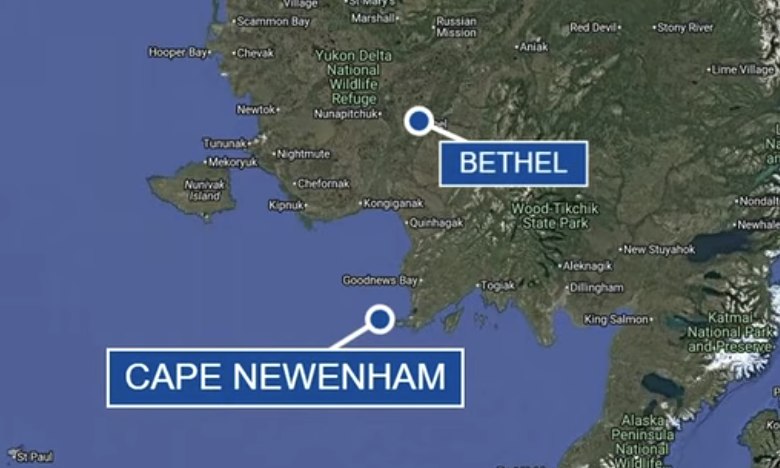
JUNEAU, Alaska — A charter aircraft carrying eight people crashed near a remote radar installation in western Alaska on Thursday, killing everyone on board, according to the U.S. military.
The crash occurred near the Cape Newenham Long Range Radar Site Airport, located roughly 450 miles west of Anchorage. U.S. Air Force Lt. Gen. Robert Davis, who commands Alaskan Command, the Alaskan North American Aerospace Defense Command Region and the Eleventh Air Force, called the incident “a devastating loss for our military family and the communities we serve.”
According to a statement from Alaskan Command, the radar site is operated by the Pacific Air Forces Regional Support Center and forms part of a broader network of remote installations that monitor aircraft flying through Alaska’s airspace and along its borders. The statement did not detail the specific work those aboard the flight had been performing, describing the aircraft only as a civilian-contracted plane. Davis further described those killed as dedicated professionals who had been carrying out an important mission under challenging conditions, and said the military’s immediate focus was on supporting the families, friends and colleagues of those lost, while expressing gratitude for the search and recovery teams that responded to the crash site.
Clint Johnson, who leads the National Transportation Safety Board’s Alaska regional office, said Thursday evening that the flight had two pilots and six passengers aboard at the time of the crash.
According to the Federal Aviation Administration, the aircraft involved was a Cessna 441 that had departed from Ted Stevens Anchorage International Airport bound for Cape Newenham. The crash occurred at approximately 12:15 p.m. Thursday, west of Cape Newenham.
U.S. Sen. Lisa Murkowski of Alaska identified the operator of the flight as Security Aviation, an Anchorage-based charter company, in a social media post Thursday night. Murkowski said she had personally traveled extensively with the company across Alaska and had met a number of its pilots over the years, adding that her thoughts were with those aboard the flight and their families as the investigation into the crash continues. An email seeking comment was sent to Security Aviation on Friday morning; the company had not responded as of this report.
The crash adds to a difficult recent history of aviation incidents in Alaska, a state where remote geography, harsh weather conditions and heavy reliance on small aircraft for transportation to isolated communities and installations have periodically contributed to fatal accidents. Alaska’s vast, sparsely populated terrain means many communities and military installations, including remote radar sites like the one near Cape Newenham, depend heavily on charter and small commercial aircraft for personnel, supplies and equipment, given the absence of road access to many parts of the state.
Cape Newenham’s radar installation is one of several remote, long-range radar sites the U.S. military maintains across Alaska as part of its broader air defense infrastructure, designed to detect and track aircraft operating in the region’s airspace, including along international boundaries. These sites are typically staffed and serviced through a combination of military personnel and civilian contractors, given their remote locations far from major population centers or military bases.
Thursday’s crash triggered an immediate emergency response involving multiple agencies. According to Murkowski’s statement, the U.S. Coast Guard, the National Transportation Safety Board, Alaska State Troopers and the Rescue Coordination Center all took part in responding to the crash site, reflecting the coordinated, multiagency approach typically required for search and recovery operations in Alaska’s remote and often difficult-to-access terrain.
The National Transportation Safety Board, which investigates civil aviation accidents in the United States, is expected to lead the formal investigation into the cause of Thursday’s crash, a process that in cases involving remote or difficult-to-reach crash sites can take considerably longer than investigations conducted in more accessible locations. The agency’s Alaska regional office, which Johnson leads, routinely investigates aviation accidents throughout the state given Alaska’s unusually high reliance on small aircraft relative to its population.
Alaska has faced scrutiny in the past over aviation safety issues tied to charter and small commercial flights operating in the state’s challenging conditions. Previous federal investigations into fatal Alaska air crashes have at times identified broader systemic concerns, including instances of aircraft operating with excessive weight loads and gaps in regulatory oversight of charter operators, findings that have periodically prompted renewed calls for stricter enforcement of aviation safety standards specific to the state’s unique operating environment.
As of Friday morning, officials had not released the identities of those killed in Thursday’s crash, pending notification of next of kin, a standard practice followed in fatal aviation accidents while families are formally informed before public identification occurs. Military and civilian investigators were continuing to work at the remote crash site as the investigation into the cause of the accident got underway.
The loss has drawn condolences from Alaska’s congressional delegation and military leadership alike, with both Murkowski and Davis emphasizing the close-knit nature of the communities affected by the crash, whether through personal connections to Security Aviation’s pilots or through the broader military family associated with operations at Alaska’s remote radar installations. As search and recovery operations continue and the formal investigation moves forward, further details regarding the cause of the crash and the identities of those on board are expected to be released in the coming days.

Ecora Royalties: The Cobalt Shift Still Needs Proof

Sensex gained over 3 points to close at around 77,541 while Nifty 50 rose 20 points to end the session at 24,252. Broader markets performed better, with Nifty Smallcap 100 rising 0.6%.
Analyst Sudeep Shah, Vice President and Head of Technical & Derivatives Research at SBI Securities, interacted with ETMarkets regarding the outlook for the Nifty IT, options data as well as an index strategy for the upcoming week. The following are the edited excerpts from the chat:
1.) Sensex, Nifty have fallen in 4 out of 5 sessions. What does next week’s set up look like?
Since the beginning of August, the benchmark index Nifty has been gradually drifting lower. After marking a low of 24,025, the index witnessed a minor pullback; however, it ended lower for the second consecutive week. On the weekly chart, the index has formed a small-bodied candle with a minor lower shadow, reflecting a lack of strong directional conviction.
An interesting pattern has emerged during August. The index has largely witnessed momentum during the first hour of trading, only to slip into consolidation thereafter. The repeated formation of small-bodied candles further highlights the absence of strong commitment from both bulls and bears. The question now is: who will make the first decisive move?
Technically, the index is currently oscillating around its crucial moving averages, which are largely flat. Momentum indicators and oscillators are also pointing towards a sideways phase. The daily RSI remains in a sideways zone, while the trend-strength indicator, daily ADX, is placed at 12.80 and continues to remain flat. And when the trend indicators go quiet, the next signal often becomes even more important.
Going ahead, the 24,350-24,400 zone will act as a crucial hurdle for the index. On the downside, 24,050-24,000 will remain an important support zone. A decisive move beyond this range could determine whether Nifty is ready for its next big move or another round of consolidation awaits.Sensex: The benchmark index registered a recent high of 79,143 on August 04, following which it entered a phase of gradual correction. However, on Wednesday, the index found support near the lower trendline of its rising channel and witnessed a mild pullback. Despite the recovery attempt, Sensex ended the week around the 77,500 mark, down 0.60%, while forming a small-bodied candle with a lower shadow.
From a technical standpoint, the index continues to hover around its 20-day, 50-day, and 100-day EMAs. The flattening of these key moving averages suggests a lack of directional bias and points towards a consolidative market structure. Additionally, the daily RSI has remained range-bound over the last ten trading sessions, reinforcing the ongoing sideways trend. The ADX is currently placed at 13.53, highlighting weak trend strength and the absence of any strong momentum in either direction.
Looking ahead, the 77,900-78,000 zone is expected to act as an immediate resistance area. A decisive and sustained breakout above 78000 could trigger renewed buying interest, paving the way for an advance towards 78700, followed by 79300.
On the downside, the 77,000-76,800 zone remains a crucial support band. As long as the index holds above this range, the broader consolidation is likely to continue. However, a breach below these levels could invite further weakness in the near term.
2.) Where are you seeing the derivatives positioning right now, and which Nifty strikes could act as the immediate support and resistance zones going into the next expiry?
Nifty has maintained a higher high–higher low structure since the low of 22,183 recorded on April 2, although the broader movement has remained confined within a range.
A rising trendline connecting the lows of 22,183 on April 2 and 23,072 on June 11, when extended further, provided support to Nifty around 23,606. The index bounced sharply from this trendline and subsequently rallied nearly 5%.
After hitting a high of 24,774 on August 3, which coincided with the first day of the new CAS settlement system, Nifty remained under pressure and failed to close above the previous session’s high for 12 consecutive sessions — its longest such streak in recent history. However, the index has now broken this streak after finding support around the rising trendline in the 24,020–24,000 zone.
Importantly, this trendline support coincides with the 61.8% Fibonacci retracement of the previous upmove from 23,606 to 24,774, making the 24,020–24,000 zone a crucial support area.
Historical evidence also provides some encouragement. A study of the previous three comparable nine-session losing streaks — November 15–25, 2011; August 24–September 5, 2012; and December 5–17, 2012 — shows that Nifty delivered positive returns over the subsequent one-week, one-month and three-month periods. The average gains during these periods stood at 4.32%, 5.36% and 12.27%, respectively.
The derivatives setup further reinforces the importance of 24,000. Put open interest at the 24,000 strike is nearly three times the Call open interest, highlighting strong support around this level. Hence, 24,000 remains a key near-term level to watch. A decisive breach below this zone could trigger fresh selling pressure.
On the upside, 24,500 is the key hurdle, with Call open interest around 3.5 times the Put open interest. A decisive move above 24,500 could trigger short covering and potentially accelerate the upward momentum.
3.) With crude, geopolitical risks and global bond yields all elevated, what is the biggest risk that the options market may be underpricing right now?
The options market could be underpricing tail risk at current levels. IV is around 11, while IVP is near 17, suggesting implied volatility is towards the lower end of its historical range. At the same time, the intraday range has remained compressed since the beginning of August, making it difficult for traders to find meaningful momentum or directional opportunities. This prolonged compression may be creating a sense of complacency in the options market. The key risk is a low-probability but high-impact event, be it geopolitical, macro, a sharp move in crude or in bond yields that suddenly expands the trading range and triggers a spike in volatility. Such a move could catch option sellers off guard, particularly those carrying short-gamma exposure. So, the risk is not just direction, but a sudden repricing of tail risk and volatility.
4.) What are key levels to track for Nifty Bank and Nifty IT?
The banking benchmark, Bank Nifty, has remained in a prolonged consolidation phase over the last 48 trading sessions, trading within a broad range of 58,706-56,023. More recently, the consolidation has tightened further, with the index confined to a narrow 721-point range over the past 13 trading sessions, reflecting a clear lack of directional conviction.
This subdued price action has resulted in the formation of a Bollinger Band Squeeze on the daily chart, a pattern that develops when volatility contracts sharply and the Bollinger Bands narrow significantly. Historically, such phases of compressed volatility are often followed by a strong directional move, making the current setup important from a trading perspective.
Momentum indicators also continue to support the consolidation view. The Daily RSI and Stochastic Oscillator have been moving sideways, indicating the absence of any meaningful bullish or bearish momentum. At the same time, the Average Directional Index (ADX) has slipped to 8.06, its lowest reading since inception, highlighting an extremely weak trend environment.
Going forward, the 58,000-58,200 zone is likely to act as a critical resistance band. A decisive and sustained breakout above this hurdle could trigger a fresh uptrend and lead to a sharp expansion in volatility. On the downside, the 57,200-57,000 zone remains a key support area. A breach below this range may signal the start of a corrective phase.
Overall, Bank Nifty appears to be in the final stages of consolidation, and a convincing move beyond either 58200 on the upside or 57,000 on the downside could mark the beginning of the next trending move in the index.
For Nifty IT, the zone of 30,200-30,000 will act as important support. On the upside, the 200-day EMA zone of 31,600-31,800 will act as a crucial hurdle.
5.) For traders looking beyond the index, which 2-3 stocks currently offer the clearest risk-reward setup in the F&O segment, and what are the levels or triggers that would make you take those trades?
The three stocks that offer the cleanest risk-reward setups in the F&O segment are AU Small Finance Bank, Aditya Birla Capital, and Nippon Life India Asset Management.
AU Small Finance Bank has been consolidating in the Rs 431–384 range for the past eight weeks. Despite the consolidation, the stock continues to trade above its key moving averages, while the rising ADX indicates a gradual buildup in trend strength. A decisive breakout above Rs 431 could trigger the next directional move, with the Rs 385–380 zone acting as an immediate support area.
Aditya Birla Capital hit an all-time high of Rs 1,108 before closing marginally lower on the daily timeframe. The stock has faced strong resistance in the Rs 1,080–1,100 zone, which it has failed to decisively cross multiple times since late April. On the downside, the 20-day EMA has consistently acted as dynamic support, keeping the broader bullish trend intact.
The rising ADX points towards a gradual strengthening of the trend, while the RSI remains above 60 on both the daily and weekly timeframes, indicating sustained bullish momentum. As long as the stock is able to sustain above the Rs 1,100-1,080 zone, the stock is likely to extend its up move.
Nippon Life India Asset Management has given a breakout from a downward-sloping trendline on the daily timeframe, signalling a potential shift in trend. The stock has repeatedly found strong support near its 34-day EMA, which has acted as a reliable dynamic support since August 7. It is now trading above its key short- and long-term moving averages, reinforcing the positive bias.
The MACD line has crossed above the signal line and remains above the zero line, indicating strengthening bullish momentum. Additionally, DI+ is positioned above DI- on the ADX indicator, highlighting strong buying pressure. As long as the stock holds above the Rs 1,210-1,200 zone, the pullback is likely to extend further.
(Disclaimer: Recommendations, suggestions, views and opinions given by the experts are their own. These do not represent the views of The Economic Times)

Bitcoin RSI hits 87 with MFI maxed at 100: Hourly levels

The 10 Most Influential Books of the 20th Century, Ranked

Financial Freedom, When to Say ‘Go Live Your Life!’ – Morgan Lemaitre on The Dean’s List Podcast

US Open 2026: Carlos Alcaraz can end American dreams by beating Ben Shelton, plus Frances Tiafoe or Alex Michelsen, in New York




-

 Business6 minutes ago
Egyptian TV Presenter Sarah Khalifa, 11 Others Sentenced To Death In Major Drug Trafficking Case In Cairo
-
 Tech23 minutes ago
Strong Password Policy and Password Manager Guide
-
 NewsBeat31 minutes ago
‘Shocking, disappointing, woeful’: Reaction to Wales’ fall in the global schools Pisa scores – live
-

 Crypto World20 minutes ago
Visa expands stablecoin card network to 160 programs
-

 Business32 minutes ago
model backs CBD drinks brand
-
 Entertainment28 minutes ago
Chiefs Reporter Reveals Patrick Mahomes Message After Dad’s Death
-

 Crypto World27 minutes ago
Tracking cocoa may be just the beginning for PwC, Merck, Hashgraph provenance system
-
 NewsBeat25 minutes ago
I’ve spotted this luxury luggage brand in The Gentleman season 2
-

 Crypto World33 minutes ago
Stablecoins could save South Korean merchants up to $3.8 billion a year, budget office says
-

 News Videos17 minutes ago
MASSIVE XRP RECORD SET! EVERYTHING CHANGES TODAY!!!
-
 Sports22 minutes ago
India’s para archers shine with twin golds, silver at World Archery Para Series | More sports News
-
 NewsBeat18 minutes ago
Manchester United fans announce ticket protest before Manchester derby
-
 Entertainment15 minutes ago
5 Artists Who Need to Sing the Next James Bond Theme Song
-

 NewsBeat12 minutes ago
They’re resilient, low-effort and beautiful: how to plant a rubble garden
-

 Sports9 minutes ago
Lindermann back to his best in 2026 Chelmsford Stakes
-
 Crypto World7 minutes ago
Hyperliquid Season 3 Airdrop Wait Fuels a Meme Coin Machi Big Brother Promotes
-

 Crypto World13 minutes ago
The Leaders AI Innovation Needs
-
 Tech10 minutes ago
AMD GPUs are climbing the sales charts as Radeon beats Nvidia on Amazon and in Germany
-
 NewsBeat5 minutes ago
US Open 2026: Carlos Alcaraz can end American dreams by beating Ben Shelton, plus Frances Tiafoe or Alex Michelsen, in New York
-
 News Videos4 minutes ago
Financial Freedom, When to Say ‘Go Live Your Life!’ – Morgan Lemaitre on The Dean’s List Podcast
You must be logged in to post a comment Login