
Business
India doubles down on curbing rupee speculation after initial steps fall short


Late on Wednesday, the Reserve Bank of India barred banks from offering rupee non-deliverable forwards to resident and non-resident clients. It further said that companies cannot rebook cancelled forward contracts.
The series of measures from the central bank comes at a time when the rupee has hit a string of all-time lows on worries over the spillovers from the Iran war. The currency fell 4.24% in March, marking its worst monthly drop in six years.
Earlier this week, the RBI put a limit of $100 million on net open rupee positions of banks. However, that failed to offer relief to the currency with banks exiting positions by offering them to corporates, Reuters reported.
The RBI’s latest step now targets this surge in corporate arbitrage.

By forcing banks to cut their positions, the central bank opened up arbitrage between the onshore and NDF market which corporates exploited, putting renewed pressure on the rupee and diluting the impact of the initial measures, three bankers said.
One banker said corporate arbitrage flows at his bank alone were estimated at $750 million-$800 million. He and the other bankers requested anonymity, citing restrictions on speaking to the media. The rupee, after the RBI’s crackdown on banks, had rallied past 93 in the interbank market on Monday but slid quickly beyond 95 to an all-time low.
The RBI did not respond to an email requesting comment.
ACTION ON SPECULATIVE ACTIVITY
Additionally, the central bank barred banks from rebooking any foreign exchange derivative contract on behalf of clients, whether deliverable or non-deliverable, which has been cancelled after April 1.
Up until now, a corporate would book a forward contract to hedge its dollar exposure. If the exchange rate later moved in its favour, it could cancel the contract and book a profit. Since the underlying exposure still remained, it was then allowed to enter into a new forward contract again, effectively repeating the cycle.
“All of this basically cuts speculation,” said Dhiraj Nim, FX strategist and economist at ANZ Bank. However, the fundamental is that if oil prices stay where they are, “your current account stress remains and capital flows remain scanty”, he added.
“It does not reverse the rupee’s course but it does make the central bank’s objective of curbing excess volatility easier.”
The central bank further prohibited banks from undertaking FX derivative contracts with related parties.


Netflix’s popular teen rom-com “XO, Kitty” returns for its third season on April 2, 2026, with all eight episodes dropping at once as fans finally see Kitty Song Covey navigate her senior year at the Korean Independent School of Seoul (KISS).

The series, a spin-off from Jenny Han’s “To All the Boys I’ve Loved Before” universe, has built a dedicated following since its 2023 debut thanks to its blend of heartfelt romance, cultural exploration and high-school drama set against the vibrant backdrop of Seoul. Season 3 picks up after the dramatic Season 2 finale, with Kitty and her friends facing the challenges and excitement of their final year together.
Anna Cathcart reprises her role as the optimistic and matchmaking Kitty Song Covey. The Canadian actress, who first appeared as Lara Jean’s younger sister in the “To All the Boys” film trilogy, has become a breakout star in her own right. Joining her is a returning ensemble cast including Sang Heon Lee as Min Ho, the charming K-pop trainee who has captured Kitty’s heart, along with other KISS students and faculty members who have become fan favorites.
In a highly anticipated crossover, Lana Condor — who portrayed Lara Jean Covey in the original films — guest stars in multiple episodes of Season 3. Netflix confirmed the family reunion in early March 2026, releasing promotional images and a trailer that teased emotional moments between the on-screen sisters. Fans have eagerly awaited this development since the spin-off launched.
The third season was renewed quickly after Season 2 premiered in January 2025 and wrapped production in July 2025. Showrunner Valentina Garza, who took over creative duties, has promised deeper character growth, more complex relationships and continued exploration of themes like identity, first love and cultural belonging for an Asian-American teen living abroad.
Netflix’s Tudum site and promotional materials describe Season 3 as Kitty’s senior year at KISS, filled with new adventures, lingering romantic tension with Min Ho and the pressures of deciding what comes after graduation. Early trailers show Kitty balancing friendships, potential heartbreak and the excitement of new opportunities, while hinting at bigger personal revelations.
The April 2 release date aligns with Netflix’s strategy of dropping full seasons simultaneously, allowing binge-watching over the Easter long weekend in many countries. In the United States, episodes become available at 12:00 a.m. Pacific Time (3:00 a.m. Eastern), standard for most Netflix originals. International viewers will see the season roll out according to local time zones.
Reception to the first two seasons has been largely positive among younger audiences, with praise for the show’s diverse cast, stylish production and light-hearted yet meaningful storytelling. Critics have noted its appeal as comforting, escapist television that handles teen romance with sincerity while incorporating Korean culture and language elements.
“XO, Kitty” stands out in Netflix’s teen programming slate for its international setting and focus on cross-cultural experiences. The series benefits from strong production values in Seoul, featuring authentic locations, K-pop influences and fashion that resonates with global Gen Z viewers.
With Season 3 marking what many assume could be the final chapter — though no official confirmation on future seasons has been made — fans are hoping for satisfying resolutions to ongoing storylines. Will Kitty and Min Ho finally commit? How will the group handle the end of high school? These questions have fueled online speculation and fan theories since Season 2’s cliffhanger.
Jenny Han, the author and executive producer, has remained closely involved. Her books and the film adaptations created a loyal fanbase that carried over to the series. Han has teased that Season 3 honors the emotional core of her stories while expanding the world for television.
Beyond the core cast, Season 3 introduces new characters and deepens existing relationships. Promotional images released in February and March 2026 show Kitty and friends in new settings around Seoul, suggesting fresh storylines involving university applications, family visits and romantic complications.
The series’ soundtrack, featuring K-pop and contemporary tracks, has also been a highlight. Fans expect Season 3 to deliver another memorable playlist that complements the emotional beats.
As the April 2 premiere approaches, Netflix has ramped up marketing with trailers, first-look photos and cast interviews. Anna Cathcart and Sang Heon Lee have shared light-hearted advice for viewers on love and relationships in recent promotional appearances.
For those new to the series, Netflix encourages catching up on Seasons 1 and 2, both available to stream now. The show’s accessible storytelling makes it easy for latecomers to join in, though longtime fans will appreciate the callbacks and character development.
“XO, Kitty” has contributed to Netflix’s success with international and diverse teen content. Its global appeal has helped the streamer reach younger audiences in Asia and beyond, while resonating with viewers who appreciate feel-good stories with substance.
As April 2 arrives, anticipation is high. Whether Season 3 serves as a fitting conclusion or sets up further adventures, fans are ready to return to KISS alongside Kitty for what promises to be an emotional and entertaining senior year.
With just days until release, social media is buzzing with countdown posts, theories and excitement. Many plan watch parties or solo binges over the long weekend.
Netflix has not announced exact runtime details beyond the eight-episode season, but each episode is expected to run approximately 30 minutes, making the full season a manageable binge.
The series continues to highlight important themes for its target audience, including self-discovery, friendship, family dynamics and navigating young adulthood in a globalized world.
As “XO, Kitty” Season 3 premieres on April 2, 2026, it joins a strong slate of spring programming on Netflix. For fans of light romance, cultural stories and coming-of-age tales, the new season offers the perfect springtime escape.

ANALYSIS: There’s no doubt that petrol supplies are causing angst as the war in the Middle East has closed the Strait of Hormuz, but this scenario has played out previously; in high prices, at least.

A version of this article first appeared in the CNBC Property Play newsletter with Diana Olick. Property Play covers new and evolving opportunities for the real estate investor, from individuals to venture capitalists, private equity funds, family offices, institutional investors and large public companies. Sign up to receive future editions, straight to your inbox.
Refinancing a home loan has long been a complicated and pricey process. The costs can be so high that most experts suggest if a borrower can’t shave at least 75 basis points off their current mortgage interest rate, the refinance isn’t even worth it.
Now two property tech leaders are joining forces to lower those costs.
Opendoor, which buys homes directly from sellers and has a title and escrow business, is acquiring part of Doma, a property technology company that automates title searches, the companies told CNBC exclusively. Doma says it uses machine learning and artificial intelligence to make real estate closings — specifically title, escrow and underwriting — faster and more affordable.
“We’re in the process of completely rebuilding and automating, like most of the other pieces of technology that Opendoor is working on … to eliminate time and money for customers,” said Lucas Matheson, president of Opendoor.
Terms of the deal were not disclosed.
Since 2024, Doma’s technology has been used in a Fannie Mae pilot program designed to reduce title insurance costs on eligible refinance transactions. It was just extended through 2027.
Under the program, certain refinance transactions determined by Doma to have low title risk may be sold to Fannie Mae without needing a lender’s title insurance policy or an attorney opinion letter. So far, that has been about 80% of the refinance candidates, according to Doma.
The title insurance, however, is only one component of the refinancing process. Closing costs include other services, such as setting up an escrow account, making sure all the mortgages are paid off, paying transfer fees and taxes. Some of this is still manual and highly service-oriented; it can take several days and add thousands of dollars to the cost of the refinance.
“This program grew so dramatically last year, we were operating our own closing and escrow agency, and it’s a sizable one, and doing a decent job of keeping up, but, frankly, the demand was outstripping our ability to close transactions,” said Max Simkoff, CEO of Doma. “We just did not have the resources to be able to do both the tech for the risk decisioning and the closing side.”
So Doma went looking for a company with the technology to scale its business as far as possible and ended up with Opendoor, whose technology can do the closings much more efficiently. As a result, the price that it charges for closings is lower than the industry average, according to Simkoff.
Following the acquisition, 85 employees from Doma will be joining Opendoor.
The refinance business, however, is not what it was just a month ago. The war with Iran has caused mortgage rates to rise sharply and quickly. Applications to refinance a home loan have been sinking in response. Demand is down 20% in just the past four weeks, according to the Mortgage Bankers Association.
“Refinances in the current market represent the most challenged home ownership experience,” said Simkoff. “Nobody doing refinance at a six and a quarter, 30-year fixed mortgage is doing it because they want to, they’re doing it because they have to.”
But both Simkoff and Matheson say the timing of this collaboration is irrelevant.
Last year, they note, mortgage rates were higher, and the program with Fannie Mae still saw enormous growth. Even if the pool of refinances shrinks, the share of borrowers using Opendoor’s closing services with Fannie Mae will grow, according to Matheson.
“This is around $1,100 per refi that a family would save while injecting effectively no risk into the system,” he said. “Just for context, Doma has had a zero defect track record in this program.”

Sealand Capital Galaxy names new CEO as Sawyer steps down
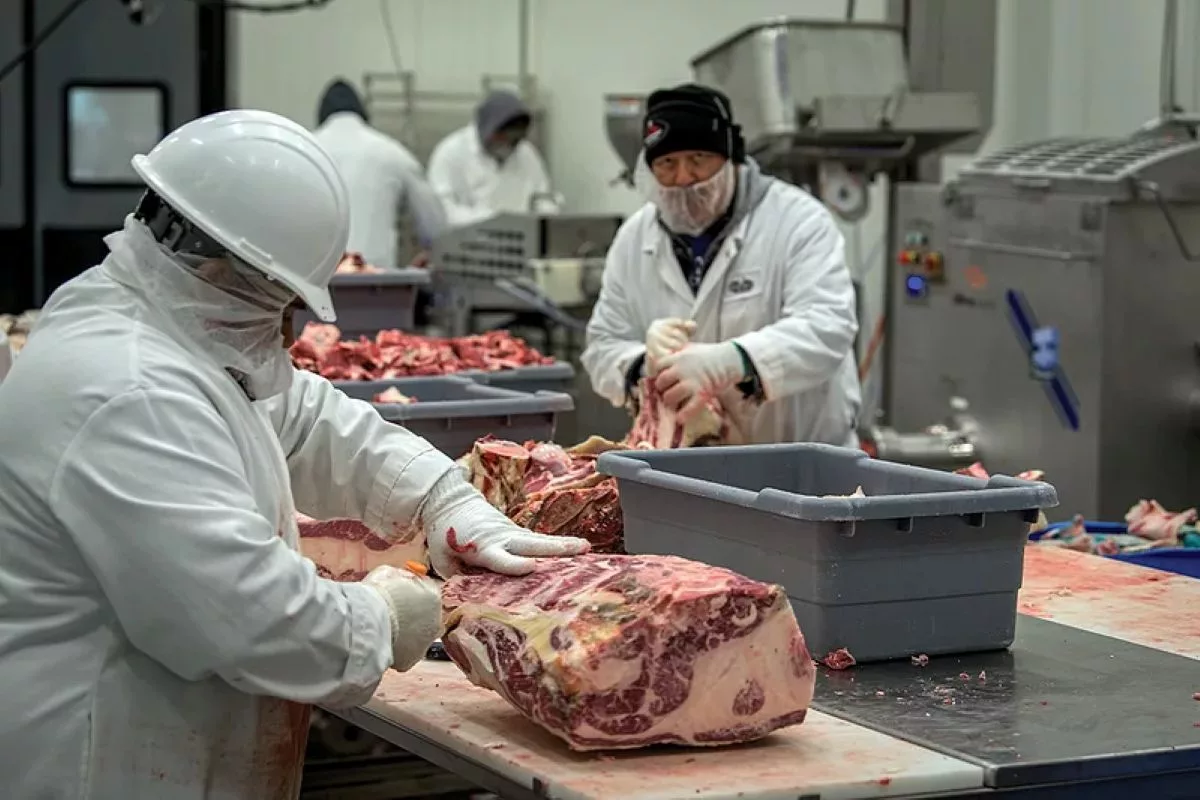

Butler, Mo., facility will add 22 jobs in the region.
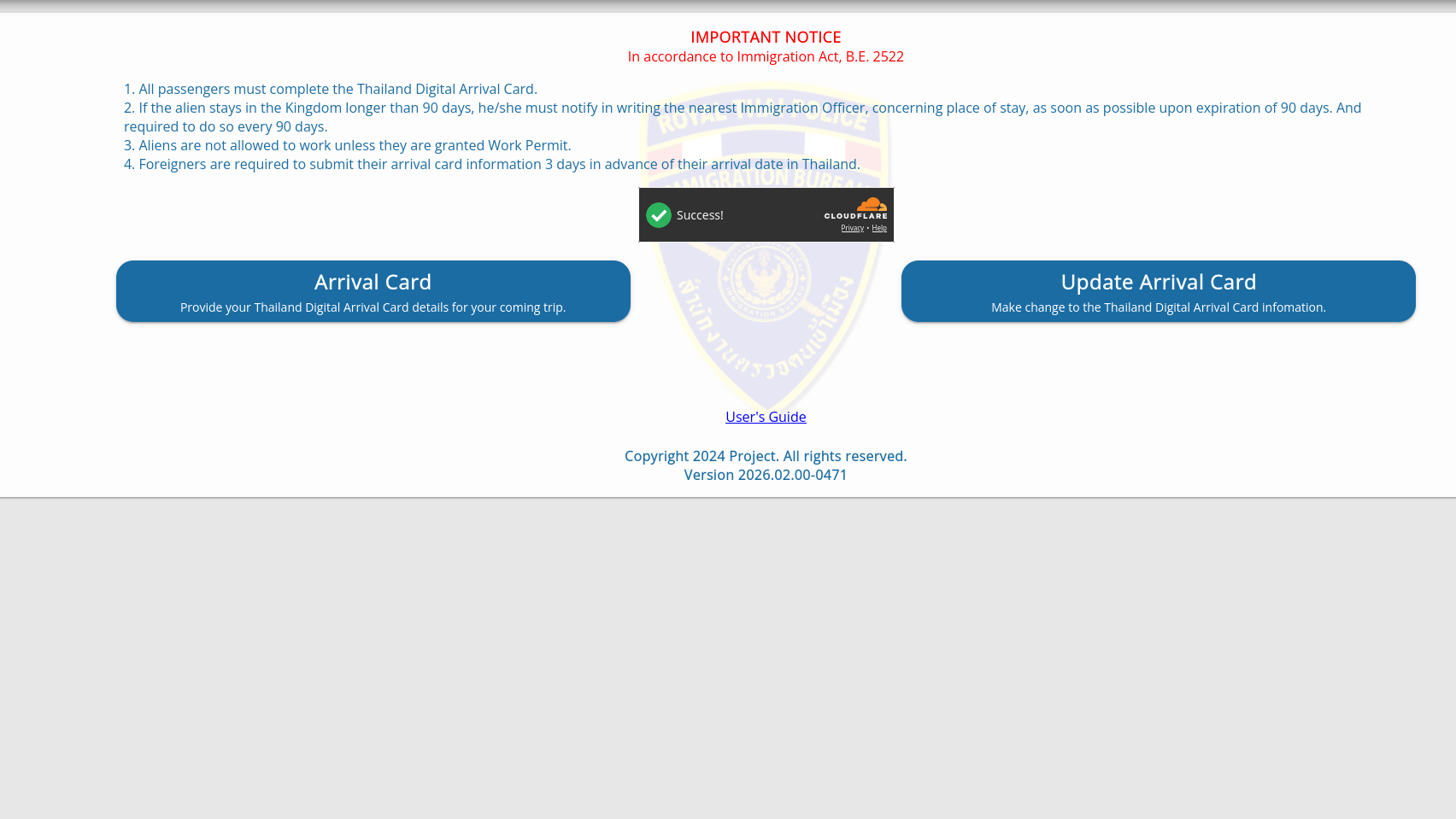
Thailand’s Immigration Bureau reports that 10% of foreign travelers have mistakenly registered through fraudulent Thailand Digital Arrival Card (TDAC) websites, urging the public to use only the official free platform to avoid scams and data misuse.
Key Details:
- The TDAC system, mandatory since May 1, 2025, is required for all foreign nationals and mirrors similar systems in South Korea, Japan, and Singapore.
- Official registration is free and accessible only via https://tdac.immigration.go.th or through the Immigration Bureau’s main site using QR codes or approved links.
- Authorities recommend registering three days before arrival to ensure screening and reduce checkpoint delays; confirmation is sent via email.
- Fraudulent sites often charge fees, collect data under false pretenses (e.g., e-visa applications), and do not connect to Thailand’s official immigration system.
- The Immigration Bureau is collaborating with agencies and airlines to shut down fake sites and educate travelers, though enforcement is complicated by overseas hosting.
Why It Matters:
Using fake TDAC sites risks financial loss and compromised personal data — travelers must verify they’re using the official, free platform to ensure smooth and secure entry into Thailand.
Thailand Digital Arrival Card (TDAC) When you travel to a new country, you often need to fill out an arrival form — think of it like a digital “check-in” that tells the government who you are and why you’re visiting. Thailand created an official, free online system called the TDAC to make this easy. It’s like checking in for a flight online, but for entering the country.
Fraudulent Websites Some dishonest people created fake websites that look like the official TDAC site. Imagine a fake McDonald’s website that looks identical to the real one, but charges you money for a coupon that doesn’t exist — that’s the idea here. These fake sites trick travelers into thinking they’re using the official government service.
The 10% Problem The Immigration Bureau found that 1 in 10 foreign visitors accidentally used one of these fake sites instead of the real one. That’s a significant number — for 1 million tourists visit, that’s 100,000 people potentially scammed.
Two Main Risks
- 💸 Getting charged money — The real TDAC is free. Fake sites charge a fee for something that should cost nothing, essentially stealing money from unsuspecting travelers.
- 🔓 Data misuse — When you fill out an arrival card, you share sensitive personal details (passport number, address, travel plans). Fake sites collect this data and could sell it, use it for identity theft, or other fraud. Think of it like handing your passport to a stranger on the street instead of the border officer.
The key takeaway: Always go directly to the official government website for immigration forms — don’t trust links from random emails, ads, or third-party travel sites. When in doubt, search for the official .go.th (Thailand government) domain.
Other People are Reading

Thirty-five countries will meet to discuss ways of reopening the Strait of Hormuz, weeks after the key shipping route was closed by the US-Israeli war on Iran.

Cardi B is stepping confidently into a new chapter in April 2026, launching her own haircare line, celebrating fresh legal victories and openly discussing personal transformation following her 2024 divorce from Offset, while continuing her sold-out “Little Miss Drama” tour and teasing future music projects.

The Grammy-winning rapper appeared on the “Aspire with Emma Grede” podcast on March 31, 2026, where she described feeling “reborn” after filing for divorce from Offset. “I feel like last year a new person was reborn,” Cardi said. “I don’t know if it was the divorce. I don’t know if something woke me up. I feel like I’m definitely a new person.” The candid reflection highlighted her growth as a mother of four and a businesswoman determined to take greater control of her career and finances.
Cardi, 33, is preparing to launch Grow-Good Beauty, her haircare line, on April 15. During the same podcast appearance, she addressed assumptions that she is entering the beauty space in direct competition with stars like Beyoncé and Rihanna. She dismissed the idea, expressing support for her peers while emphasizing her focus on creating quality products for her audience. The move represents another step in her entrepreneurial journey, following successful ventures in fashion and other endorsements.
In a significant legal development, a federal judge in Texas dismissed a $50 million copyright infringement lawsuit against Cardi on March 30, 2026. The suit claimed her 2025 hit “Enough (Miami)” improperly used elements from the song “Greasy Frybread” featured in the FX series “Reservation Dogs.” The judge ruled that further amendments to the complaint would be futile, marking another courtroom victory for the rapper, who has successfully defended multiple intellectual property cases in recent years.
Cardi’s “Little Miss Drama” tour, supporting her sophomore album “Am I the Drama?,” continues to draw strong crowds. On March 31, she sold out the newly renovated TD Coliseum in Hamilton, Ontario, Canada, just weeks after publicly urging fans to buy tickets to preserve her streak of sold-out shows. The tour, her first major arena run in six years, has been praised for high-energy performances and custom stage elements, including standout footwear choices that have generated fashion buzz.
The Bronx native has been open about balancing motherhood with her career. She welcomed her fourth child, a son with NFL star Stefon Diggs, in late 2025. Recent reports suggest the couple has faced challenges, though Cardi has focused publicly on personal growth and professional momentum rather than relationship details.
Looking ahead, Cardi has teased plans for another album in 2026, aiming for a faster turnaround than previous projects. In late 2025 interviews, she expressed a desire for a “new era” with a different sound, signaling creative evolution following the success of “Am I the Drama?,” which peaked at No. 5 on the Billboard Canadian Albums chart and received strong critical attention for its genre-blending approach.
Cardi has also spoken about making intentional changes to her physical appearance once the tour concludes in mid-April. In backstage comments, she joked about heading to Colombia to adjust some cosmetic enhancements, reflecting her history of candid discussions about body image and past procedures.
Her 2026 trajectory shows a clear shift toward greater ownership. In the podcast with Emma Grede, Cardi discussed learning from earlier business deals and prioritizing investments that build long-term wealth rather than short-term gains. “I was tired of making everyone else rich,” she remarked, underscoring her evolving mindset as an entrepreneur and artist.
Fans have responded enthusiastically to her transparency and momentum. Social media has been filled with support for her haircare launch, tour successes and personal reflections. The “Little Miss Drama” tour has showcased her as a performer at the top of her game, with high-production values and emotional connection to audiences.
Industry observers note that Cardi’s ability to navigate public scrutiny while building multiple revenue streams sets her apart in hip-hop. From chart-topping singles to business ventures, she continues to expand her influence beyond music.
As April unfolds, attention turns to the April 15 debut of Grow-Good Beauty. Early promotional materials suggest a focus on quality ingredients and accessibility, aligning with Cardi’s goal of creating products that resonate with her diverse fanbase.
The rapper’s legal wins provide additional momentum. Successfully defending against high-profile copyright claims reinforces her position as an artist who protects her creative work while pushing boundaries in the industry.
Cardi’s openness about rebirth and reset has resonated with many followers facing their own life changes. Her message of forward movement — “We can only go forward now” — echoes through recent interviews and social posts, framing 2026 as a year of intentional growth.
With the tour wrapping soon and new projects on the horizon, Cardi B shows no signs of slowing down. Her blend of raw honesty, business acumen and artistic drive continues to captivate audiences worldwide.
Whether launching beauty products, defending her catalog in court or reflecting on personal evolution, the artist once known for viral moments has matured into a multifaceted entertainer with clear vision for the future.
As fans await the haircare line and potential new music, Cardi’s 2026 narrative centers on empowerment, resilience and self-reinvention — themes that have defined much of her public journey from reality television to global stardom.
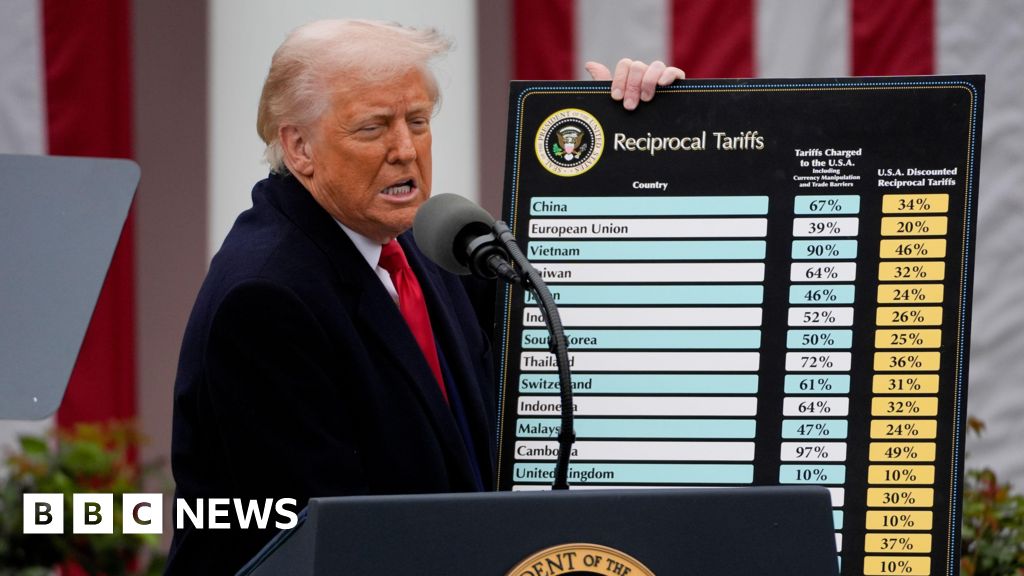
US tariffs stand at the highest rate in decades. But what has the impact been?

Long before seatback screens, playlists and onboard internet connection became standard, Singapore Airlines experimented with something close to a lounge show in the sky.
Back in 1976, the airline trialed live musical performances on its jumbo jets, and what began as a publicity stunt ended up as a regular part of the journey before disappearing less than a year later.
The experience of live music aboard
This story belongs to a very different era of flying. Singapore Airlines, in the mid-1970s, was still shaping its identity and looking for ways to stand out. Inflight movies and music were only just arriving with Boeing 747s, and the airline experimented with all kinds of onboard distractions. One of the boldest ideas the company tried was live entertainment: in April 1976, SIA launched a trial on the Singapore-Sydney route with a Filipino trio called Los Amigos, who performed a 45-minute set covering 13 popular songs.
For passengers, it felt unusual even by the standards of the time. Today, cabin entertainment is largely private and screen-based, with each traveler disappearing into a film, a playlist or a podcast on their own. Back then, the performance was shared by the whole cabin, creating a collective moment that modern flying rarely offers. According to MileLion, 86% of passengers enjoyed their performance, enough for the airline to move from trial mode to regular live performances the following month. The music was available to First and Economy Class passengers at no extra charge, making it a signature flourish of the company.
Still, romance and reality do not always travel well together at cruising altitude. The performers themselves found the conditions tough: singers complained that the engines were too loud, so they had to yell the lyrics, while the dry cabin air affected their voices before the flight was over. What sounded glamorous in theory quickly became problematic in practice, both for those on stage and for some of those in their seats. By February 1977, the experiment ended because of the loss of novelty and a noticeable increase in passenger complaints. The idea lasted roughly ten months as a regular feature, one of the reasons it remains a curious chapter in the airline’s history.
Airlines now offer different alternatives to their passengers
The old experiment feels even more fascinating when set against what airlines offer now. Singapore Airlines’ own current onboard offer includes KrisWorld and KrisWorld Digital, where passengers can browse films, television, audio content, and featured articles, while also accessing live TV channels, web-based games, or personal devices and in-flight Wi-Fi that can be used to access an online casino, check the latest news, or even plan activities to do once the passenger arrives at their destination.
Considering the live performances, the cabin has shifted from shared spectacle to personalized choice. Delta, for example, says its Delta Studio platform offers more than 1,000 hours of free entertainment, including movies, series, playlists, podcasts, and live satellite TV on select flights. JetBlue has gone a step further with Blueprint by JetBlue, a platform that adds watch parties, saved favorites, viewing recommendations and the ability to pick up where a passenger left off on a previous flight, while also tying the experience to the carrier’s broader seatback and Wi-Fi ecosystem.
That may be the clearest contrast with Singapore Airlines’ live-music era. In 1976, airlines were trying to surprise travelers with something they had never seen before. In 2026, the goal is usually to let passengers shape the journey themselves, whether that means streaming a series, checking live sports, messaging over Wi-Fi or syncing entertainment across devices. The tools are different, the cabins are quieter, and no one is belting out songs over engine noise anymore. But the basic ambition has not changed much: make time in the air feel a little less like waiting, and a little more like an experience worth remembering.

Full Scrubs cast list from The Stranger actor Jacob Dudman to Broadway star

Everything to Know About Netflix Return
MARA’s $1.1 Billion Bitcoin Sell-Off Hands Metaplanet the Number 3 Spot


-

 Business7 days ago
Instagram, YouTube Found Responsible for Teen’s Mental Health Struggle in Historic Ruling
-

 NewsBeat6 days ago
The Story hosts event on Durham’s historic registers
-
 Tech7 days ago
Intercom’s new post-trained Fin Apex 1.0 beats GPT-5.4 and Claude Sonnet 4.6 at customer service resolutions
-

 Sports5 days ago
Sweet Sixteen Game Thread: Tide vs Michigan
-
Entertainment3 days ago
Fans slam 'heartbreaking' Barbie Dream Fest convention debacle with 'cardboard cutout' experience
-
 Entertainment4 days ago
Lana Del Rey Celebrates Her Husband’s 51st Birthday In New Post
-
Crypto World2 days ago
Dems press CFTC, ethics board on prediction-market insider trades
-

 Crypto World13 hours ago
Gold Price Prediction: Worst Month in 17 Years fo Save Haven Rock
-

 Tech3 days ago
The Pixel 10a doesn’t have a camera bump, and it’s great
-

 Sports2 days ago
Tallest college basketball player ever, standing at 7-foot-9, entering transfer portal
-

 Tech2 days ago
EE TV is using AI to help you find something to watch
-

 Tech3 days ago
Apple will hide your email address from apps and websites, but not cops
-

 Fashion4 days ago
Amazon Sundays: Soft Spring Layers
-

 Tech2 days ago
Flipsnack and the shift toward motion-first business content with living visuals
-

 Tech2 days ago
How to back up your iPhone & iPad to your Mac before something goes wrong
-

 Fashion7 days ago
En Vogue in Brown Leather and Tailored Neutrals by Atelier Savoir, Styled by J Bolin
-

 Politics3 days ago
Should Trump Be Scared Strait?
-

 Crypto World2 days ago
U.S. rule change may open trillions in 401(k) funds to crypto
-

 Fashion7 days ago
What Are Your Favorite T-Shirts for the Weekend?
-

 Tech4 days ago
Elon Musk’s last co-founder reportedly leaves xAI
You must be logged in to post a comment Login