

Crypto World
Bitcoin Price Prediction: BTC Hits a 2-Week Low as Liquidations Top $500 Million


BTC is bleeding. Bitcoin price dropped as low as $76,500 this morning, a two-week low, shedding more than 2% as geopolitical shockwaves and a crowded long market prediction collided in brutal fashion. The selloff accelerated as US-Iran war tensions rattled risk assets globally, with oil surging toward $100 per barrel and Nasdaq 100 futures sitting roughly 10% below January highs.
Bitcoin’s correlation to tech stocks did it no favors. Long liquidations swamped the market; nearly $300 million in long positions were wiped out, exposing just how crowded bullish futures positioning had become. Spot BTC ETFs, which drove much of Q4 2025’s euphoria, have seen inflows slow and flip to net outflows in recent sessions.
Macro headwinds and derivatives positioning now dominate the near-term picture, and with approximately $14 billion in BTC options open interest approaching expiry, volatility is far from finished.
Discover: The best pre-launch token sales
Bitcoin Price Prediction: Can BTC Recover to $82,000?
Bitcoin is hovering at the $77,000 area as we speak, well below the local high of $82,800 that marked resistance earlier this month. Data shows BTC’s one-month range compressed between $73,800 and $82,800, with the lower bound now acting as the critical floor.
Momentum indicators are deteriorating. BTC is now 28% below its all-time high, trading in a wide consolidation band that marks between $60,000 and $80,000. The options expiry overhang near current strikes could pin price in the short term, which could release a volatility spike in either direction once those positions roll off.
Three scenarios dominate current positioning:

- Bull case: BTC holds the $73,800–$75,000 support zone, ETF outflows stabilize, and a macro de-escalation pushes price back toward $82,000–$83,000 resistance within two weeks.
- Base case: Choppy consolidation between $75,000 and $80,000 as options expiry resolves and traders wait on Fed signals and geopolitical clarity.
- Bear case: A daily close below $73,800 opens a path toward the $60,000–$66,000 demand zone, or the 52-week low territory where longer-term buyers historically stepped in.
On-chain data offers a partial counterweight: exchange outflows remain elevated, signaling ongoing self-custody moves that analysts typically read as longer-term accumulation behavior, even during price weakness. The question is whether those buyers can absorb continued macro-driven selling pressure.
Discover: The best crypto to diversify your portfolio with
Hyper Targets Early Mover Upside as Bitcoin Tests Key Levels
When spot BTC trades 28% off its highs, and ETF inflows dry up, late-cycle entry into large-cap crypto looks increasingly unattractive on a risk-reward basis. Rotation toward early-stage infrastructure plays is a pattern that tends to gain traction precisely during consolidation phases like this one.
Bitcoin Hyper ($HYPER) is positioning itself at that intersection. It will be the first-ever Bitcoin Layer 2 with Solana Virtual Machine (SVM) integration that targets sub-second finality and smart contract throughput that the base Bitcoin layer simply cannot deliver. It preserves Bitcoin’s security while stripping out its speed and programmability limitations entirely.
The presale numbers are concrete. More than $32 million has been raised at a current price of $0.0136 per $HYPER. Staking is live with a high 35% APY for early participants. Key infrastructure includes a Decentralized Canonical Bridge for trustless BTC transfers and low-latency execution designed to outpace Solana on its own architecture.
The post Bitcoin Price Prediction: BTC Hits a 2-Week Low as Liquidations Top $500 Million appeared first on Cryptonews.

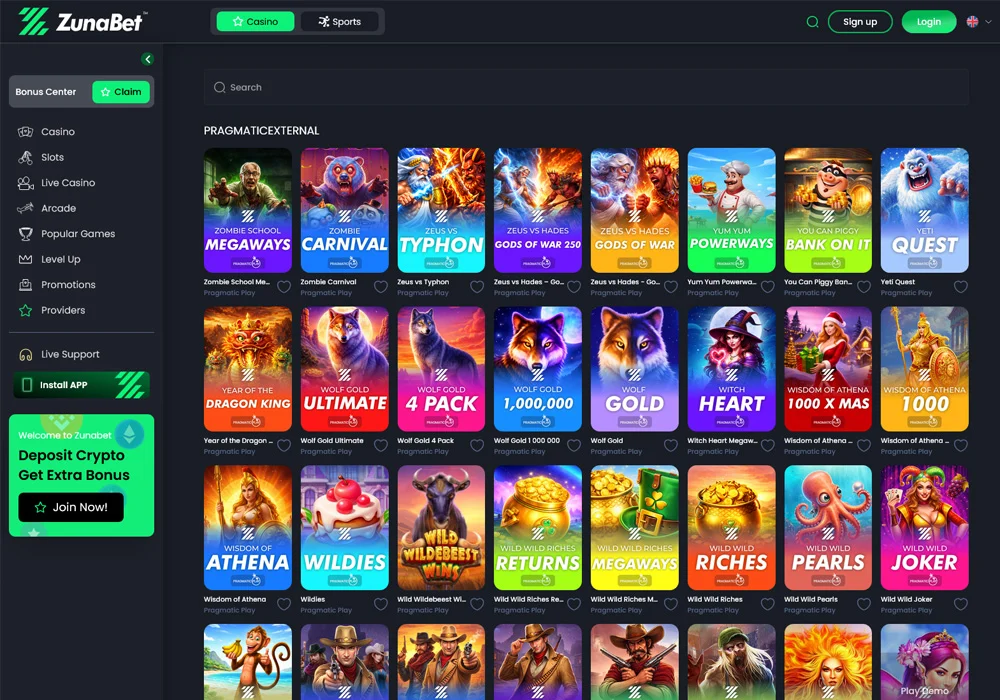
The online gambling industry has long been shaped by a handful of major operators. Bet365 and 888casino sit near the top of that list. Both have spent years building their reputations, expanding their game libraries, and attracting millions of players worldwide. But the market is shifting. A new wave of crypto-focused platforms is emerging, and among them, ZunaBet is drawing attention as a platform built from the ground up for a different kind of player. This article breaks down how these three platforms compare across games, payments, bonuses, loyalty programs, and overall direction.
Bet365: The Scale Operator
Bet365 is one of the biggest names in online gambling globally. Founded in 2000, the UK-based operator holds licenses in multiple regulated markets and is known primarily for its sportsbook, which is widely considered one of the most comprehensive in the world. Its casino arm offers a solid selection of slots, table games, and live dealer options from well-known providers.
Bet365 operates on a traditional fiat model. Deposits and withdrawals are handled through credit cards, bank transfers, PayPal, and other standard payment methods. The platform does not currently support cryptocurrency payments. Its welcome offers tend to be modest compared to some competitors, with a focus on sports betting promotions rather than large casino bonuses.
The loyalty system at Bet365 is relatively straightforward. There is no elaborate tiered program with public rakeback percentages. Instead, the platform relies on periodic promotions, free bets, and retention offers tailored to individual players. For many users, Bet365’s strength lies in its reliability, breadth of sports markets, and global reach rather than flashy bonus structures.
888casino: The Long-Running Brand
888casino has been around since 1997, making it one of the oldest online casino brands still in operation. It holds licenses from the UK Gambling Commission and the Malta Gaming Authority, among others. The platform offers a wide library of slots, jackpot games, table games, and a live casino section powered by providers like Evolution and NetEnt.
Like Bet365, 888casino operates entirely on fiat payment rails. Players can deposit using Visa, Mastercard, Skrill, Neteller, and similar options. There is no cryptocurrency support. The welcome bonus at 888casino typically sits in the low-to-mid hundreds of dollars range, depending on the market and current promotion. It is competitive but not among the largest in the industry.
888casino uses a tiered VIP program with levels that unlock based on activity. Benefits include bonus offers, faster withdrawals, and dedicated account managers at higher tiers. The system is functional but follows the same general template used by most traditional operators. There is nothing particularly unique about it compared to other legacy casino loyalty programs.
ZunaBet: The Crypto-First Challenger
ZunaBet launched in 2026 and takes a fundamentally different approach. Built by a team with over 20 years of combined industry experience, it was designed from the start as a crypto-first platform. It is owned by Strathvale Group Ltd and operates under an Anjouan gaming license.
The numbers are hard to ignore. ZunaBet offers over 11,000 games from 63 providers, including Pragmatic Play, Hacksaw Gaming, Evolution, Yggdrasil, and BGaming. That makes it one of the larger game libraries among crypto-focused casinos. The selection covers slots, RNG table games, and live dealer titles. Alongside the casino, ZunaBet runs a full sportsbook covering football, basketball, tennis, NHL, and esports titles like CS2, Dota 2, League of Legends, and Valorant. Virtual sports and combat sports round out the offering.
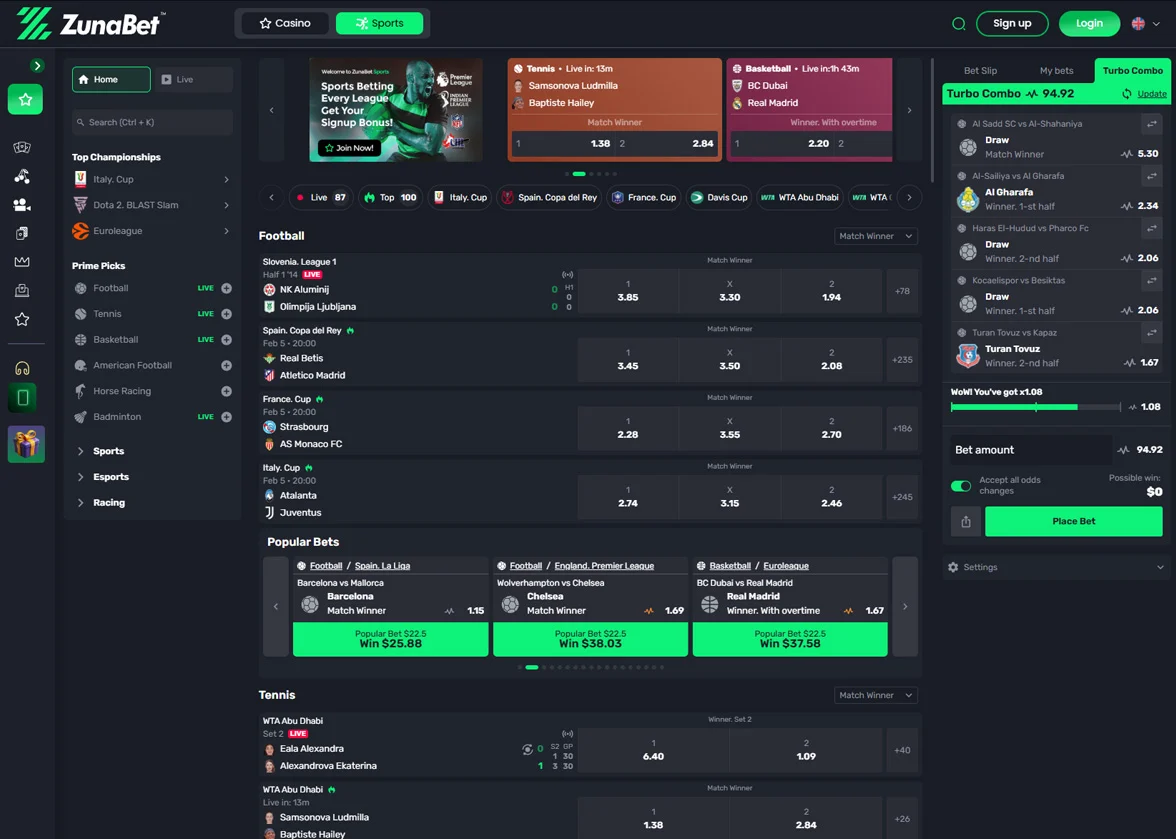
Where ZunaBet stands apart most clearly is payments. The platform supports over 20 cryptocurrencies, including BTC, ETH, USDT across multiple chains, SOL, DOGE, ADA, and XRP. There are no platform processing fees, and withdrawals are fast. For players who already hold crypto, this removes the friction of converting to fiat, waiting for bank processing times, or dealing with card declines that sometimes affect gambling transactions.
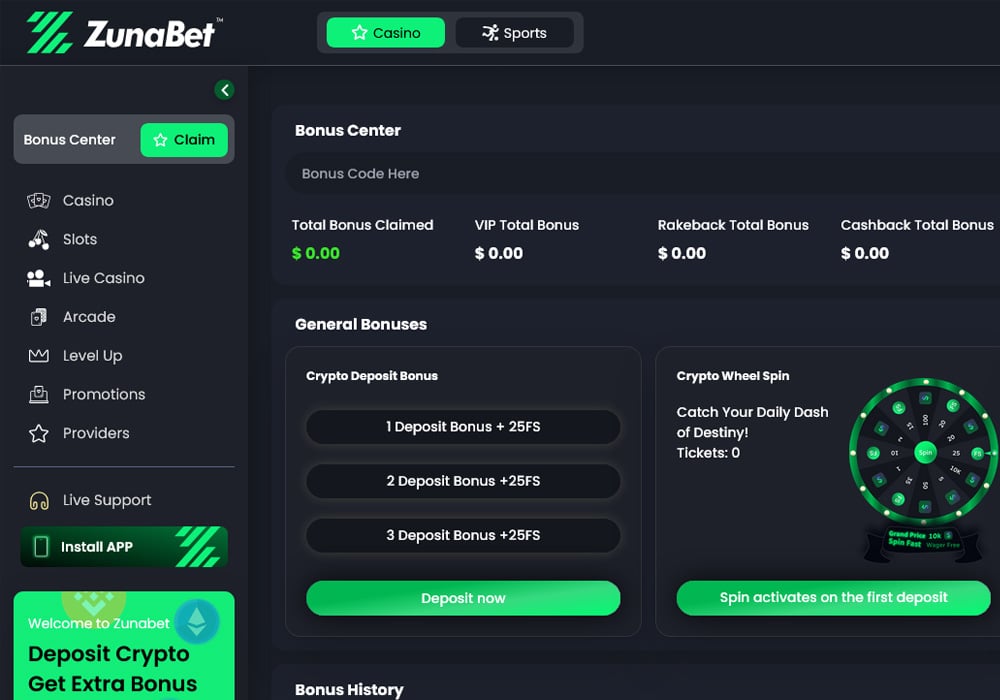
The welcome bonus is significantly larger than what Bet365 or 888casino typically offer. ZunaBet provides up to $5,000 plus 75 free spins spread across three deposits. The first deposit gets a 100% match up to $2,000 plus 25 spins. The second gives 50% up to $1,500 plus 25 spins. The third adds another 100% up to $1,500 plus 25 spins. That total package puts it well above the industry average for welcome offers.
Loyalty Programs: Traditional Tiers vs. Gamified Progression
This is where the philosophical difference between old and new platforms becomes most visible. Bet365 keeps things simple with ad hoc promotions. 888casino uses a tiered VIP system that rewards volume but follows a familiar pattern. Neither platform offers transparent, publicly stated rakeback percentages at each tier.
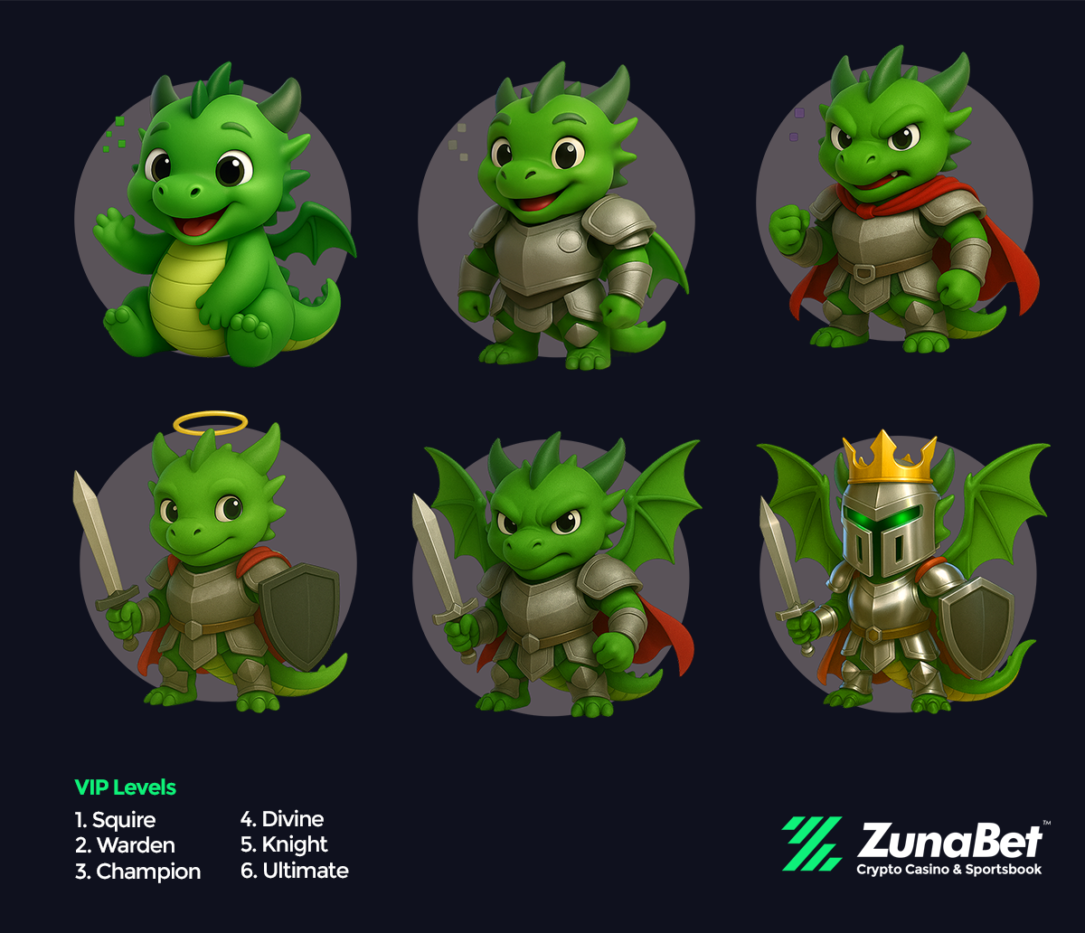
ZunaBet takes a different route with its dragon evolution loyalty system. The program has six tiers — Squire, Warden, Champion, Divine, Knight, and Ultimate — each with a clearly stated rakeback rate. Players start at 1% rakeback and can progress to 20% at the highest level. The program also includes tier-based free spins up to 1,000, VIP club access, double wheel spins, and a gamified mascot called Zuno. It is designed to feel more like progression in a game than a standard rewards program, which appeals to a generation of players who grew up with video games and expect that kind of engagement.
Crypto vs. Traditional Platforms
The broader trend behind ZunaBet’s approach is worth noting. Traditional operators like Bet365 and 888casino built their businesses around fiat currencies, regulated banking systems, and payment processors that come with their own fees and processing times. That model works and has worked for decades.
But crypto-native platforms are growing because they solve specific problems. Transactions are faster. Fees are lower. Players in regions with limited banking access can participate more easily. Privacy preferences are better served. And for the growing number of people who hold cryptocurrency as a primary asset, being able to gamble without converting to fiat is a practical advantage, not just a novelty.
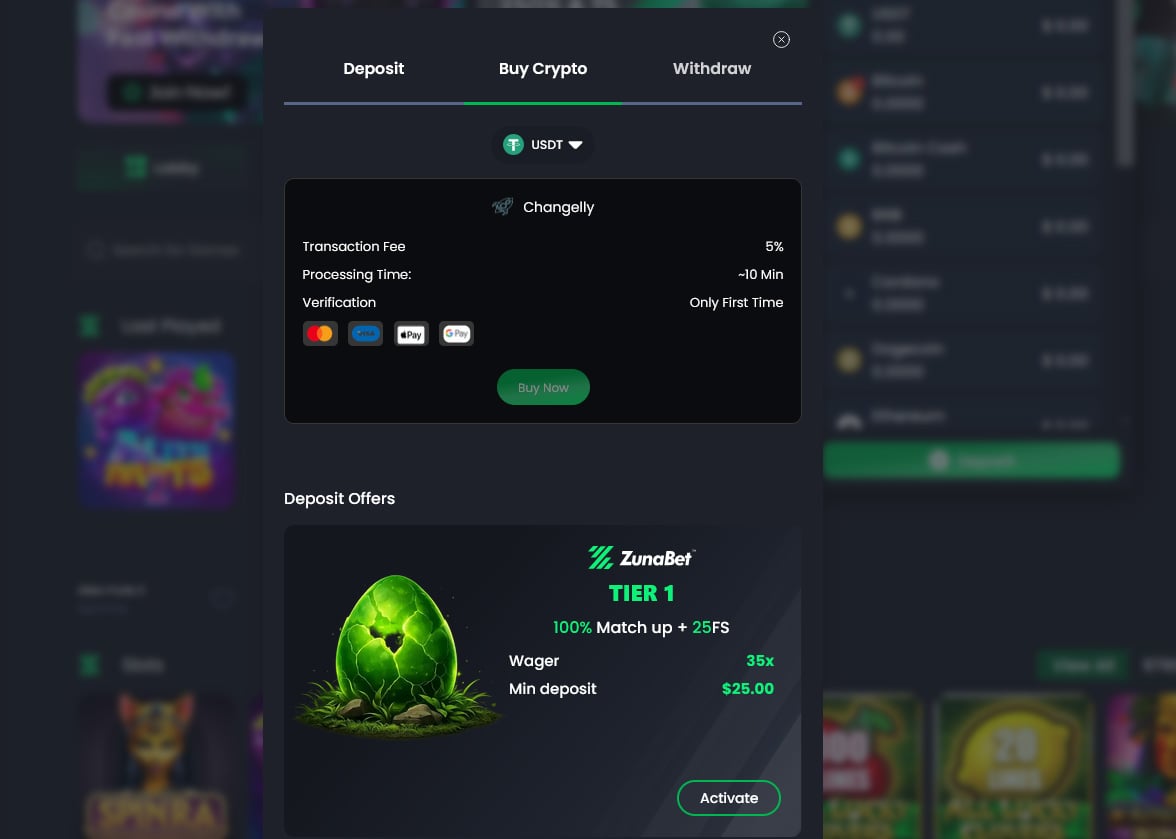
ZunaBet sits squarely in this space. It was not built as a traditional casino that added crypto later. It was designed around crypto from day one, and that shapes everything from its payment infrastructure to its bonus structure to its target audience.
Where Things Stand
Bet365 and 888casino are not going anywhere. They have the licenses, the brand recognition, and the user bases to remain major players for years to come. They serve a broad market and do it well.
But ZunaBet represents something different. It is a platform built for players who want more games, bigger bonuses, transparent loyalty rewards, and the ability to use crypto without friction. With over 11,000 games, a full sportsbook, 20+ supported cryptocurrencies, and a loyalty program that clearly states what you earn at every level, it is positioning itself as the next step in what online casinos can look like.
For a new generation of players who think in crypto, expect gamified experiences, and want transparency in their rewards, ZunaBet is the platform to watch.

Key Takeaways
- Bank of America maintained its Underperform stance on Salesforce (CRM), setting a $160 price target that suggests approximately 8% downside from current trading levels.
- The firm highlighted three primary challenges: sluggish new customer acquisition, constrained expansion opportunities with existing accounts, and questionable AI revenue generation capabilities.
- Shares of CRM began Monday’s session at $173.77, hovering close to the 52-week low of $163.52, reflecting a 25% decline over the last half-year.
- Contrasting with BofA’s pessimistic outlook, the broader analyst community rates CRM as a Moderate Buy with a consensus target of $274.56.
- The company delivered fourth-quarter results exceeding expectations with $3.81 EPS and $11.20 billion in revenue, while authorizing a substantial $25 billion stock repurchase initiative.
Bank of America reaffirmed its Underperform position on Salesforce (CRM) at the start of the week, establishing a $160 price objective — calculated using 9x CY27 EV/FCF — which indicates potential downside of approximately 7.9% from the opening price of $173.77.
Shares of CRM kicked off Monday’s trading session dangerously close to the 52-week bottom of $163.52, after experiencing a substantial 25% pullback throughout the preceding six-month period. The stock currently trades significantly below its 50-day moving average of $184.17.
BofA identified three fundamental concerns driving its bearish thesis: lackluster growth in new customer acquisition, minimal opportunities to expand wallet share with current customers, and what analysts characterized as a questionable AI monetization strategy.
The financial institution perceives Salesforce as evolving from a high-velocity growth company into a mature enterprise focused on cash generation. BofA’s projections anticipate annual revenue growth around the 10% mark moving forward — representing a notable deceleration from the company’s historical expansion trajectory.
However, Salesforce’s underlying business metrics remain solid. The enterprise software giant delivered fourth-quarter earnings of $3.81 per share, surpassing analyst projections of $3.05 by a substantial $0.76 margin. Quarterly revenue reached $11.20 billion, narrowly exceeding the Street’s $11.18 billion estimate and representing 12.1% year-over-year growth.
Wall Street’s Broader Perspective
Bank of America’s bearish position represents a clear outlier. Among 39 analysts tracking the stock, 25 recommend buying, 11 suggest holding, and merely two — including BofA — advocate selling. One analyst has assigned a Strong Buy rating. The average price target stands at $274.56.
Truist Securities affirmed its Buy recommendation with a $280 price objective following the company’s TDX developer conference. Barclays sustained its Overweight rating alongside a $252 target. Jefferies continues to recommend buying the stock, though it reduced its price target from $375 down to $250.
Salesforce has implemented strategic measures to bolster shareholder value. This past March, the board greenlit a $25 billion share buyback authorization, empowering management to repurchase as much as 14.1% of shares outstanding — typically interpreted as leadership’s conviction that shares are trading below intrinsic value.
Director Purchases and Institutional Movements
Two board members executed stock purchases during March. Laura Alber acquired 2,571 shares at an average price of $194.58, while David Blair Kirk purchased 2,570 shares at $194.62. Both transactions represented significant increases to their respective holdings.
Institutional investors control 80.43% of outstanding shares, with multiple funds expanding their positions during the fourth quarter. Brighton Jones grew its stake by 13.7%, while Revolve Wealth Partners increased its holdings by 12.6%.
Salesforce recently reorganized its revenue reporting framework into two distinct segments — Agentforce Apps and Data 360 — mirroring evolution in its product portfolio. The company has also deepened its strategic alliance with Google Cloud to implement AI agents throughout Slack and Google Workspace environments.
Looking toward FY2027, Salesforce has projected EPS ranging from $13.11 to $13.19, with first-quarter guidance between $3.11 and $3.13. Current analyst consensus anticipates full-year EPS of $9.71.
The stock trades at a P/E ratio of 22.25 with a beta of 1.14, maintaining a robust gross profit margin of 77.68% and a conservative debt-to-equity ratio of 0.18.

[PRESS RELEASE – Johannesburg, South Africa, May 18th, 2026]
VALR, Africa’s leading digital asset infrastructure provider, served as diamond sponsor of the Kenya Blockchain & Crypto Conference held in Nairobi on 14 and 15 May 2026.
Peter Mwangi, VALR’s newly appointed Country Manager for Kenya, delivered a keynote address in which he outlined his vision for Kenya as an up-and-coming digital asset hub on the African continent. He drew parallels between the country’s pioneering adoption and development of mobile money and the opportunities in payments, financial inclusion, and infrastructure on the digital asset front. Shelley Havemann, VALR’s Head of Payments, participated in a panel discussion on stablecoins, the future of payments, and VALR’s role in transforming finance.
VALR also hosted a meetup in the capital for business leaders in finance to explore partnership opportunities. These activities underscore VALR’s strategic focus on Kenya and its support for the country’s emerging digital asset ecosystem.
Kenya’s Digital Finance Leadership and Recent Regulatory Progress
Kenya is recognised for its early and pioneering adoption of mobile money, which has driven significant advances in financial inclusion, payments, and broader economic participation across the continent. Recent regulatory developments have strengthened this foundation. The Virtual Asset Service Providers (VASP) Act was enacted in October 2025 and came into force in November 2025. The finalisation of the supporting 2026 VASP Regulations under the Capital Markets Authority establishes a clear licensing and oversight framework. This framework aligns Kenya with international standards, promotes investor protection and responsible innovation, and creates a solid base for digital asset growth. These steps reinforce the vision outlined in Mwangi’s keynote and position Kenya as an increasingly important digital asset market in Africa.

(Peter Mwangi, VALR’s Country Manager for Kenya)
VALR Brings Scale, Infrastructure, and Innovation
Founded in Johannesburg in 2018, VALR quickly grew to become South Africa’s largest crypto exchange by trading volume. It has since developed into Africa’s leading digital asset infrastructure provider. VALR processes more than 15 billion US dollars in stablecoin volumes annually and consistently ranks among the top 10 global minters of USDC. The platform serves over 1.8 million registered users and more than 2,000 corporate and institutional clients, including companies listed on the JSE and Nasdaq.
VALR offers institutional-grade infrastructure, including API integration, multi-account management, governance controls, an OTC desk, staking, lending, borrowing, VALR Pay, and crypto-as-a-service solutions that power other institutions’ offerings. The company also recently launched its AI Service, which features an intuitive chat assistant for market analysis, account insights, and support, together with open API support for autonomous AI agents under the open Agent Skills Standard.
Through its conference participation and Nairobi meetup, VALR is bringing this proven expertise and infrastructure directly to Kenyan institutions and the wider African market. VALR welcomes discussions with Kenyan financial institutions and businesses interested in partnership opportunities.
About VALR
Founded in 2018, headquartered in Johannesburg, and backed by leading investors including Pantera Capital, Coinbase Ventures and Fidelity’s F-Prime Capital, VALR is a global crypto exchange, and the leading digital asset infrastructure provider on the African continent, offering a comprehensive suite of products, including Spot Trading, Spot Margin, Perpetual Futures, Staking, Lending, Borrowing, OTC services, VALR Invest, Crypto Bundles, and VALR Pay. Licensed by South Africa’s FSCA, with regulatory approval in Europe, VALR serves over 1.8 million registered users and 2,000 corporate and institutional clients worldwide. The exchange is dedicated to advancing a just financial future that upholds human dignity and the unity of mankind. For more information, visit valr.com.
The post VALR, Africa’s Leading Digital Asset Infrastructure Provider, Eyes Kenya for Expansion appeared first on CryptoPotato.

Goldman Sachs has reduced exposure to XRP and Solana, according to recent portfolio disclosures. The timing raises an obvious question: is this institutional profit-taking, or something more structural?
Both assets have catalysts on the horizon, but the exit signal from one of Wall Street’s most-watched desks is hard to ignore.
The bank’s exit reflects an institutional shift away from higher-beta altcoins and toward large-cap anchors like BTC and ETH. While XRP’s regulatory overhang has been resolved, SOL’s sharp one-week drawdown of nearly 11% has reignited questions about its dependence on speculative memecoin cycles, even with the Foundation President’s statement on memecoins.
— Solana Community (@SolCommunityy) May 18, 2026
 INSIGHT: Solana Foundation President Lily Liu says, “Memecoins don’t define Solana.” https://t.co/OYMj63YQs4 pic.twitter.com/kSY8jhX9Sc
Neither asset delivered a clear breakout in recent sessions despite windows of opportunity. The data points to a market in transition, with altcoin liquidity thinning and institutional appetite shifting to infrastructure plays closer to Bitcoin’s base layer.
Discover: The best pre-launch token sales
Can XRP and SOL Survive Goldman Sachs Exit?

XRP is holding a narrow range between $1.38 and $1.42, with bulls defending the $1.35 support floor established during recent consolidation. Resistance sits at $1.50, a zone where XRP has stalled repeatedly across the past several weeks.
XRP’s moves remain tightly correlated with altcoin flows rather than any idiosyncratic driver, meaning upside depends heavily on macro risk sentiment flipping positive.

SOL’s picture is sharper and more painful. Down almost 12% on the week, the current $85 level is its last support. A hold there opens a potential rebound toward $95. However, a clean break below $80 would expose prior consolidation zones with limited technical support.
Solana’s roadmap developments, including Alpenglow and MEV design changes, remain longer-term positives, but they do not resolve near-term selling pressure.
Discover: The best crypto to diversify your portfolio with
Bitcoin Hyper Targets Early Mover Upside as XRP and SOL Test Key Levels
When established altcoins face institutional exits and technical stress simultaneously, capital doesn’t disappear; it rotates. SOL’s 12% weekly drawdown and XRP’s range-bound stagnation are exactly the conditions that push active traders to look earlier in the cycle.
Bitcoin’s own price action has been consolidating, but the infrastructure being built on top of it is accelerating.
Bitcoin Hyper is positioning itself at that intersection. The project is the first-ever Bitcoin Layer 2 with Solana Virtual Machine (SVM) integration. It smart contract that executes at Solana-level speeds, secured by Bitcoin’s network.
The pitch is direct: break Bitcoin’s core constraints like slow transactions, high fees, and no programmability, without sacrificing its trust model. The presale has raised more than $32.7 million to date, with $HYPER currently priced at $0.01368. Staking is live alongside the presale buy option at the current rate of 35% APY.
Bitcoin Hyper presale details are available here.
The post Goldman Sachs Dumps XRP and SOL: Altcoins Market Could Crash appeared first on Cryptonews.
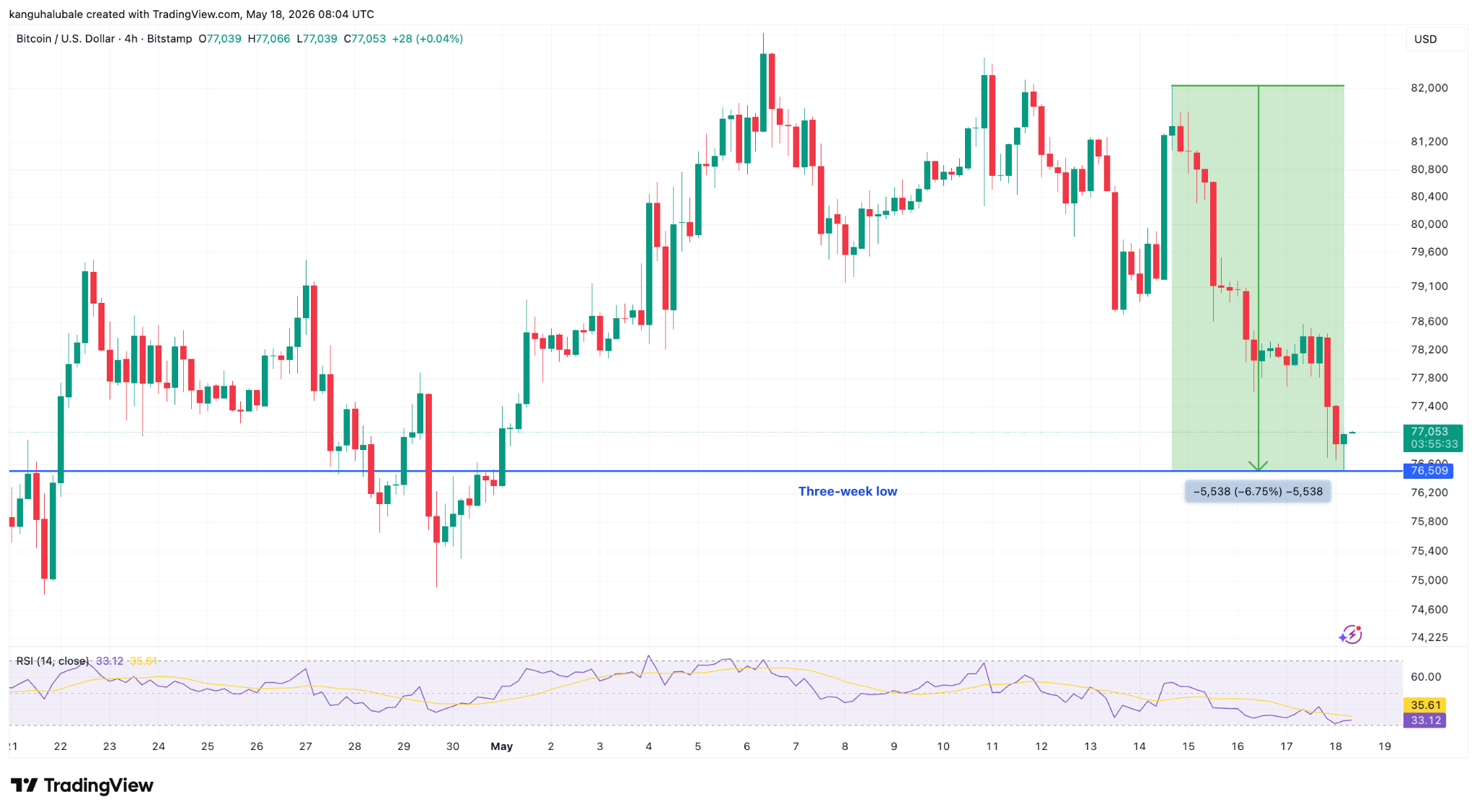
Bitcoin (BTC) dropped to $76,000 during the early Asian trading hours on Monday as US-Iran tensions resurfaced.
Key takeaways
- Bitcoin falls to $76,500 as bearish momentum becomes increasingly tied to geopolitical developments.
- Over $607 million in long positions have been liquidated in the last 24 hours.
- Bitcoin traders say support at $76,000 should hold to avoid a BTC price drop to $65,000.
Bitcoin hits three-week lows with 7% drop
Data from TradingView showed BTC price dropped as much as 7% over the last three days to three-week lows of $76,500, erasing all the gains made since May 1.
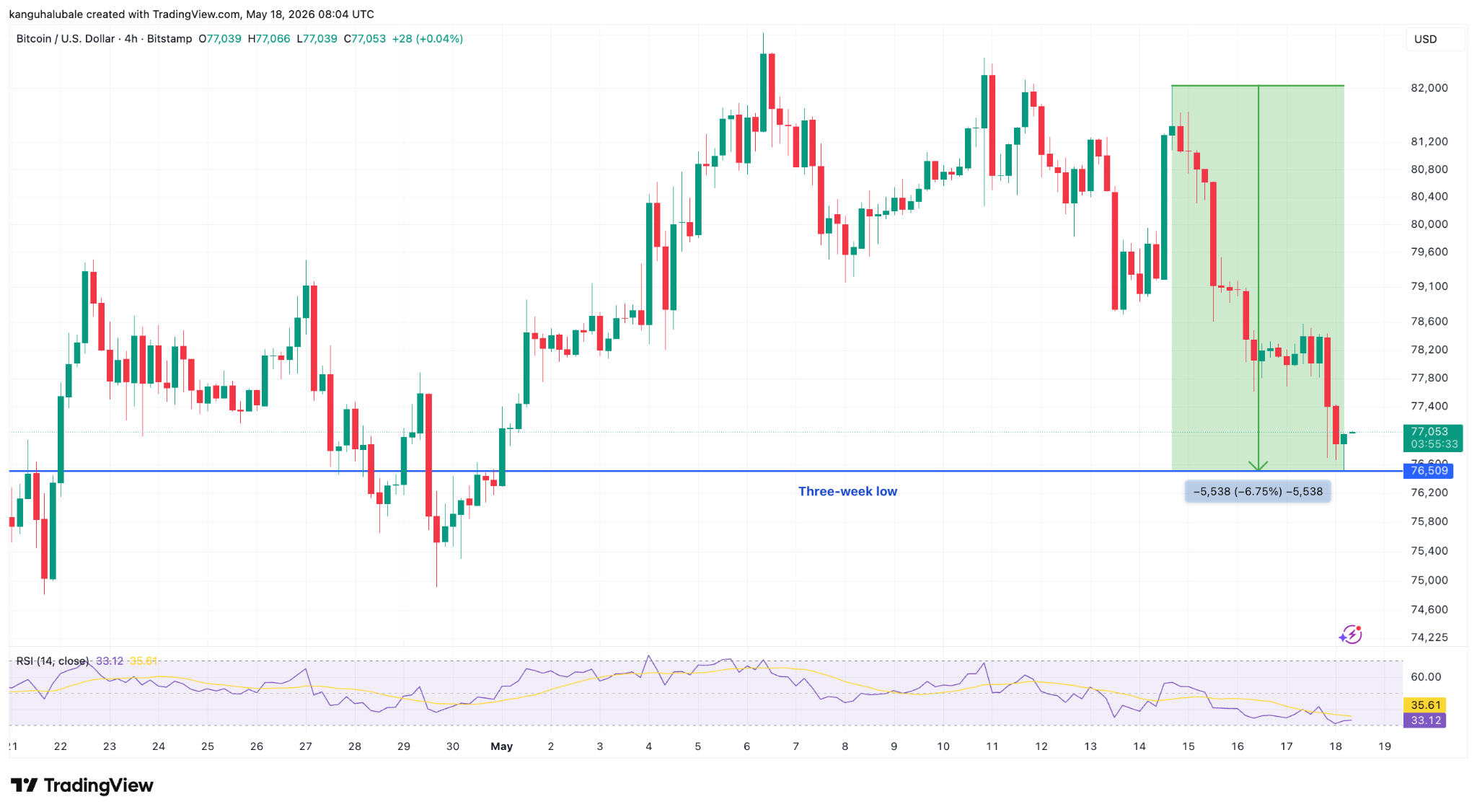
BTC/USD one-hour chart. Source: Cointelegraph/TradingView
The losses come just days after BTC/USD reached 13-week highs around $83,000, boosted by strong inflows into spot exchange-traded funds and optimism surrounding the US CLARITY Act.
Related: BTC price ‘bull trap’ at $76.5K? Five things to know in Bitcoin this week
On Sunday, however, US President Donald Trump issued fresh threats against Iran regarding delays in the peace agreement, warning that the “clock is ticking.”
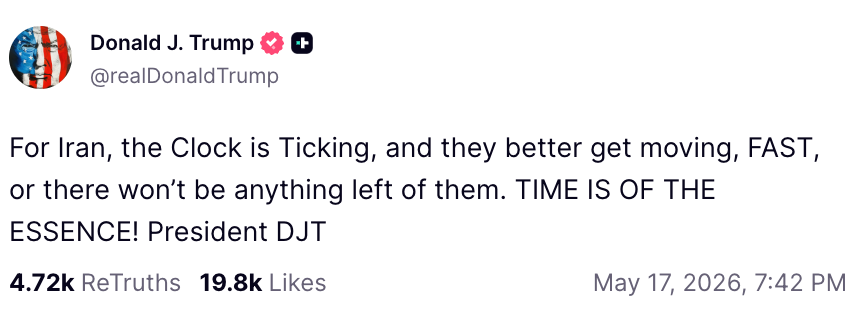
Source: TruthSocial/Donald J. Trump
“Trump confirms the clock is ticking for Iran. The US is allegedly preparing for a potential new military operation against Iran,” analyst CryptoRover said in a Monday post on X, adding:
“This is extremely dangerous for $BTC.”
The move in Bitcoin was accompanied by $607 million in long liquidations over the last 24 hours, with BTC long liquidations accounting for $190 million.
This brought the total liquidations across the crypto market over the last 24 hours to $677 million.
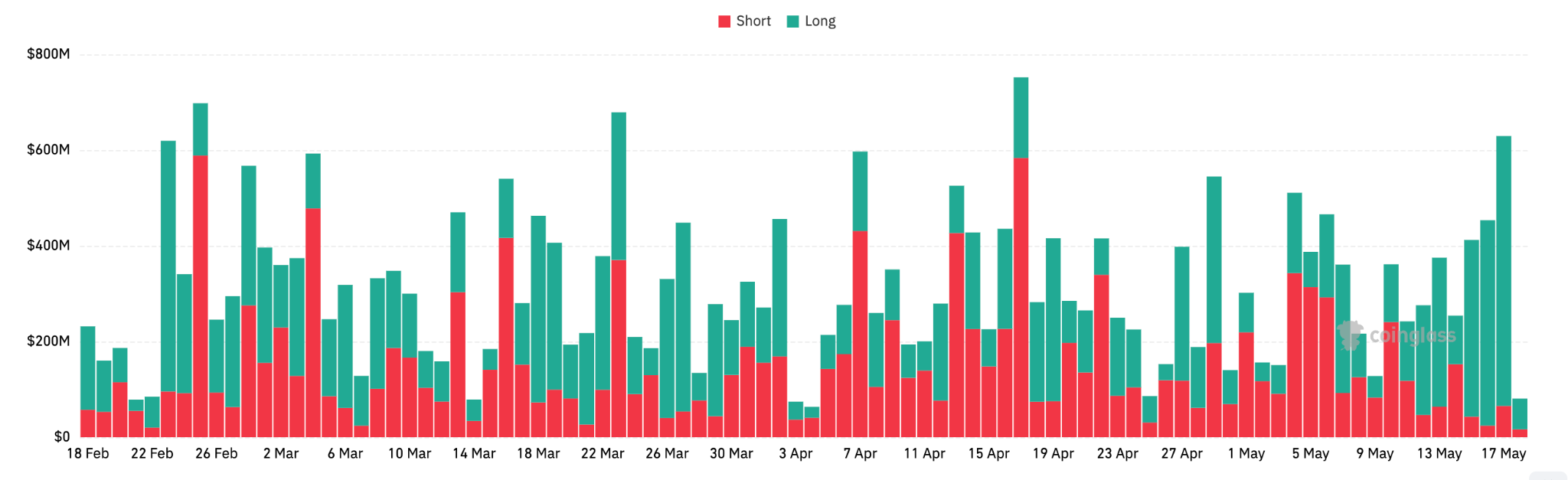
Total crypto liquidation across all exchanges. Source: CoinGlass
Oil also saw volatility, with WTI rising over 3% in a matter of hours to $104 per barrel before correcting to $101.
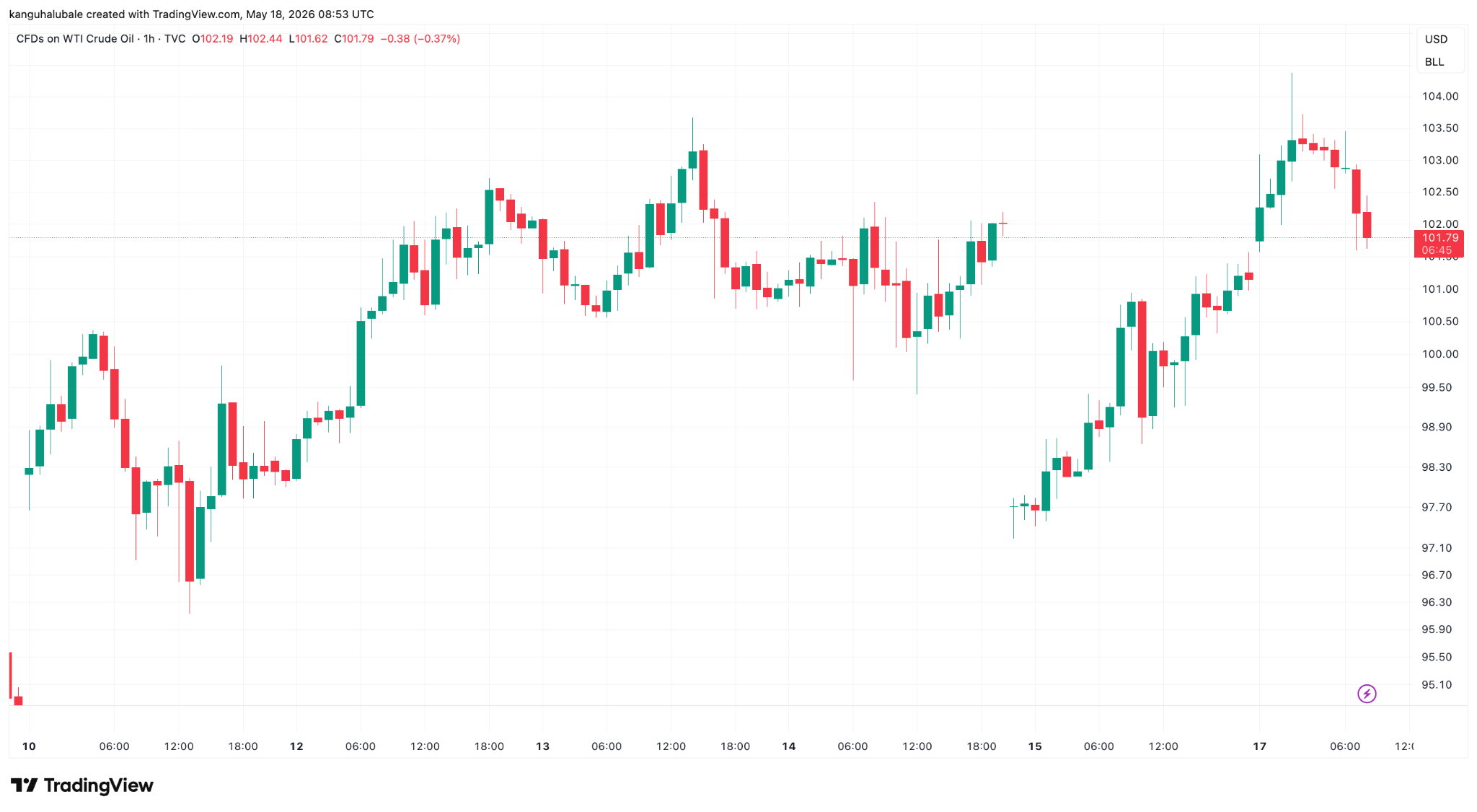
CFDs on WTI crude oil one-hour chart. Source: Cointelegraph/TradingView
“WTI surged above $103 as Trump publicly lost patience with stalled peace talks and a waiver for Russian crude sales expired, adding to supply fears around the still-disrupted Strait of Hormuz,” trading resource Capital.com said in a Monday X post, adding:
“Higher oil means hotter future inflation, reinforcing higher-for-longer Fed expectations and lifting both the dollar and yields — a tough combination.”
Bitcoin traders say bears “back in the driver’s seat”
Bitcoin traders, meanwhile, looked at the technical setup for clues as to where the price might head next.
Analyst CryptoJelleNL said that a bearish divergence from the relative index as BTC/USD ran into resistance at $82,000 was responsible for the “pullback we’re in right now,” adding:
“Bears getting back in the driver’s seat?”
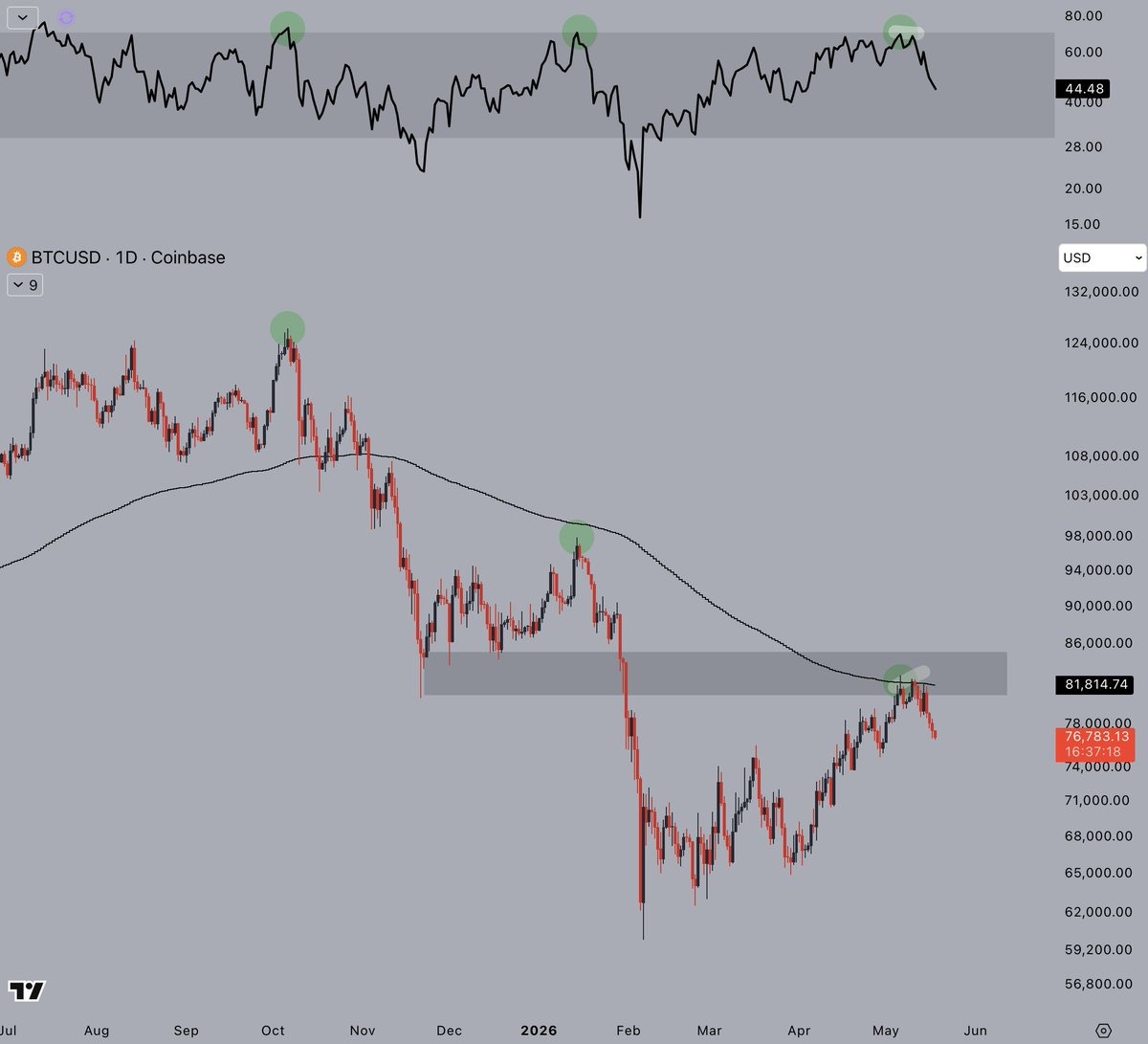
BTC/USD daily chart. Source: X/CryptoJelleNL
MN Capital founder Michael van de Poppe said immediate support at $76,000 should hold to “prevent a market-wide crash.”
An accompanying chart showed other support levels to watch if this area is lost, including the $71,000-$73,000 demand zone and the local low at $65,000.
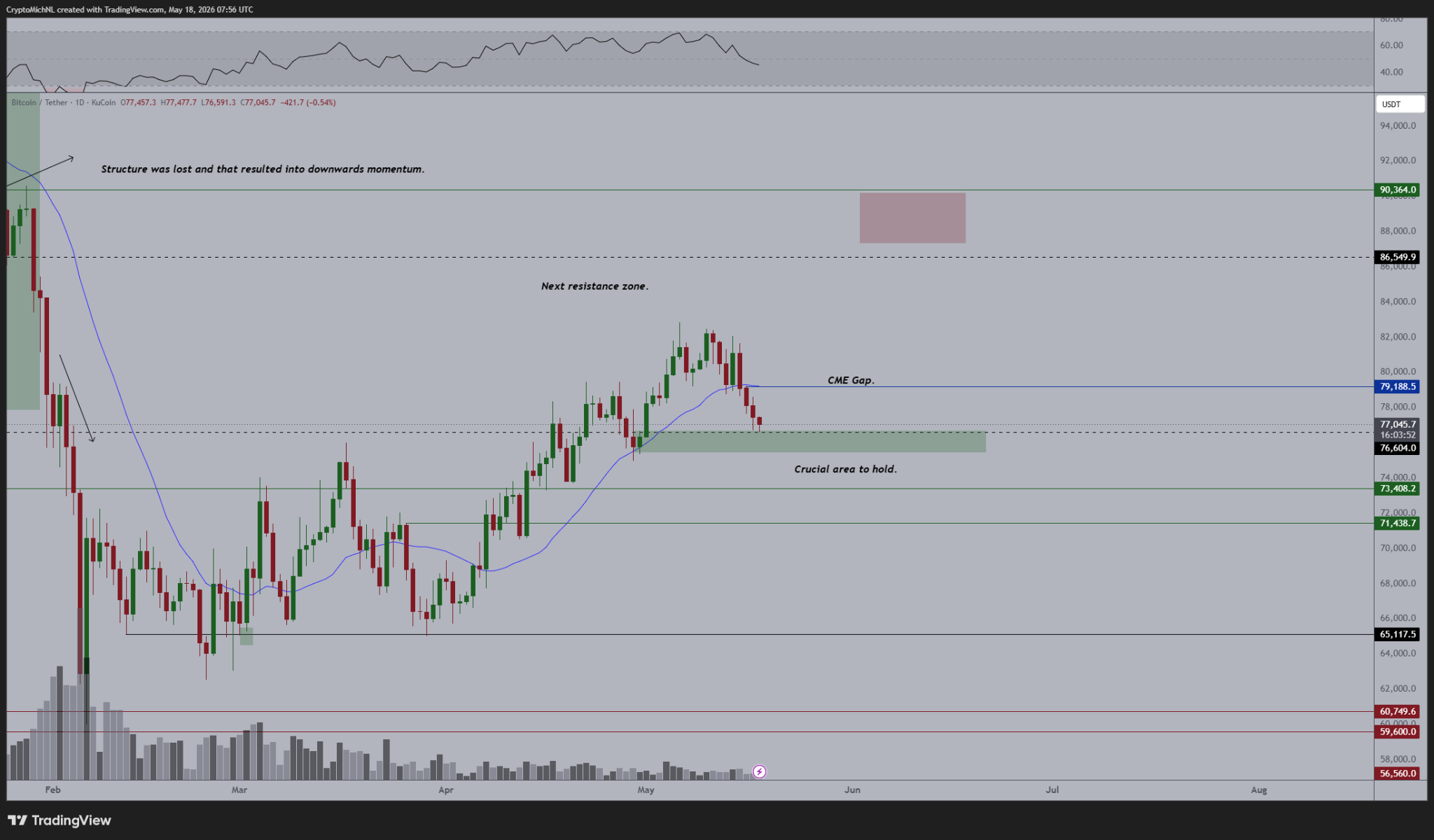
BTC/USD chart. Source: X/Michael van de Poppe
The local low at $65,000 coincides with the target of an inverted V-shaped pattern, as shown on the daily chart below. This represents a 16% drop from the current price.
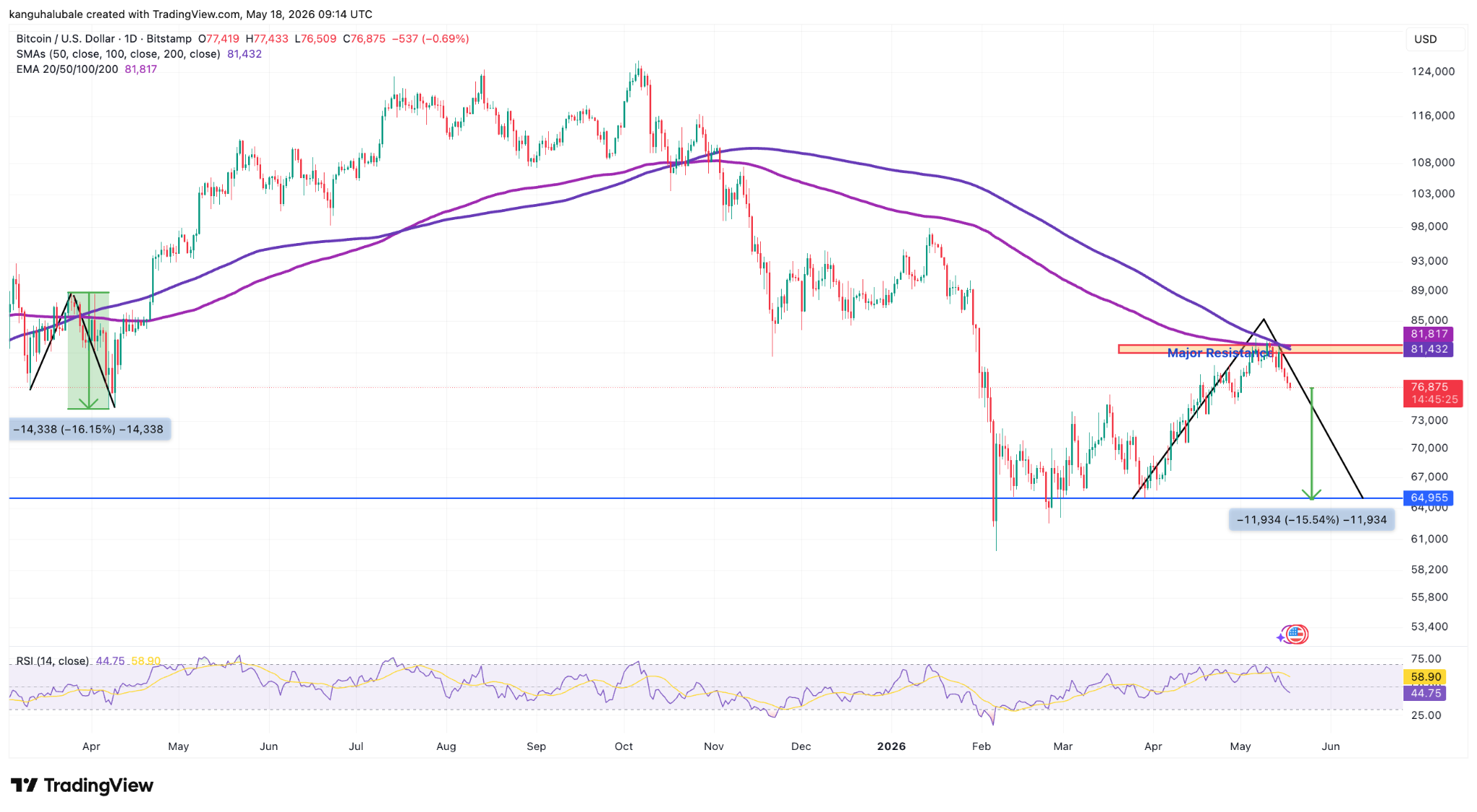
BTC/USD daily chart. Source: Cointelegraph/TradingView
Note that the BTC/USD pair experienced a similar sharp correction of the same magnitude after being rejected by the 200-day moving averages in April 2025.

Key Highlights
- Ford shares rallied 6.9% in premarket hours Monday, rebounding from Friday’s 7.5% decline
- Ford Energy secured a five-year agreement with EDF Group for battery storage systems totaling up to 20 gigawatt-hours
- The automaker unveiled seven new European models through 2029, including five consumer vehicles and two commercial offerings
- Ford Pro’s global software subscription base reached 879,000 in Q1 2026, marking a 30% annual increase
- UBS maintained its Buy recommendation with a $14 target price, while reducing its 2027 earnings projection by approximately 10%
Ford shares surged 6.9% during premarket hours Monday, staging a sharp recovery following Friday’s 7.5% decline. The rally was fueled by two distinct announcements — one of which didn’t involve automobiles at all.
The company’s recently established energy division, Ford Energy, announced a framework agreement with French energy giant EDF Group to deliver up to 20 gigawatt-hours of battery energy storage systems across a five-year period. Initial deliveries are slated to begin in 2028.
Ford Energy focuses on serving utility-scale operations, data centers, and commercial and industrial clients across the United States. This EDF partnership represents a significant milestone for the newly launched division, providing its first substantial commercial foundation.
On the vehicle front, Ford revealed its European product roadmap featuring seven new models arriving by the end of 2029. The announcement came during a dealer and partner event held in Salzburg, Austria.
The lineup includes five consumer vehicles: a compact SUV from the Bronco family to be manufactured in Valencia beginning 2028, a pair of small electric vehicles, and two crossover models. Each of these five offerings will feature multiple powertrain configurations, including hybrid and electric alternatives.
Ford Pro Strengthens European Commercial Position
The two additional models belong to the Ford Pro commercial vehicle portfolio. The Ranger Super Duty boasts a payload capacity approaching 2 tonnes and towing capability of up to 4.5 tonnes. The Transit City represents a fully electric urban delivery van, scheduled for release later this year with an estimated range of 254 kilometers.
Ford Pro has maintained its leadership position in the European commercial vehicle market for 11 straight years. The division currently serves 1.2 million connected customers, generating approximately six million vehicle health data points each day.
The company introduced new Dealer Uptime Services designed specifically for small business customers. Initial pilot programs demonstrated repair time reductions of up to 50%, with 80% of maintenance issues identified proactively before escalating into major problems.
Software Revenue Gaining Momentum
Ford’s worldwide paid software subscription count climbed to 879,000 during Q1 2026, representing a 30% year-over-year increase. This business segment is generating gross margins above 50%.
The automaker aims for software and services to contribute 25% of Ford Pro’s operating income. This represents a significant strategic evolution for a company still navigating its path to profitability — Ford recorded a negative EPS of $1.53 over the trailing 12 months.
Market analysts anticipate a turnaround this year, with consensus estimates projecting an EPS of $1.64 for 2026.
Ford recently expanded its employee pricing incentive to all U.S. consumers through July 6, applicable to most 2025 and 2026 Ford and Lincoln vehicles.
In related news, Chinese automotive manufacturer Geely has acquired a portion of Ford’s Almussafes manufacturing facility in Valencia, Spain, with potential plans to produce a Ford vehicle model at the location.
UBS reaffirmed its Buy rating on Ford shares after conducting a tour of the company’s EV Development Center located in Long Beach, California. The firm established a $14 price objective, reduced from $15, attributing the adjustment to elevated commodity costs impacting its 2027 profitability forecast.
Ford stock has gained 18% during May, positioning it for its strongest monthly showing since 2023.
Crypto World
Ondas (ONDS) Stock Climbs After Announcing Acquisition of Israeli AI Defense Firm Omnisys

Key Highlights
- Ondas (ONDS) announced a definitive agreement to purchase 100% of Omnisys, an Israeli firm specializing in AI-driven Battle Resource Optimization (BRO) software.
- The BRO platform boasts a 25-year operational history and has been validated in large-scale combat environments.
- This strategic move will introduce a high-margin software component to Ondas’ portfolio while strengthening its footprint in international defense sectors.
- Omnisys’ BRO technology will merge with Ondas’ current infrastructure to establish a comprehensive “sense-decide-orchestrate-act” operational model, working in tandem with the SkyWeaver AI system.
- Shares of ONDS traded 1.5% higher in premarket hours after the deal was disclosed.
Ondas (ONDS) announced its intention to acquire Omnisys, an Israeli developer of AI-enhanced battlefield management software, marking a significant expansion into software-centric defense solutions.
Shares of ONDS increased 1.5% during premarket trading following the announcement.
Omnisys develops Battle Resource Optimization (BRO) software, a platform designed to assist military forces in mission planning, resource distribution, and executing time-sensitive decisions across various combat theaters simultaneously.
With a quarter-century of operational experience, Omnisys claims its BRO platform has been successfully implemented in sophisticated defense scenarios worldwide, including intricate multi-tier air defense operations.
Eric Brock, CEO of Ondas, characterized BRO as a “proven, battle-tested software platform” that adds substantial value by enhancing both mission planning and live operational execution in multi-domain settings.
The transaction involves acquiring complete ownership of Omnisys. Ondas submitted a Form 8-K filing to the SEC detailing the acquisition agreement’s specifics.
Integration with Current Ondas Technology
The BRO platform will complement Ondas’ existing SkyWeaver AI technology, functioning as an orchestration and optimization component.
When combined, these platforms are designed to deliver what Ondas describes as a “sense-decide-orchestrate-act” operational framework — supporting intelligence, surveillance, reconnaissance, strike missions, electronic warfare, counter-unmanned aircraft systems, and air defense capabilities.
Ofer Yarden, CEO of Omnisys, expressed enthusiasm about leveraging Ondas’ worldwide presence to introduce BRO technology into global defense markets outside of Israel.
The vendor-neutral architecture of BRO enables compatibility with diverse defense systems and infrastructure, independent of specific hardware dependencies.
Strategic Rationale Behind the Acquisition
Ondas has been systematically expanding its autonomous systems capabilities, incorporating ISR platforms, counter-UAS technologies, and comprehensive defense solutions.
Incorporating a revenue-generating, software-centered business with attractive profit margins aligns perfectly with this strategic direction.
According to Ondas, BRO will function as a “core orchestration layer” throughout its expanding product lineup — integrating sensors, platforms, and effectors into a unified operational ecosystem.
The system employs AI algorithms and advanced operations research techniques to produce real-time tactical options throughout the entire mission spectrum, from initial planning stages to post-operation assessment.
Oshri Lugassy, Co-CEO of Ondas Autonomous Systems, emphasized that BRO facilitates “true closed-loop operations” — an architecture where threat identification, decision processes, and responsive actions occur within a single integrated network.
Ondas further noted that this acquisition reinforces its expansion into American and allied defense markets while fast-tracking its transition toward fully integrated, software-defined defense ecosystems.


Iran launched Hormuz Safe, a state-backed Bitcoin-settled maritime insurance platform for cargo transiting the Strait of Hormuz.
The move lets sanctioned shippers pay premiums in crypto for instant digital coverage, potentially unlocking billions in new revenue while deepening crypto’s role in global energy trade.
Iran’s Bitcoin Insurance Bets Big on Hormuz Risk
Iran’s Ministry of Economic Affairs and Finance rolled out the platform around May 16-18, 2026. Coverage activates immediately upon Bitcoin confirmation, delivering a signed digital receipt to owners.
“Hormuz Safe provides Iranian shipping companies and cargo owners with fast, verifiable digital insurance — paid via Bitcoin and settled at the speed of the blockchain,” the official site states.
Follow us on X to get the latest news as it happens
$10 Billion Revenue Target Amid Sanctions
Iranian officials project more than $10 billion in annual revenue if the service captures a meaningful share of insurance for traffic through the world’s critical oil chokepoint, which handles roughly 20% of global seaborne crude.
The platform focuses initially on Iranian entities but signals broader ambitions for Persian Gulf operators seeking alternatives to Western insurers restricted by sanctions.
Crypto as Sanctions Lifeline
By settling in Bitcoin and other cryptocurrencies, Hormuz Safe bypasses traditional banking rails and SWIFT. This fits Iran’s ongoing strategy to monetize its strategic waterways while reducing dollar dependence.
The Strait remains a high-risk zone, where insurance costs have spiked due to geopolitical tensions. Hormuz Safe offers a crypto-native workaround.
The official website hormuzsafe.ir remains under construction but promises full details soon.
Global shipping firms and regulators will watch closely for adoption, compliance risks, and potential U.S. secondary sanctions responses.
Success could accelerate crypto integration in maritime trade and set a precedent for other sanctioned nations.
Subscribe to our YouTube channel to watch leaders and journalists provide expert insights
The post Iran Launches Bitcoin Insurance for Strait of Hormuz Shipping appeared first on BeInCrypto.

KB Financial Group, the parent company of South Korea’s largest bank, KB Kookmin, completed a stablecoin pilot for offline payments and cross-border remittances through the Kaia blockchain.
KB tested the lifecycle of a South Korean won-denominated stablecoin, including issuance, merchant settlement and remittances, with Kaia, electronic payments company KG Inicis and fintech firm OpenAsset, local outlet Yonhap reported.
The stablecoin pilot adds to the growing list of legacy financial institutions in South Korea experimenting with stablecoins. In late April, one of the nation’s largest credit card providers, Shinhan Card, signed a memorandum of understanding with the Solana Foundation to test stablecoin payments.
KB Kookmin is South Korea’s largest bank with over 584.9 trillion won ($266.7 billion) in total assets, according to the bank’s factbook for the fourth quarter of 2025.

Source: Kaia
Stablecoin test reduced remittance fees by 87%
As part of KB Financial’s experiment, a won stablecoin was converted into a US dollar stablecoin and delivered to a bank account in Vietnam.
The full transfer was completed in under 3 minutes, with an 87% fee reduction compared to the same transaction executed through the SWIFT network, a Kaia spokesperson told Cointelegraph in an email.
The SWIFT network is the messaging network for international payments used by thousands of banks and financial institutions worldwide.
The offline payment test was executed through Seoul-based coffee franchise Hollys, enabling users to pay through QR codes, without needing to install a cryptocurrency wallet.
Related: Vietnam eyes Q3 launch for regulated crypto asset market: Report
KB plans stablecoin services launch after regulations take effect
KB is reportedly preparing to launch stablecoin services once digital asset regulations are established in the country.
But the country’s proposed Digital Asset Basic Act has repeatedly stalled due to disagreements between regulators over who should be allowed to issue stablecoins.
The Bank of Korea, the nation’s central bank, has argued that banks should retain majority ownership of stablecoin issuers, while the Financial Services Commission warned that strict limitations could slow innovation.
Formal deliberations are unlikely to resume before South Korea’s June local elections.
Magazine: Singapore isn’t a ‘crypto hub’ — it’s something better: StraitsX CEO


The blockchain bridge connecting the Verus and Ethereum networks has been exploited for over $11 million.
One of eight bridge hacks so far this year, this latest incident brings the running total of funds lost to almost $329 million.
DeFiLlama data shows Verus as the 58th largest blockchain by total-value-locked ($22 million); its website promises “security without the audits.”
In addition to the hack, Verus’ blockchain explorer shows block production stopping approximately 12 hours ago.
According to a screenshot posted by the Verus X account, the network halt is due to “most block-generating nodes taking themselves offline” following the attack.
Read more: DeFi projects lose $6M in fresh string of exploits this week
Blockchain security monitoring platform Blockaid, which flagged the loss, suspects that the root cause is similar to the 2022 hacks of the Wormhole and Nomad bridges.
The firm explains that three of the bridge’s verification steps worked correctly, but it failed to check that the parameters of the source chain transaction matched the payouts on Ethereum.
It estimates the vulnerability, which cost the attacker just $10 to exploit, is mitigated by 10 lines of code.
The hacker’s address on Ethereum received ETH, as well as tBTC and USDC, which were swapped to ETH.
Keep up to date on the day-to-day of crypto hacks with Protos’ new hack tracker, which has 79 entries since the beginning of 2026.
Read more: Crypto hackers snatch over $1B in 68 incidents this year
Troubled waters
Multi-million dollar bridge hacks were once the scourge of the crypto industry.
In 2022, a particularly bumper year, hacks of Qubit, Wormhole, Ronin, Harmony, Nomad and BNB bridges raked in a combined total of $1.9 billion. Of these, all but Ronin and Harmony were smart contract exploits.
In recent years, however, attackers have mostly moved onto new vectors to secure the biggest paydays.
Bridge exploits have been replaced by complex social engineering and supply-chain compromises, a speciality of the DPRK-linked Lazarus Group. Such schemes have been responsible for hefty losses from Bybit ($1.4 billion), and Drift Protocol ($280 million).
Crypto audit firm Peckshield estimates that the Versus incident brings the total lost to bridge hacks so far in 2026 to almost $329 million.
Read more: DeFi sector in $14B meltdown as $290M rsETH hack fallout burns Aave
The losses are dominated by a single incident, April’s $290 million rsETH hack, with fallout affecting the entire DeFi sector.
Other notable incidents this year include Hyperbridge’s $2.5 million loss, which came just days after joking about being hacked for April Fools’ Day, and Friday’s $10 million hack of THORChain, which has repeatedly faced criticism itself for inaction over its use to launder illicit funds.
Got a tip? Send us an email securely via Protos Leaks. For more informed news and investigations, follow us on X, Bluesky, and Google News, or subscribe to our YouTube channel.

Debenhams Maxi Dress Collection for Women

Rivals Season 2: Bristol ‘integral’ to television show’s success, says Disney boss

Established Leaders and the Growth of ZunaBet

Manchester United reach agreement with Casemiro over contract clause amid transfer speculation

US brings back mandatory military draft registration

Steven Gerrard disagrees with Gary Neville over ‘shock’ Chelsea and Arsenal claim | Football

The 5 Secrets We’ve Learned in 50 Years of Financial Planning

Crypto Trading Ban in Pakistan? New Regulations & Risks for Investors | Pakistan News

BIGGEST XRP Inflows EVER! Senate Drops Bombshell Clarity Act Draft IT’S NOT GOOD!
-
 Crypto World3 days ago
BloFin War of Whales 2026 Grand Prix opens registration for $5M trading championship
-

 Fashion3 days ago
Weekend Open Thread: Theory – Corporette.com
-

 Crypto World3 days ago
E-Estate Announces 1 Year Live: Washington DC Summit as Real Estate Tokenization Enters Its Next Phase
-

 Fashion7 days ago
Coffee Break: Travel Steam Iron
-

 Politics7 days ago
What to expect when you’re expecting a budget
-

 Tech3 days ago
Tech Moves: Microsoft AI leader jumps to OpenAI; former AI2 exec joins Meta; and more
-
Crypto World5 days ago
Bitcoin Suisse expands with Digital Asset License and Investment Business Act Registration Approval in Bermuda
-

 Tech7 days ago
GM agrees to $12.75M California settlement over sale of drivers’ data
-

 Politics6 days ago
Pakistan to enter Chinese capital market as war inflation bites
-

 Crypto World6 days ago
Bitcoin Suisse expands with Digital Asset License and Investment Business Act Registration Approval in Bermuda
-
 Crypto World4 days ago
Google’s Gemini AI Predicts Incredible Solana Price by the End of 2026
-

 Business3 days ago
H&R Real Estate Investment Trust (HR.UN:CA) Q1 2026 Earnings Call Transcript
-

 Tech3 days ago
Google reimburses Register sources who were victims of API fraud
-

 Sports3 days ago
Napoleonic enters 2026 Doomben 10,000 field via Abounding withdrawal
-

 Politics7 days ago
The geopolitics behind the UK’s South Atlantic hantavirus rescue mission
-

 Politics7 days ago
The Board of Deputies just smeared Polanski to suck up to Farage
-

 Fashion6 days ago
The Best-Kept Makeup Secret for a More Defined Face
-

 NewsBeat6 days ago
Comment on Keir Starmer surviving the day as Prime Minister like a turd that wont flush
-
 Entertainment4 days ago
Zara Larsson Has Blunt Response To Chris Brown Diss
-
 Tech5 days ago
Why AI is making typography a boardroom conversation
You must be logged in to post a comment Login