

Crypto World
Revenue Is the New Narrative


For years, the crypto industry has been driven by narratives.
From ICOs and DeFi Summer to NFTs, GameFi, the Metaverse, AI tokens, and memecoins, markets have repeatedly chased stories that promised future growth. Capital flowed toward attention, speculation, and potential rather than measurable business performance.
But the industry is evolving.
As crypto matures, a new narrative is emerging—one that may prove more durable than any trend cycle before it:
Revenue is the new narrative.
The Shift From Hype to Fundamentals
In traditional finance, companies are often evaluated based on revenue, profitability, cash flow, and long-term sustainability. Crypto, however, spent much of its early history prioritizing network growth, token distribution, and community expansion over actual economic output.
This approach made sense during the industry’s formative years. Protocols needed users, developers, liquidity, and network effects before they could focus on monetization.
Today, many blockchain networks have achieved scale. The question investors are increasingly asking is no longer:
“How many users does this protocol have?”
Instead, they are asking:
“How much value does this protocol generate?”
This subtle shift represents one of the most important transitions in digital asset markets.
Why Revenue Matters
Revenue demonstrates that a product solves a real problem for real users.
When individuals or institutions repeatedly pay fees to use a protocol, it creates tangible economic activity rather than speculative demand alone.
Revenue-generating protocols often possess:
- Sustainable business models
- Strong product-market fit
- Loyal user bases
- Defensible network effects
- Long-term growth potential
While revenue does not guarantee success, it provides a measurable signal that users find value in a platform’s services.
In an industry often criticized for speculation, revenue offers a foundation grounded in actual utility.
The Rise of On-Chain Businesses
One of crypto’s most fascinating developments is the emergence of fully on-chain businesses.
Decentralized exchanges generate trading fees.
Lending protocols earn interest spreads.
Infrastructure networks collect usage fees.
Stablecoin issuers generate treasury income.
Prediction markets monetize information flows.
Tokenized asset platforms create revenue from issuance and management services.
These businesses operate globally, transparently, and continuously, often with financial metrics visible in real time.
Unlike traditional companies that report earnings quarterly, blockchain protocols frequently provide open access to their economic performance.
This transparency allows investors to evaluate projects using objective data rather than relying solely on marketing narratives.
Revenue and Token Valuation
The growing focus on revenue is also changing how market participants evaluate tokens.
Historically, token valuations often depended on future expectations:
- Potential adoption
- Partnership announcements
- Ecosystem growth
- Narrative momentum
Today, investors increasingly examine:
- Protocol revenue
- Fee generation
- Treasury growth
- Token buyback mechanisms
- Value accrual models
- Economic sustainability
Projects that successfully connect protocol revenue to token holder value may attract greater long-term investor confidence.
As markets become more sophisticated, financial performance is becoming a larger component of token analysis.
The Era of Productive Capital
Another reason revenue is gaining importance is the changing nature of capital allocation.
During periods of abundant liquidity, speculative assets can thrive regardless of fundamentals.
As markets mature, however, investors become more selective.
Capital increasingly flows toward protocols that generate measurable economic activity rather than simply promising future growth.
This creates a feedback loop:
Strong products generate revenue.
Revenue attracts investors.
Investment funds expansion.
Expansion generates additional revenue.
Protocols capable of sustaining this cycle may become the dominant digital businesses of the next decade.
Beyond Revenue: Quality Matters
Not all revenue is created equal.
Sophisticated investors look beyond headline figures to evaluate:
- Revenue consistency
- User retention
- Revenue diversification
- Organic demand
- Cost efficiency
- Long-term scalability
A protocol that earns sustainable revenue from loyal users may ultimately outperform one that generates larger but highly volatile fee streams.
The quality of revenue is becoming just as important as the quantity.
What This Means for Crypto’s Future
The rise of revenue-focused investing signals a broader maturation of the digital asset industry.
Crypto is gradually transitioning from an experimental ecosystem driven primarily by narratives into an industry increasingly evaluated through business fundamentals.
Narratives will never disappear. Stories remain powerful drivers of innovation and capital formation.
However, the strongest narratives of the future may be those supported by measurable economic performance.
In the years ahead, attention alone may no longer be enough.
Protocols will need users.
Users will need products.
And products will need revenue.
The next generation of crypto winners may not simply be the projects with the loudest communities or the strongest narratives.
They may be the projects that generate real value, serve real customers, and produce sustainable revenue at scale.
Because in an increasingly mature digital economy, revenue is no longer just a metric.
Revenue is the narrative.
REQUEST AN ARTICLE


A former Goldman Sachs analyst just put a $1,000 price target on XRP by 2030. XRP is currently trading around $1.20, down 3.5% over 24 hours, but also the whole market as we wait for FOMC.
Dom Kwok, co-founder of Web3 education platform EasyA and a former Goldman Sachs analyst, told The Rollup podcast: “I think it could go over $1,000 in the next four to five years.”
His thesis centers on mass crypto adoption routing through XRP rather than Bitcoin or Ethereum, arguing that new retail entrants are priced out of the larger-cap assets and will default to cheaper, more practical alternatives.
This target sits orders of magnitude above the institutional consensus band of $3–$20. On-chain, wallets holding at least one million XRP now control 74.1% of the total supply, with those large holders adding 1.53 billion tokens over the past six months, accumulating at a scale.
Simultaneously, easing U.S.-Iran tensions lifted risk appetite, pushing Bitcoin toward the mid-$60,000s and pulling XRP along.
Discover: The Best Crypto to Diversify Your Portfolio
Can XRP Price Hit $1,000, Or Even $10, Before 2030?
At $1.20 with a weekly green candle of 8%. XRP is in a corrective phase, but the technical structure hasn’t broken down. RSI sits near 62, constructive, not overbought. A recent 3-day MACD bullish cross remains intact, and a decade-long rising trendline has not been violated.
Key support is clustered in the $1.10–$1.15 zone, with mid-term resistance flagged at $1.43–$1.55 by multiple technical frameworks (the asset has since broken above those levels, setting up a new range).

If the U.S. legislative progress via the CLARITY Act passes, XRP-linked ETF inflows will likely accelerate. Then, continued whale accumulation will tighten supply, and price will retest recent highs and push toward $2, consistent with Standard Chartered’s conditional $8 target.
The $1,000 call? That would require a market cap measured in the tens of trillions, a number that requires assumptions about global financial infrastructure adoption that are plausible in theory and extraordinary in practice. Kwok’s framing as an internet-era analogy is intellectually coherent.
Discover: The Best Token Presales
LiquidChain Eyes Early Infrastructure Positioning as XRP Tests Range
XRP’s bull case leans heavily on infrastructure maturation, the idea that real adoption follows useful applications built on top of accessible networks. That same thesis is driving early interest toward a different layer of the stack.
Even in a confirmed XRP uptrend, entry at $1.20 is entry into an asset with a $75 billion market cap. The asymmetry is compressed. Early-stage infrastructure is where that asymmetry still exists.
LiquidChain is always cooking something new. — LiquidChain (@getliquidchain) June 15, 2026

This is what happens when a great idea meets innovation.  pic.twitter.com/qYbth0impA
LiquidChain ($LIQUID) is a Layer 3 infrastructure project positioning itself as the cross-chain liquidity layer, fusing Bitcoin, Ethereum, and Solana liquidity into a single execution environment.
The architecture includes a Unified Liquidity Layer, Single-Step Execution, Verifiable Settlement, and a Deploy-Once model that lets developers access all three ecosystems without redeployment. The presale is currently priced at $0.0147, with $850K raised to date.
Research LiquidChain’s presale details here.
The post XRP Price Is Targeting $1,000 Says Ex Goldman Analyst appeared first on Cryptonews.
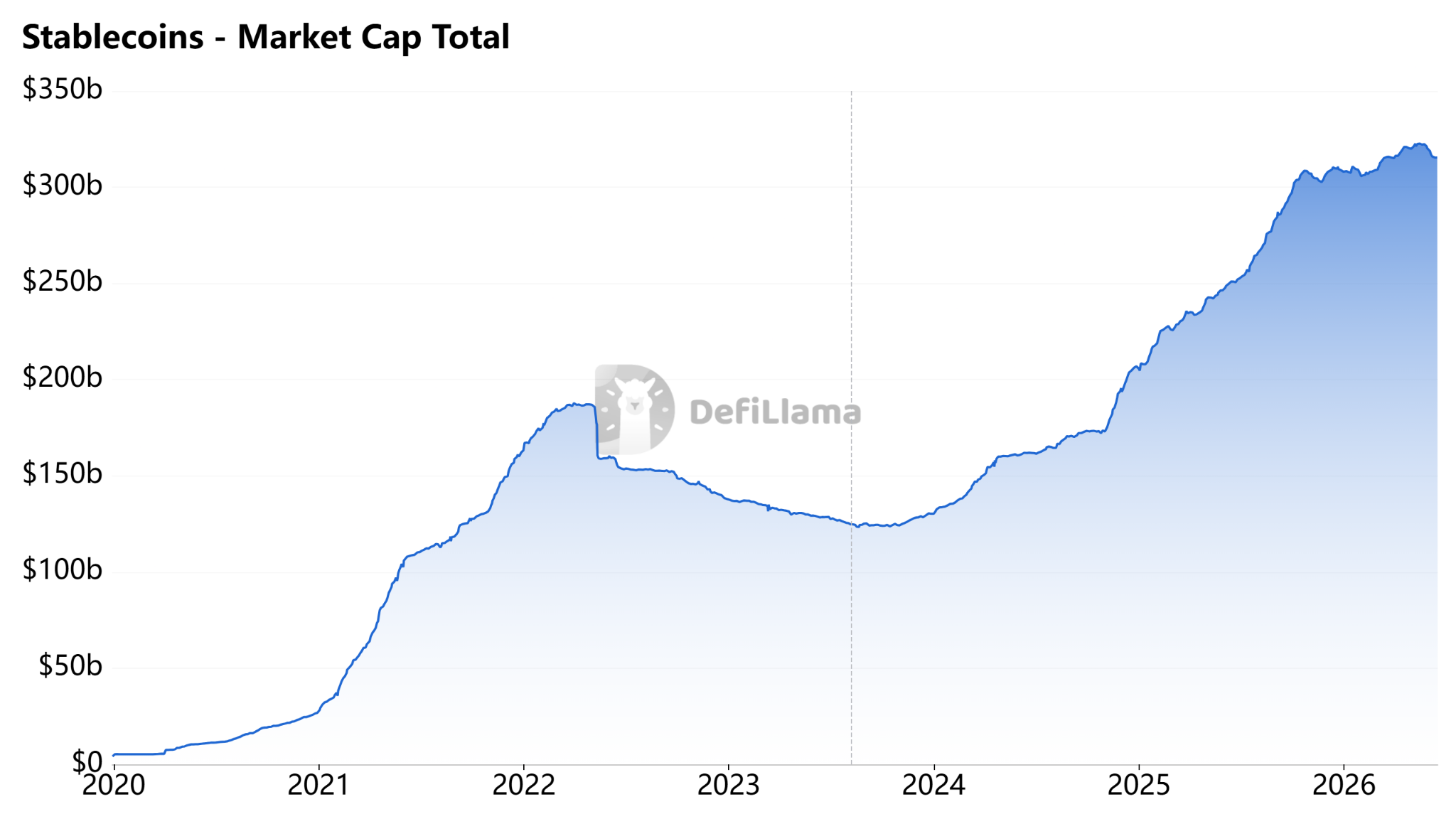
Stablecoin settlement infrastructure company Trace Finance has raised $32 million in a Series A funding round led by CoinFund.
Coinbase Ventures, Jump Capital and Paxos were among the investors that participated in the round, the company said Wednesday in a statement shared with Cointelegraph.
Trace Finance provides banking, foreign exchange and stablecoin settlement infrastructure for cross-border payments across Latin America. It claims to have processed more than $10 billion in transaction volume and plans to use the fresh capital to expand across LatAm, the US and Asia-Pacific markets.
The funding comes as stablecoin settlement increasingly moves into regulated financial infrastructure, with companies racing to connect blockchain-based payments to local banking systems and foreign exchange networks.
In 2022, Trace Finance raised $4.3 million in a seed round led by HOF Capital, with participation from Circle Ventures and Mantis VC, the venture capital firm co-founded by electronic music duo The Chainsmokers. HOF Capital also participated in the company’s Series A round.
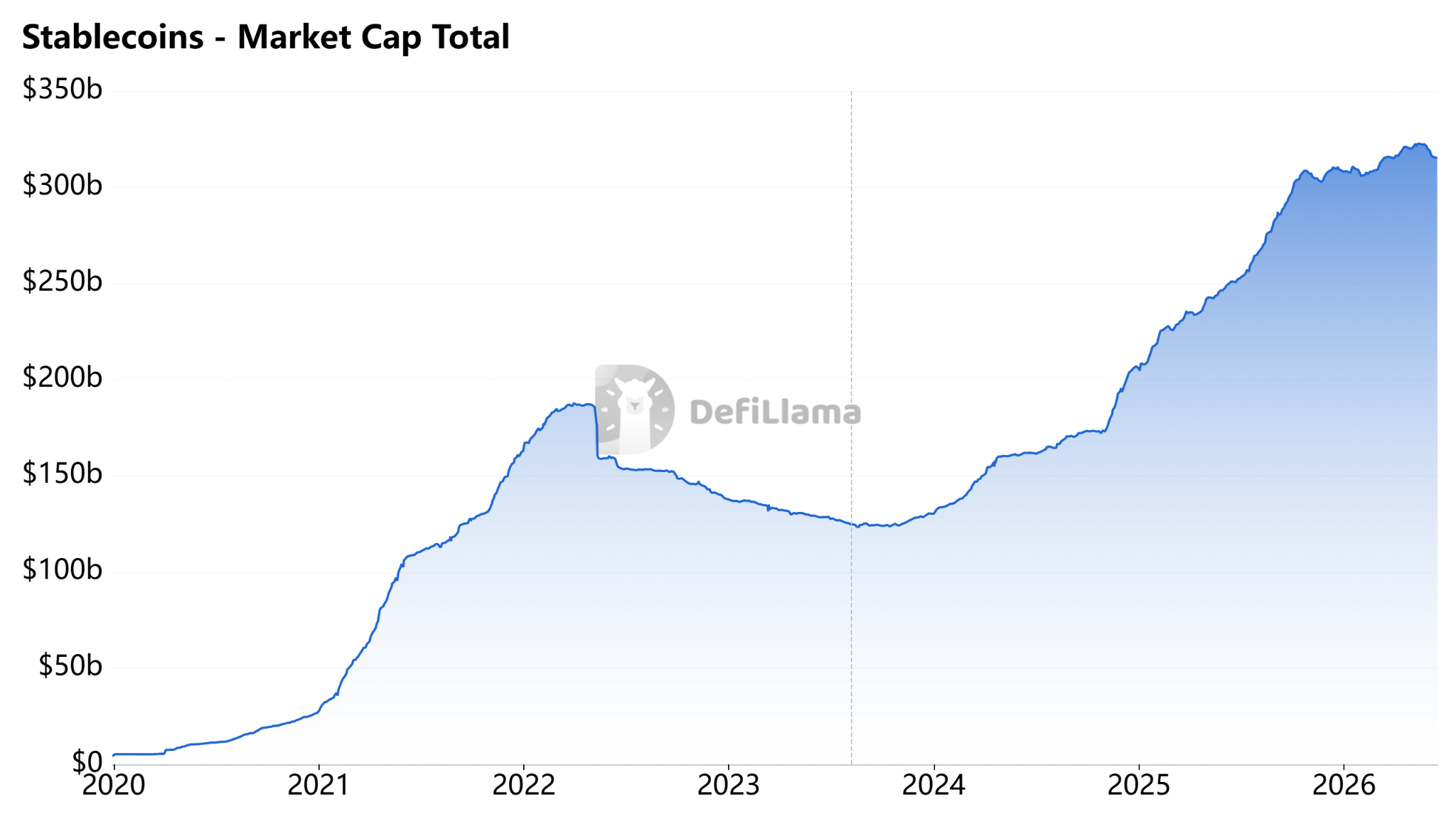
Stablecoin market capitalization stood at about $315 billion. Source: DeFiLlama
Stablecoin regulation drives cross-border payments push
Stablecoin policy discussions accelerated globally after US President Donald Trump signed the GENIUS Act into law in July 2025.
The legislation spurred discussions around stablecoin laws in jurisdictions developing their own digital asset strategies. Hong Kong implemented its Stablecoin Ordinance in August 2025 and has recently granted its first batch of licenses.
On Wednesday, People’s Bank of China (PBOC) official Wang Xin said authorities are closely monitoring how stablecoins could affect the international monetary system and cross-border payments.
Wang’s remarks were less critical than comments made by PBOC Governor Pan Gongsheng in October 2025, when Pan described stablecoins as high-risk and vulnerable to misuse for illicit cross-border transfers.
As stablecoin regulations advance globally, private-sector firms have also ramped up efforts to build infrastructure for cross-border payments.
Last Thursday, cross-border payout platform MassPay partnered with Coinbase to offer stablecoin-powered international payouts. The companies said the service would allow customers to move between fiat currencies, USDC and other digital assets while reducing costs and speeding up settlement times.
Other financial infrastructure providers have also expanded their stablecoin offerings. Stripe acquired stablecoin infrastructure startup Bridge in 2025, while Circle launched its Circle Payments Network in May 2025 to connect banks, payment companies and digital wallets for real-time cross-border settlement using stablecoins.

Aster DEX just handed its tokenomics a structural overhaul, and its crypto token rockets. The announcement redirecting 99% of daily platform fees into automatic ASTER buybacks sent the token up over 10% on the day.
Under the upgraded model, Aster executes TWAP buybacks across each day, settling on-chain to a public wallet. For every token repurchased, an equal amount is permanently burned from reserves, starting with team allocations.
[Tokenomics Update] $ASTER Buyback and Burn Steps Up to 198% — Aster
Aster is upgrading its buyback so the platform's own activity both rewards stakers and sets $ASTER on a deflationary path.
Starting from 12:00 PM UTC today, 99% of Aster's daily platform fees buy back $ASTER. An equal…
 (@Aster_DEX) June 17, 2026
All bought-back tokens flow directly into Loyalty Rewards, stacked atop the existing 300,000 $ASTER base pool and distributed proportionally to veASTER lock weight. The protocol has already completed over $214 million in cumulative buybacks, reclaiming more than 143.38 million ASTER (7.11% of supply) in under a month.
Aster has drawn consistent comparisons to Hyperliquid as institutional capital rotates toward on-chain derivatives infrastructure, making this tokenomics upgrade more than a housekeeping move. It’s a direct competitive signal.
Discover: The Best Crypto to Diversify Your Portfolio
Can ASTER Crypto Break $1?
Before the crypto announcement, ASTER was trading in a tight range, consolidating under $0.7 after a brief spike to $0.76 months ago, a level it failed to hold. The token broke a short-term downtrend line in the lead-up to the announcement, posting a 12% rally in less than 2 hours, but resistance near $0.75 has rejected the price twice.

Support is long gone; it was clustered in the $0.63 demand zone, where every sell pressure has been absorbed. The 30-period moving average sits near $0.65, acting as a short-term floor. RSI hovering near 61 signals moderate bullish momentum.
For its crypto holders, daily buybacks of $2–3 million would compress supply steadily, and unlock pressure from the locked airdrop wallet might be absorbed. If all those happen, ASTER could clear $1 to open a path toward $1.50 once again.
Discover: The Best Token Presales
Bitcoin Hyper Eyes Early-Stage Entry as ASTER Tests Structural Resistance
ASTER’s 10% pop on strong tokenomics news underscores a familiar dynamic: the market rewards supply-side discipline, but established tokens with billions of market cap face a different risk/reward than early-stage entries. At this market cap, the multiple is compressed. The asymmetry has already been partially priced. That’s exactly where traders with a different time horizon start looking elsewhere.
Bitcoin Hyper ($HYPER) is a Bitcoin Layer 2 presale building what it bills as the first-ever BTC L2 with Solana Virtual Machine (SVM) integration, targeting sub-second finality on top of Bitcoin’s security layer. The pitch directly addresses Bitcoin’s three structural constraints: slow throughput, high fees, and limited programmability.
Hard numbers: presale price sits at $0.0136, total raised has crossed $32.8 million, and staking carries a high APY for early lockers. The Decentralized Canonical Bridge handles native BTC transfers without custodial wrapping. The DEX token game might be too late to enter, and Bitcoin layer 2 could be the next narrative.
Research Bitcoin Hyper before the next stage closes.
The post Aster Crypto Explodes: Buyback and Burn News Sends Hyperliquid Rival Up 10% appeared first on Cryptonews.


Sam Bankman-Fried (SBF), the disgraced founder of FTX, is floating plans to launch a new crypto token after his release from prison. The former crypto magnate is currently serving a 25-year sentence after the catastrophic collapse of his exchange.
Here is what SBF reportedly said, why experts strongly dismiss the plan, and how the crypto community is now reacting.
SBF Has Ambitious Plans After Prison
SBF shared his future plans during a recent conversation with former inmate David Bunevacz. The revelation was later detailed in a New York Magazine feature. According to the report, his main goal is to return to the tech business right after his release from prison.
“Maybe he was joking, and probably no one will flock to him. But who knows,” Bunevacz said.
To build a real corporate structure, he reportedly needs initial capital between $50 and $100 million. Furthermore, the most striking part of his testimony focused on issuing a fully independent digital asset of his own design.
The former crypto figure expressed full confidence in the idea. According to the source, SBF said he will launch his coin, and everyone will come to it. The statement reignites scrutiny over his ambitions, despite his serious legal troubles.
Follow us on X to get the latest news as it happens
His legal record makes the comeback ambitions controversial. The 2022 FTX collapse exposed widespread fraud and misuse of client funds. Moreover, US courts categorically rejected the defense’s appeal to reduce the sentence.
The announcement also revives debate over how crypto handles repeat offenders. SBF was once celebrated as one of the most influential founders in the industry. However, his fall from grace became one of the most documented corporate scandals of the past decade.
Why Experts Strongly Dismiss SBF’s Crypto Comeback
The claims belong strictly to SBF’s personal wishes, according to industry experts. His release date is still far away, so the current market will not face any real or operational changes from comments made inside prison.
However, the episode shows that the former billionaire retains his ambition in full. His mindset has not changed despite the destruction of trust caused by the FTX collapse. The desire for financial redemption exposes the persistence of messianic crypto leadership.
Compliance regulations from supervisory bodies represent a major barrier to any return. Securities commissions across the West have strengthened background checks on token issuers in recent years. As a result, no legitimate bank or VC fund is expected to support his operations.
Still, crypto markets have shown short memories toward unethical conduct. Several controversial figures have managed relative success after launching new campaigns. That dynamic keeps a remote window open for the disgraced founder’s potential return in the long term.
How the Crypto Community Is Reacting to the News
Reactions across crypto forums and social media showed deep divisions. A majority of the community argues that SBF’s reputation has been permanently and irreversibly destroyed. For this group, it is impossible for the market to ever validate a platform they develop.
“Yeah mate, I’ll believe it when I see it, but honestly who’d line up for round two of that circus,” one user said on X.
On the other hand, some observers note that volatility and the search for quick returns often cloud traders’ judgment. There are precedents of digital assets gaining popularity based purely on the media notoriety of their creators.
That speculative dynamic feeds the remote possibility of a comeback for the polemic founder of the defunct trading platform. Whether the market ultimately rewards or punishes the attempt remains an open question that may unfold over the years.
“After going broke, SBF needs your money to rug you and start a wealthy life,” another user exposed.
In any case, the resolution of this story will be written under market conditions likely very different from today. The current institutional infrastructure punishes attempts to manipulate capital more severely. Time will determine whether SBF’s projections become reality or fade quietly into oblivion.
The post Sam Bankman-Fried Want’s to Launch a New Crypto After Prison appeared first on BeInCrypto.
Wall Street expectations for future Federal Reserve tightening have increased sharply, with Citadel Securities now warning that policymakers could begin raising interest rates again as early as September 2026.
Summary
- Citadel Securities expects the Fed could begin raising interest rates again as early as September 2026.
- The firm cites persistent inflation, strong labor markets, and rising AI investment as key drivers of price pressures.
- Prediction markets and major banks including BNP Paribas are increasingly discussing the possibility of future rate hikes.
According to a note from Citadel Securities Head of Macro Strategy Frank Flight, the firm sees a growing risk that inflation is becoming embedded across the U.S. economy, creating conditions that could force the Federal Reserve into a more aggressive stance than investors currently expect.
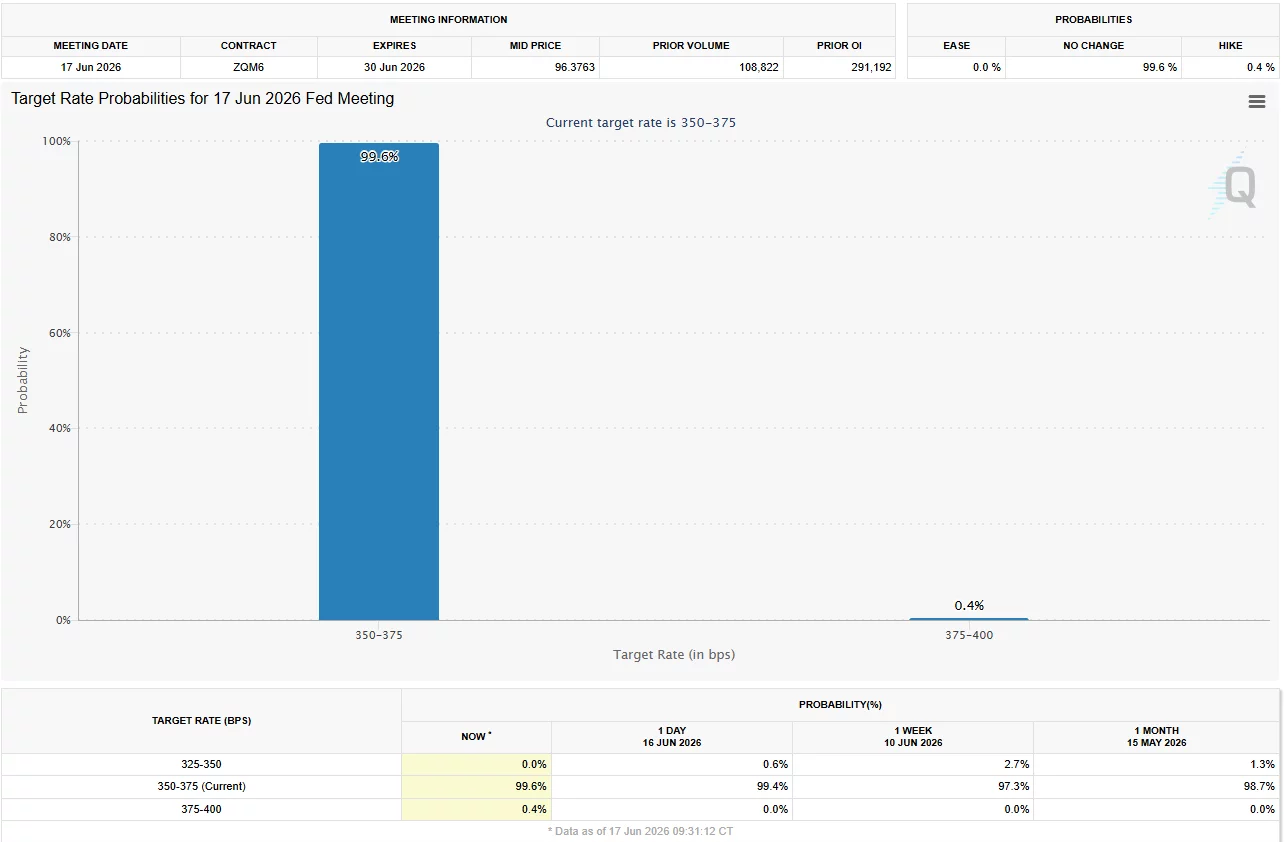
The warning arrives just ahead of the Federal Open Market Committee meeting on June 17, where CME FedWatch data shows markets overwhelmingly expect officials to leave interest rates unchanged.
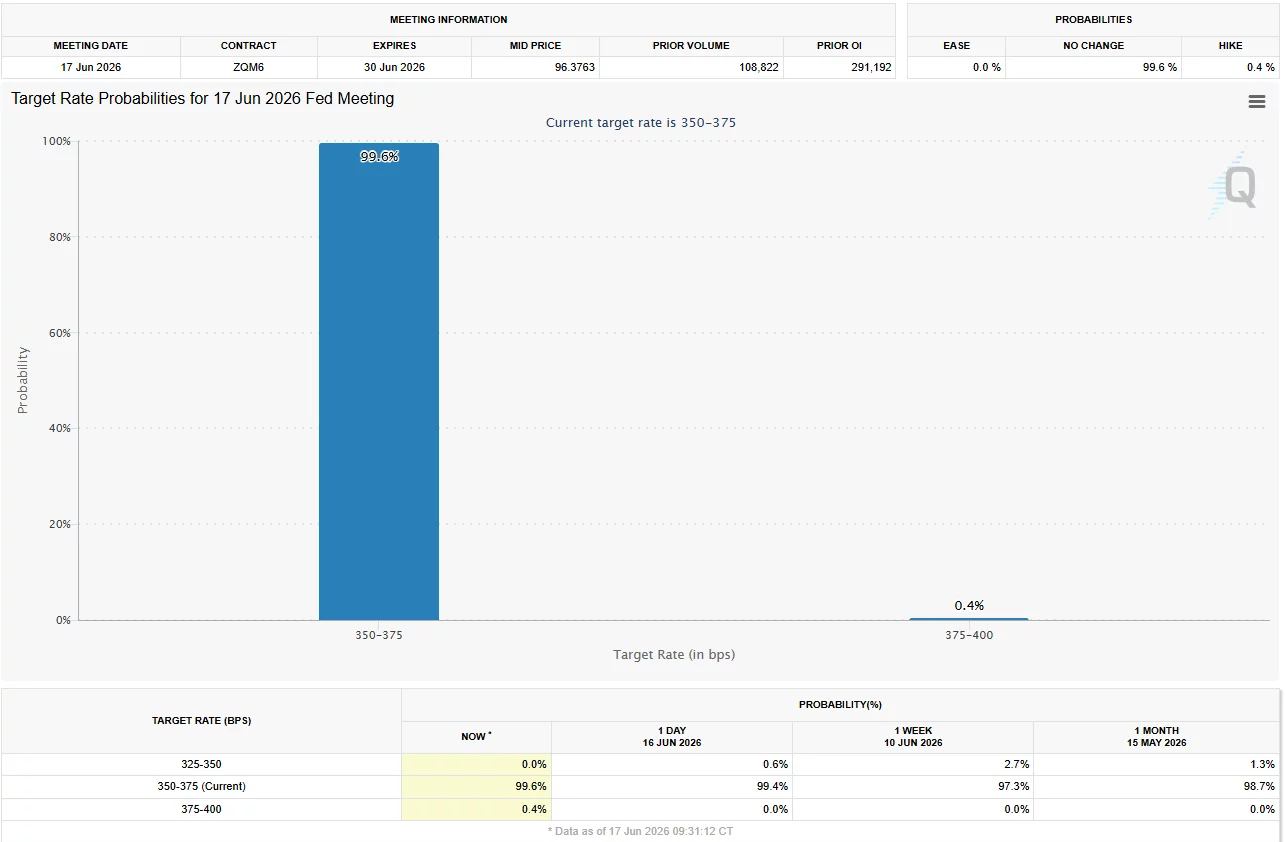
While an immediate move is not anticipated, Citadel believes the focus should be on how Fed Chair Kevin Warsh frames the outlook for inflation and future policy.
Inflation data keeps pressure on policymakers
Within its client note, Citadel argued that inflation is no longer being driven solely by energy prices. Frank Flight wrote that the U.S. economy faces the risk of entering a “hysteretic equilibrium,” a condition in which temporary shocks leave lasting effects on inflation even after the original trigger fades.
Although oil prices have retreated following the initial U.S.-Iran agreement, Citadel said price pressures have continued spreading through other parts of the economy. The firm pointed to accommodative financial conditions, supply-chain disruptions, and ongoing labor-market strength as factors supporting inflation.
Additional signs of persistent inflation have emerged in recent economic data. Citadel highlighted that a growing share of core Consumer Price Index components are now rising more than 3% year-over-year. The firm also noted that headline CPI reached 4.2% in May, while Producer Price Index inflation climbed to 6.5%, indicating continued pressure on businesses and consumers.
At the same time, Citadel argued that the artificial intelligence investment boom is adding another source of demand. The firm estimates AI-related capital expenditures could reach roughly $750 billion in 2026 before rising to $1.25 trillion in 2027 amid spending tied to companies such as OpenAI, Anthropic, and SpaceX.
Markets increasingly discuss the possibility of hikes
Against that backdrop, Citadel expects the Federal Reserve under Warsh to adopt a noticeably hawkish tone. Flight said policymakers could remove any remaining easing bias from their projections and publish forecasts showing no rate cuts during 2026.
“We think the risks skew to a rate hike at the September meeting,” Flight wrote.
Citadel further expects at least five Federal Reserve officials to signal support for future tightening and estimates that an inertial Taylor Rule framework would justify roughly 75 basis points of rate increases during 2026. The firm’s projected path includes potential hikes in September and December 2026, followed by another increase in March 2027.
Other market indicators have moved in a similar direction. Kalshi prediction market data currently assigns a 60% probability that the Federal Reserve raises rates before July 2027.
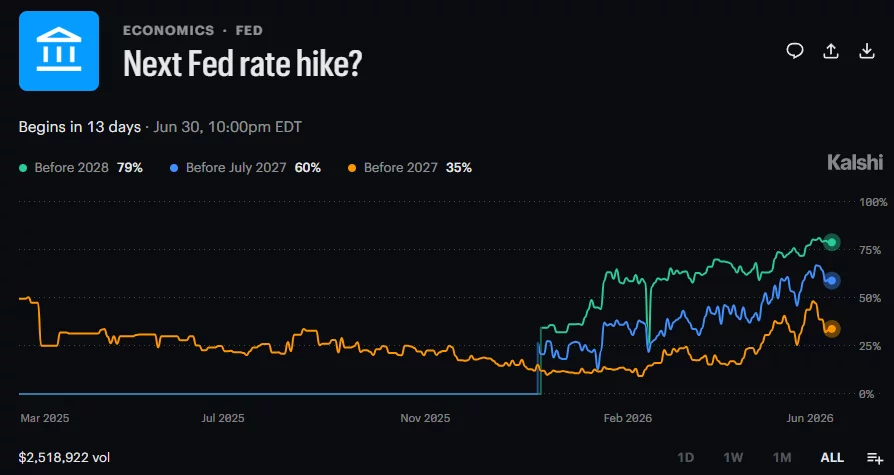
Separately, a recent Bank of America fund manager survey found that nearly 40% of respondents expect at least one rate hike within the next year, up from 16% a month earlier.
BNP Paribas has also shifted to a more hawkish outlook. The bank recently abandoned its expectation for stable policy and now forecasts three rate hikes beginning in December, citing strong employment data, persistent inflation, and inflation risks linked partly to the U.S.-Iran conflict.
For risk assets, Citadel warned that a prolonged period of tighter monetary policy could weigh on valuations. The firm said higher borrowing costs and reduced liquidity would likely create a more challenging environment for Bitcoin and the broader cryptocurrency market if investors begin pricing in additional Fed tightening.
Disclosure: This article does not represent investment advice. The content and materials featured on this page are for educational purposes only.

Key Takeaways
- Carvana shares declined approximately 6% Wednesday following CarMax’s 7% drop after its Q1 earnings release
- CarMax exceeded EPS projections ($1.31 vs $0.96) and revenue forecasts ($8B vs $7.39B) while warning about margin challenges
- Used retail gross profit per unit at CarMax decreased $230 year-over-year, landing at $2,177
- Styrax Capital LP reduced its Carvana position by 26.6%, divesting 81,729 shares; company insiders offloaded $29M in stock last quarter
- Wall Street maintains a Moderate Buy consensus on CVNA with a mean price target of $93.14
Carvana shares began Wednesday’s session at $69.96 before tumbling approximately 6%, caught in the downdraft created by CarMax’s steep decline following the used vehicle dealer’s quarterly earnings announcement.
CarMax delivered results that surpassed Wall Street’s expectations on both the top and bottom lines. The company reported EPS of $1.31, exceeding the $0.96 estimate, while revenue reached $8 billion compared to the anticipated $7.39 billion. On the surface, the numbers looked impressive — but a closer examination revealed underlying challenges.
The primary concern centered on profitability metrics. CarMax’s gross profit per used retail unit fell to $2,177, representing a $230 decline from the prior-year period. CFO Enrique Mayor addressed this directly, acknowledging that the company’s current strategic approach “requires some margin concession to support sales growth.”
Average transaction prices increased by $1,168 per unit to reach $27,288, primarily due to elevated acquisition expenses. On a comparable store basis, used unit sales declined 0.8% during the quarter.
CEO Keith Barr also highlighted operational inefficiencies, noting that while CarMax facilitates over 2 million vehicle transfers annually, the company currently experiences “too many unproductive transfers.”
Rising Consumer Credit Stress Compounds Challenges
Regarding financing operations, Jon Daniels, SVP of CarMax Auto Finance, observed that consumers are “continuing to be pressured by overall inflation.” He highlighted that delinquency rates for both credit cards and auto loans remain elevated across the broader market.
CarMax significantly expanded its Tier 2 credit exposure from 10% to 25% of total volume and established a $96 million loan loss reserve for the quarter — a figure that drew considerable attention from investors.
This convergence of compressed margins, increasing acquisition expenses, and heightened credit exposure is what precipitated Carvana into Wednesday’s selloff. Market participants are factoring in the likelihood that comparable challenges may emerge in CVNA’s upcoming financial results.
Recent Trading Activity by Institutions and Insiders
Beyond Wednesday’s price action, noteworthy selling activity has occurred recently. Styrax Capital LP decreased its Carvana holdings by 26.6% during Q4, disposing of 81,729 shares and maintaining a remaining position of 225,272 shares valued at approximately $95.1 million.
Company insiders have also been transacting. VP Stephen R. Palmer divested 5,000 shares at $70.42 on June 1st. Director J. Danforth Quayle sold 14,525 shares at $70.00 on June 10th. Collectively, insiders have sold 415,812 shares worth approximately $29.1 million during the previous quarter. These transactions were conducted through pre-established Rule 10b5-1 trading arrangements.
Despite recent selling pressure, Carvana’s most recent quarterly results were robust. The company delivered EPS of $1.69 versus the $0.32 consensus estimate, while revenue of $6.43 billion exceeded the $6.12 billion projection.
Wall Street analyst sentiment remains predominantly bullish. Needham maintained its Buy recommendation with a $120 price target on June 5th. JPMorgan elevated its target from $91 to $93 while maintaining an Overweight rating.
The consensus analyst price target stands at $93.14, supported by 17 Buy recommendations, 2 Strong Buys, and 5 Hold ratings on the stock.
CVNA’s 52-week trading range extends from $54.46 to $97.38, with shares currently positioned below both the 50-day moving average of $71.47 and the 200-day moving average of $75.25.



The U.S. Securities and Exchange Commission has moved closer to allowing tokenized stock trading as industry participants expect a new regulatory exemption that could support upcoming offerings from crypto firms, including Coinbase.
Summary
- SEC is reportedly preparing an innovation exemption that could permit tokenized stock trading in the U.S.
- Coinbase plans to launch 1:1-backed tokenized shares as regulatory discussions advance.
- CoinGecko data shows tokenized stocks grew more than 3,300% between 2024 and 2026.
According to a Reuters report citing lawyers and market analysts, SEC Chair Paul Atkins is expected to introduce an innovation exemption that would allow companies to test blockchain-based financial products under a modified regulatory framework.
The proposal comes as several crypto firms prepare tokenized equity products that would let users trade shares around the clock with near-instant settlement.
As reported by crypto.news, Coinbase has already disclosed plans to launch tokenized stocks backed one-for-one by underlying shares, while Binance and other exchanges have expanded similar offerings outside the United States. Under the framework being discussed, tokenized shares could carry the same economic rights as traditional equities, including dividend payments and voting privileges.
The expected exemption follows earlier reports that the SEC had delayed efforts to permit tokenized equities after raising concerns about investor protection standards and custody requirements.
Industry participants cited by Reuters now believe the agency is preparing a revised approach that would allow experimentation without requiring full compliance with every existing disclosure and investor-protection rule.
SEC reviews market structure rules
Separate from the proposed exemption, the SEC last week advanced a market structure proposal that could influence how tokenized equities eventually operate in the United States.
As crypto.news reported earlier, the agency proposed rescinding Rules 611 and 610(e) of Regulation NMS, two provisions that have governed U.S. stock trading since 2005.
Rule 611 currently prevents trading venues from executing stock orders at inferior prices when better quotes are available elsewhere, while Rule 610(e) addresses locked and crossed quotations in national market system stocks.
The regulator said the proposal would also remove related definitions from Rule 600 and open a 60-day public comment period after publication in the Federal Register.
Commenting on the proposal, SEC Chair Paul Atkins argued that two decades of experience with Rule 611 justified a fresh review of its market impact. According to Atkins, the regulation may have produced unintended consequences that limited competition and increased complexity within equity markets.
While the proposal does not authorize tokenized stock trading, it arrives as the SEC continues examining ways to accommodate blockchain-based securities infrastructure. Previous reporting indicated that agency officials have been studying an innovation exemption specifically designed to support tokenized public equities.
Tokenized stocks attract growing interest
Interest in the sector has accelerated sharply over the past two years. According to data from CoinGecko, tokenized stocks expanded from 14 assets on Jan. 31, 2024, to 478 assets by May 31, 2026, representing growth of more than 3,300%.
CoinGecko identified tokenized equities as the fastest-growing crypto category during that period. The same dataset showed real-world assets increasing from 64 projects to 1,282, a gain of roughly 1,900%.
Large financial institutions have also begun exploring the market. As per a WSJ report, Citigroup is preparing tokenized shares tied to private companies such as OpenAI and Anthropic, initially targeting international investors before potentially expanding access to U.S. clients.
Elsewhere, the New York Stock Exchange is developing infrastructure for 24-hour stock trading through tokenized market systems, according to previous disclosures.
Taken together, the SEC’s ongoing review of tokenized equity exemptions and traditional market structure rules has positioned blockchain-based stock trading closer to the U.S. regulatory mainstream than at any point since the concept first emerged.
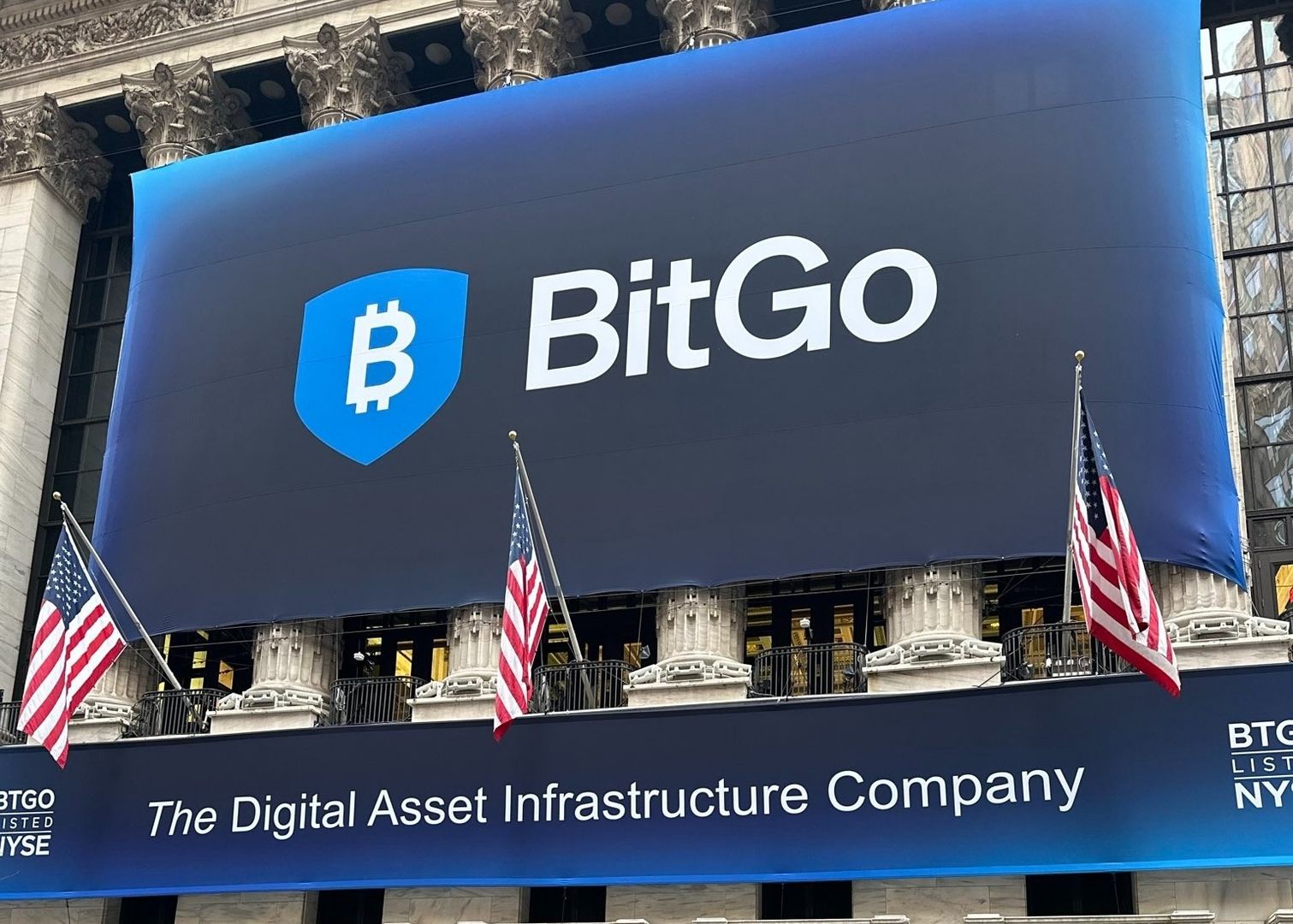
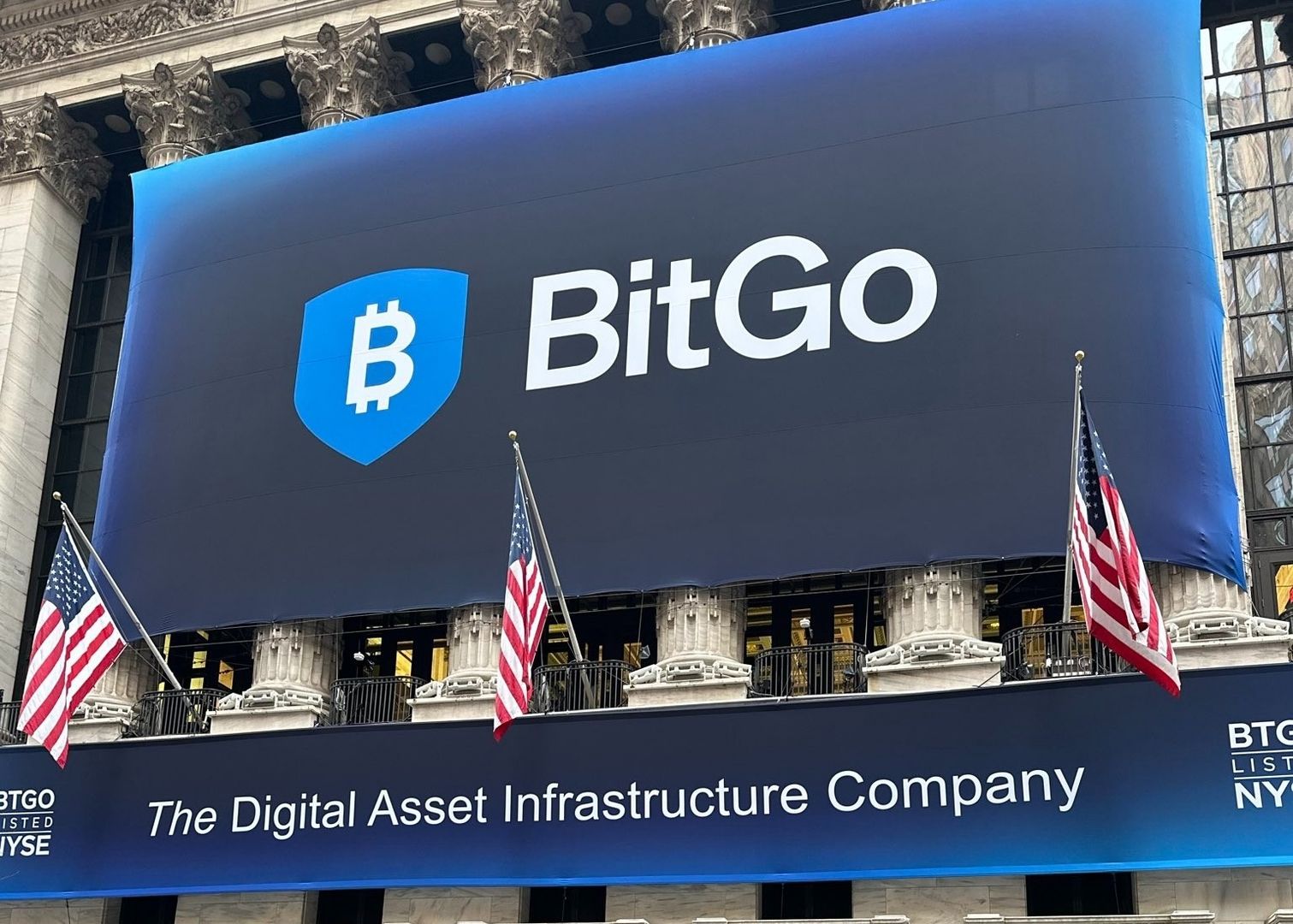
The decline is a reflection of a broader slump in investor sentiment toward digital asset-linked stocks. After a wave of crypto IPO enthusiasm last year, bitcoin and cryptocurrency prices have tumbled, and attention has increasingly turned toward artificial intelligence (AI) companies and a pipeline of highly anticipated tech listings like SpaceX (SPCX).
Several crypto companies, including Kraken and Consensys, have halted their efforts amid turbulent crypto markets.
BitGo provides custody, trading, staking and settlement services for digital assets. It also issues USD1, the U.S. dollar stablecoin tied to the Trump family-backed World Liberty Financial project.
The firm has also been promoting its Germany’s BaFin-regulated infrastructure platform as an option for companies adapting to the European Union’s digital asset regime, MiCA, ahead of a licensing deadline at the end of the month.

Most tech startups discover the same uncomfortable truth about PR at some point in their journey. The moment they most need press coverage — when they are launching a product, closing a funding round or trying to establish themselves in a new market — is exactly the moment they are least equipped to get it. The team is stretched, the budget is tight and the process of securing meaningful coverage in the right publications feels opaque and slow.
This problem is particularly acute for tech startups building in the artificial intelligence space. The AI sector generates enormous media interest at the industry level but that interest does not automatically translate into coverage for individual companies. Getting a specific startup’s story into the finance and technology publications that investors and customers actually read requires a media distribution infrastructure that most early-stage companies simply do not have.
Kooc Media has spent eight years building that infrastructure. The agency is a specialist PR and media distribution service with deep roots in the technology, crypto and fintech media ecosystem, and it has now introduced a range of AI-focused PR campaigns designed specifically around the needs of tech startups building in the artificial intelligence space. The service delivers guaranteed placements, same-day publication and distribution across the precise media landscape that AI startup audiences inhabit.
What AI-Focused PR Campaigns Actually Mean in Practice
The phrase AI-focused PR campaign gets used loosely by a lot of agencies. For Kooc Media it has a specific meaning that shapes every element of how campaigns are built and executed.
AI-focused means content that is written with an understanding of artificial intelligence as a technology and a market. Press releases for tech startups in AI need to communicate clearly to multiple audiences simultaneously — investors who care about market opportunity and competitive positioning, enterprise buyers who care about practical applications and business outcomes, developers who care about technical capability and integration, and general business audiences who are trying to understand what AI means for their own operations. Getting that balance right requires an editorial approach that is specifically calibrated for AI communications rather than adapted from a general technology PR template.
AI-focused also means distribution that reaches the specific publications where AI startup audiences are most active. Finance and investment media, specialist technology platforms, crypto and Web3 press, business and economic news sites — these are the outlets that the investors, customers and partners of AI tech startups read. Reaching them requires a network built within this ecosystem, not a generic list of websites assembled to produce impressive-sounding placement numbers.
Kooc Media’s AI-focused PR campaigns are built on both of these foundations — content crafted for AI audiences and distribution designed for the media landscape those audiences inhabit.
Owned Publications Deliver Guaranteed Results Every Time
The single most important feature of Kooc Media’s PR service for AI tech startups is the owned publication portfolio that makes guaranteed placements a genuine operational reality rather than a marketing claim.
Blockonomi, CoinCentral, MoneyCheck, Parameter, Beanstalk and Computing are all publications owned and operated by Kooc Media. They are established brands in the finance, cryptocurrency and technology publishing space with real editorial authority, genuine reader communities and meaningful credibility in the sectors that AI tech startup audiences follow. Every client receives confirmed placements across all of these publications as part of their campaign — not as a best-efforts goal but as a guaranteed outcome.
Press release approved by the client. Published across all owned sites the same day. No journalist outreach. No editorial pitch process. No uncertainty. This is how every Kooc Media AI PR campaign operates, and the difference it makes for tech startups trying to coordinate press coverage with specific business activities is significant.
Product launches, funding announcements, partnership reveals and platform updates all benefit from guaranteed same-day publication. News in the AI sector has a narrow window of peak relevance and coverage that appears days or weeks after the moment has passed delivers a fraction of the impact it would have had if it had gone live immediately. Kooc Media’s owned media model solves this problem completely. All owned publications are listed on the Kooc Media sites page.
Scaled Distribution Across Partner Networks and Global Platforms
Every AI tech startup PR campaign begins with confirmed in-house placements and extends outward through Kooc Media’s AI-focused campaign distribution network to reach audiences across the full scope of relevant finance and technology media.
The partner distribution network adds hundreds of additional websites and thousands of syndicated outlets to every campaign, ensuring that press releases from AI tech startups circulate broadly across the relevant media ecosystem rather than being confined to the owned portfolio. This layer of distribution is what turns a solid baseline of guaranteed coverage into a campaign with genuinely wide reach across the publications and platforms that AI startup audiences are following.
Premium distribution packages provide access to a third tier of reach through the most authoritative business and financial media platforms in the world. Through these channels press releases from AI tech startups can appear on Business Insider, Bloomberg, Benzinga, MarketWatch, USA Today, Dow Jones feeds and comparable global platforms that carry enormous credibility with institutional investors, global enterprise clients and international industry press.
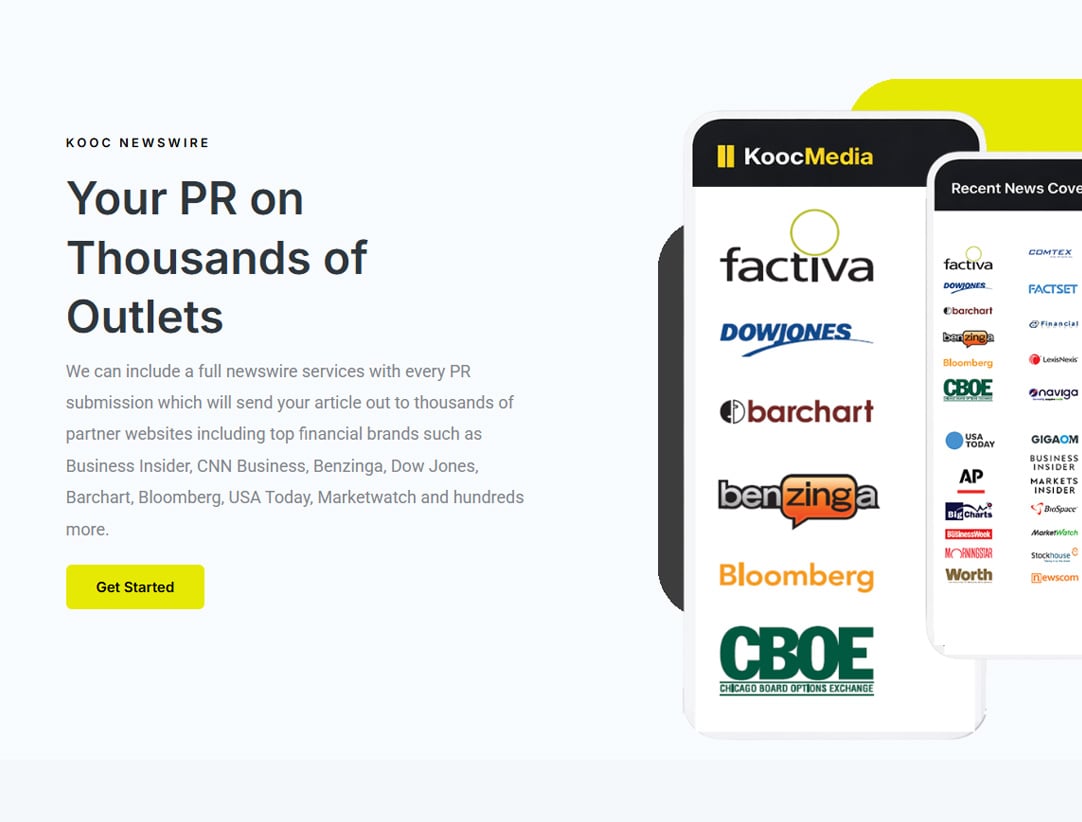
For tech startups at the stage where a single well-placed media mention in a globally recognised publication could change the trajectory of an investor conversation or an enterprise sales process, this level of distribution access is genuinely transformative.
Michelle De Gouveia, spokesperson for Kooc Media, said: “Tech startups in AI are building some of the most significant products of this generation. The challenge is not that their stories are not worth telling. It is that they have not had access to a PR service that is genuinely built for them — fast enough to keep up with the pace of the sector, targeted enough to reach the audiences that matter and guaranteed enough to actually deliver on its promises. That is exactly what our AI-focused campaigns provide. We built this service to give AI tech startups the media infrastructure that was previously only available to much larger companies.”
AgentLocker.ai — Ongoing Visibility Beyond the Campaign
Every tech startup that runs an AI-focused PR campaign with Kooc Media receives a permanent free listing in AgentLocker.ai, the dedicated AI tools and agents directory that Kooc Media has developed and operates.
AgentLocker.ai was built to solve the discovery problem that has emerged as the AI tools market has expanded. The number of AI-powered products available across categories including productivity, automation, content creation, coding assistance, data analysis, customer service, marketing and research has grown faster than any general search mechanism can effectively organise. AgentLocker.ai provides a structured alternative — a purpose-built directory where users can find, compare and evaluate AI tools across specific categories with confidence.

The strategic value of an AgentLocker.ai listing for AI tech startups lies in what it delivers over time. Press coverage is enormously valuable at the moment of publication — it creates immediate awareness, drives traffic and generates the kind of third-party credibility that no owned content can replicate. But its impact is concentrated in time. An AgentLocker.ai listing works differently. It places a startup in a directory visited by users who are actively searching for AI tools, generating a consistent stream of targeted visibility that continues indefinitely.
The listing is included at no additional cost, created during the campaign and permanently active. For startups that are building for the long term, the combination of press campaign impact and sustained directory presence creates a media approach with both immediate reach and enduring value.
Fully Managed With No PR Experience Required
Kooc Media’s AI-focused PR campaigns are completely managed by the agency from first brief to final report. Tech startups do not need communications staff, pre-written press releases or any prior experience of running PR campaigns to get started.
The editorial team handles all content creation based on a brief from the client. Finished copy is shared for review and approval before anything is published. Distribution begins the same day approval is received. A comprehensive results report with live links to every placement follows when the campaign is complete.
Those links serve as investor-facing evidence of media coverage, website press mentions that build credibility for new visitors, backlinks that strengthen search engine performance and validation signals that support enterprise sales and funding conversations.
Give Your AI Startup the Media Presence It Deserves
The AI tech startups that will define their categories over the next five years are building right now. The ones that invest in media presence early accumulate credibility and recognition that compounds over time and becomes increasingly difficult for competitors to overcome. Kooc Media’s AI-focused PR campaigns provide the fastest, most reliable and most guaranteed route to that media presence — built specifically for the pace, complexity and audience profile of the artificial intelligence sector.
Kooc Media’s AI packages are available now through the company’s website at https://kooc.co.uk/ai-pr/.

Hackers are sneaking malware into Steam Workshop wallpaper downloads that are capable of stealing crypto wallet information and installing crypto miners.
The wallpaper malware operation, discovered by cybersecurity firm Kaspersky, relies on Wallpaper Engine, one of the many apps available on Valve’s Steam Workshop.
Kaspersky discovered that downloads were being loaded with malware that included “infostealers” such as Lumma and Vidar, and the ReEngine loader.
In the case of the Lumma infostealer, it’s capable of stealing data from crypto wallets and installing further malware that allows it to search for wallet files, browser extensions, and local keys from the likes of MetaMask, Electrum, and Exodus.


Read more: Crypto malware creators allegedly infected their own PCs
The RenEnginer loader, meanwhile, has been utilised in pirated game launchers for the likes of Assassin’s Creed, FIFA, and Need For Speed, and is also capable of crypto wallet data extraction.
Kaspersky also noted that some hidden malware was installing crypto miners. This malware often would run unnoticed; however, a tell-tale sign of an illicit crypto miner is often an unusual decrease in computer performance.
Crypto malware wallpaper download by tens of thousands
The infected wallpaper packages had anywhere between thousands and tens of thousands of downloads.
Kaspersky claims that users from China and Russia were downloading most of them, with users also found in Singapore, Hong Kong, Germany, Vietnam, India and Canada.
The firm believes that the malware, which relied on the legitimacy of Steam Workshop, is likely the work of multiple individual bad actors and not a collective hacking group.
Steam has reportedly removed all the identified malicious wallpaper packages.
Read more: GitHub breach traced to poisoned VS Code extension
In 2023, a popular fan-made version of Super Mario Bros was found to have been laced with malware and infostealers that installed miners and stole personal information.
Last year, it was theorised that the US might be helping actors deploy similar malware against Russian Solana developers in order to disrupt Kremlin-linked ransomware gangs.
In another case from 2025, one group of 16 alleged creators of a malware-as-a-service bot were charged by the US.
The group allegedly leased the bot to bad actors and helped deploy malware to over 300,000 computers across the globe. They’re believed to have caused $50 million worth of damage.
Legal documents noted that the alleged creators also infected their own PCs both deliberately and accidentally.
Got a tip? Send us an email securely via Protos Leaks. For more informed news and investigations, follow us on X, Bluesky, and Google News, or subscribe to our YouTube channel.

Portugal vs DR Congo LIVE SCORE FIFA WC 2026: Ronaldo ready for action; ENG to feature later on | FIFA World Cup 2026

Danone suing Chobani over ‘deceptive’ high-protein claims
XRP Price Is Targeting $1,000 Says Ex Goldman Analyst


-

 Business3 days ago
No Jackpot Winner as $257 Million Prize Rolls Over to $269 Million Monday Draw
-

 Crypto World6 days ago
Oppenheimer backs SpaceX as $70 billion retail frenzy builds
-

 Fashion5 days ago
Weekend Open Thread: Tuckernuck – Corporette.com
-

 Crypto World6 days ago
Markets Rally as SpaceX IPO Looms Amid Iran Tensions and Inflation Surge
-
 Crypto World3 days ago
Zimbabwe Requires Crypto Businesses to Register Annually Under New FIU Regulations
-

 Tech5 days ago
NanoClaw integrates JFrog registries to secure AI agent downloads
-

 Crypto World4 days ago
Bitget enters Argentina’s regulated crypto market through PSAV registration
-

 Tech5 days ago
This Week In Security: Microsoft On Microsoft, Register Your Domains, Linux On ARM, And FreeBSD Joins The File Cache Club
-
 Tech6 days ago
Dutton Ranch star claims they ‘didn’t see any disruption’ on set following Chad Feehan’s exit from Yellowstone spinoff fueled by Taylor Sheridan clash rumors
-

 NewsBeat6 days ago
El Nino has formed in the Pacific and could set records, forecasters say
-

 Politics6 days ago
Politics Home | Healey Resignation Is “Colossal Failure Of Government”, Says Former Labour Defence Secretary
-
 Entertainment6 days ago
Donnie Wahlberg & More Heat Up Las Vegas at Circa’s Barry’s Downtown Prime
-
 Tech6 days ago
Opendoor Ends India Operations, Fueling a Bigger Conversation About AI and Outsourcing
-

 Politics6 days ago
Belfast burns, while Met chief points finger at Iran and Russia
-

 Sports6 days ago
First Time Since 1971: Australia Register Historic Low In ODI Cricket
-

 NewsBeat5 days ago
FBI searches office of Ohio voter registration group
-

 Business6 days ago
AT&T: Verizon's 27% Outperformance Sets Up A Solid Entry Point
-
 Tech6 days ago
Anthropic is spending $150M to embed 1,000 AI fellows inside nonprofits. No degree required.
-

 Politics6 days ago
Modi thanks Trump for wishes as US attacks Indian seafarers
-
 Entertainment6 days ago
‘The Pitt’s Fan-Favorite Doctor Confirms Noah Wyle Gave His Blessing to Return [Exclusive]
You must be logged in to post a comment Login