Connect with us
DAPA Banner
DAPA Coin
DAPA
COIN PAYMENT ASSET
PRIVACY · BLOCKDAG · HOMOMORPHIC ENCRYPTION · RUST
ElGamal Encrypted MINE DAPA
🚫 GENESIS SOLD OUT
DAPAPAY COMING

NewsBeat

The best GP surgeries in Cambridgeshire praised by patients

Published

on

Cambridgeshire Live

Every year NHS patients get to rate the level of care they receive from their GP surgery

Cambridgeshire’s best-rated GP surgeries have been revealed after an annual NHS survey. Each year, the NHS surveys patients across the country about the care they receive from their GP surgery.

Advertisement

Patients are asked to give their opinions on their practice on a range of different topics, from overall experience to how easy it is to contact the surgery and how much they trust their GP. The data for this year’s patient survey was collected between the start of January and the end of March. It means patients can track how their local GP has performed.

Two surgeries, one in Kimbolton and the other in Alconbury picked up an almost perfect score with 96 per cent of respondents saying the practice was ‘good’ overall. It makes Kimbolton Medical Centre in Newtown and Alconbury Surgery on School Lane the best-rated GPs in Cambridgeshire.

Just over three-quarters of patients (77 per cent) across the whole of England said that the overall experience at their practice was ‘good’. That’s an improvement from the 2025 survey, when 74 per cent gave a score of either good or very good.

A total of one in 10 said that theirs was poor or very poor. That again is an improvement on last year, when 13 per cent gave an overall poor rating.

Advertisement

An overwhelming majority of patients (93 per cent) said that they had confidence in their GP or the other health professional that they saw at their surgery. Some 86 per cent said that the health professional treats them with care and concern, while 87 per cent said that they listen to them.

Only around two-thirds (69 per cent) said that once they made an appointment, the amount of time that they had to wait felt “about right”. Almost a third (31 per cent) said that it was too long.

The top performers with the highest percentages of respondents saying the practice was good overall:

  1. Kimbolton Medical Centre, Newtown (Kimbolton) – 96 per cent
  2. Alconbury Surgery, School Lane (Alconbury) – 96 per cent
  3. Buckden Surgery, Mayfield (Buckden) – 93 per cent
  4. Great Staughton Surgery, The Highway (Great Staughton) – 93 per cent
  5. Swavesey Surgery, Boxworth End (Swavesey) – 93 per cent
  6. Burwell Surgery, Newmarket Road (Burwell) – 92 per cent
  7. Bourn Surgery, Alms Hill (Bourn) – 91 per cent
  8. Over Surgery, Drings Close (Over) – 91 per cent
  9. Bottisham Medical Practice, Tunbridge Lane (Bottisham) – 90 per cent
  10. Harston Surgery, Church Street (Harston) – 90 per cent
  11. Papworth Surgery, Chequers Lane (Papworth Everard) – 89 per cent
  12. Staploe Medical Centre, Brewhouse Lane (Soham) – 89 per cent
  13. Moat House Surgery, Beech Close (Warboys) – 88 per cent
  14. St Mary’s Surgery, Lynn Road (Ely) – 88 per cent
  15. Lensfield Medical Practice, Lensfield Road (Cambridge) – 87 per cent
  16. Yaxley Group Practice, Landsdowne Road (Yaxley) – 87 per cent
  17. Haddenham Surgery, The Green (Haddenham) – 86 per cent
  18. Newnham Walk Surgery, Wordsworth Grove (Cambridge) – 85 per cent

Source link

Continue Reading
Click to comment

You must be logged in to post a comment Login

Leave a Reply

NewsBeat

York and North Yorkshire join leaders on India trade visit

Published

on

York and North Yorkshire join leaders on India trade visit

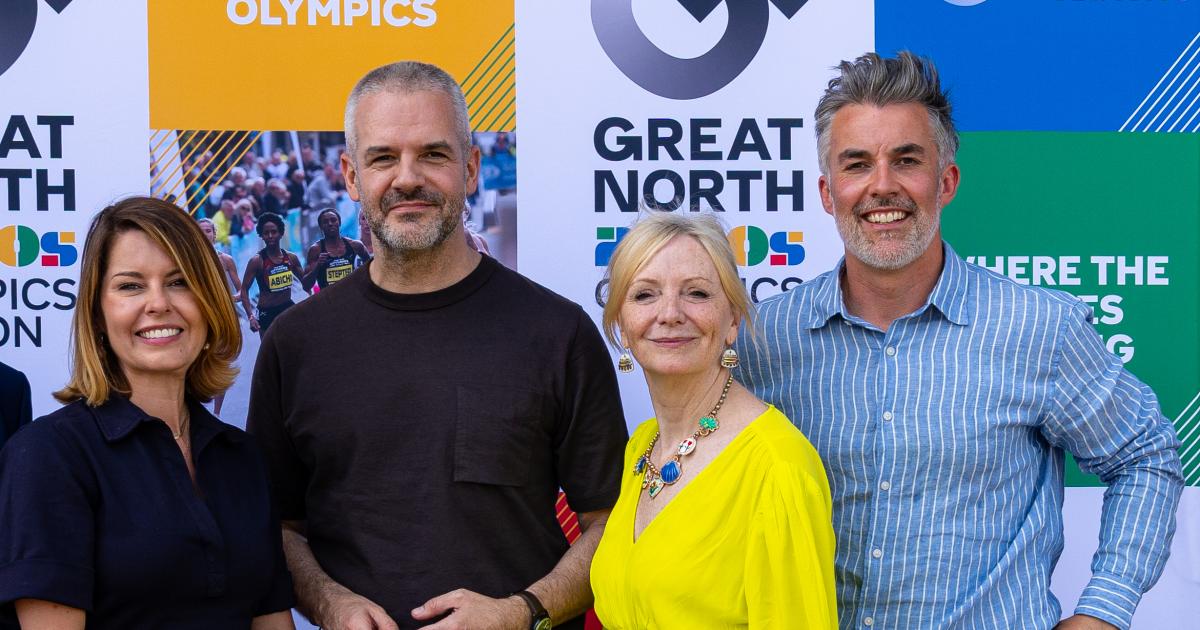
The visit marks the UK’s first major regional response to the UK-India Free Trade Agreement, which came into effect on July 15, and aims to attract Indian investment into the North while helping Northern businesses expand into the Indian market.

Taking place from October 12 to 16 under The Great North banner, the mission will bring together civic, business, and academic leaders from across the North East, York and North Yorkshire, Liverpool City Region, West Yorkshire, South Yorkshire, and Cheshire and Warrington.

David Skaith, Mayor of York and North Yorkshire, said: “The North is stronger when we work together, and we’re ready to take the commitment we made and put it into action with a joint trade mission to the world’s fastest growing economy.

Advertisement

“We will use this visit to India to showcase the combined strength of the Great North and how York and North Yorkshire can bring our world-class research and education, our thriving manufacturing sector and our hard-working farmers to the table.”

The delegation will promote trade, investment, innovation, culture, and the visitor economy, with support from the Department for Business and Trade and the Foreign, Commonwealth and Development Office.

Northern mayors will be joined by businesses, SMEs, and universities to showcase the region’s economic potential and create new opportunities for collaboration.

Kim McGuinness, Chair of The Great North and North East Mayor, said: “The Great North was created to do something the North of England has rarely had the opportunity to do before: come together with a single voice and tell our story to the world.

Advertisement

“This mission to India is a powerful example of that vision in action.

“It is the North taking control of its own destiny, coming together to build relationships, attract investment and create opportunities that will benefit our people, businesses and communities for generations to come.”

The programme will include an opening event in New Delhi, sector-focused meetings, and cultural and sporting activities to promote Northern assets.

Plans also include working with Indian travel trade partners to grow visitor numbers from India to the North of England.

Advertisement

The Great North region represents a combined economy worth more than £340 billion, with strengths in advanced manufacturing, life sciences, digital technology, clean energy, financial and professional services, and the creative industries.

India and the North already share deep ties, including a diaspora of nearly 540,000 people of Indian origin and significant Indian investment in the region.

The mission follows the India North England Opportunity Summit in March 2026, which brought together more than 300 delegates and marked one year since the opening of the Consulate General of India in Manchester.

Advertisement

Source link

Continue Reading

NewsBeat

Why some primates have even tougher births than humans

Published

on

Why some primates have even tougher births than humans

Scientists have long thought humans have a uniquely difficult birth compared to other primates.

And it’s true that from an evolutionary perspective, we face an obstetrical dilemma. As we evolved to walk on two feet, our pelvis changed shape and size and our birth canal became smaller and oddly twisted. Meanwhile, the evolution of our enormous brain meant that a large-headed baby needed to fit through it.

But our new study found that some primates have to give birth to babies that are squashed even more tightly in the birth canal.

Primate births usually happen at night which makes them difficult to study, especially in the wild. Because of this, we do not know much about them. Rare observations suggest a more solitary, shorter and less noisy labour compared to humans.

Advertisement

To get around this lack of direct observations, in 1949, the Swiss anthropologist Adolph H. Schultz looked for clues in anatomy instead. He measured the size of the pelvic birth canal and of the neonatal head in humans and seven other primates. He wanted to find out how tightly the baby’s head fitted through the birth canal. His results suggested that humans were unique in having a rounder birth canal, one in which the baby’s head only just fitted through. Other great apes seemed to have an oval canal with plenty of space for the baby’s head. Schultz’s influential study shaped how we think about human birth as unusual and harder than other primates.

However, the way he measured the birth canal was based on human anatomy. And the human standard measure Schultz used did not actually reflect how much space there was. He used the distance between the top of the sacrum (a large triangular bone at the base of the spine) and the top of the pubis bone to represent the diameter of the canal (a standard obstetric measurement in humans). Since the sacrum sits higher in the pelvis in other primates, only its lower part forms part of their birth canal. This is why their birth canals appeared so elongated in his diagram.

Our study instead used 3D scans of the pelvis and measurements of the newborn head from 29 primate species, including humans, to revisit Schultz’s study using more appropriate measurements. We found that, in reality, many primates experience a much tighter fit than humans do.

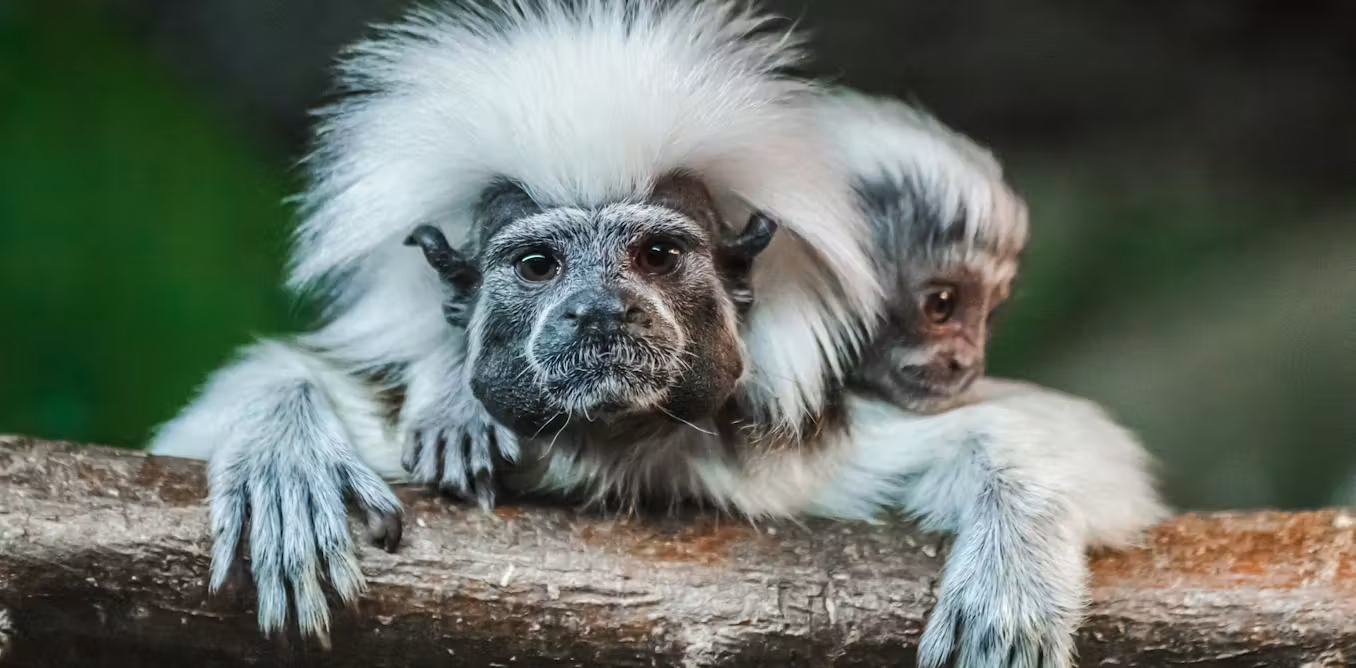
Some of the most striking examples were squirrel monkeys and tamarins, small
primates from Central and South America that live high in the tree canopy. Their
babies are born with heads that are about double the size of the maternal pelvic
canal.

Advertisement
Squirrel monkeys have a tight fit at birth.
dangdumrong/Shutterstock

Birth for squirrel monkeys and tamarins might seem impossible with such a
head-to-pelvis disproportion, but a 1995 study provides an explanation. After many
sleepless nights spent observing squirrel monkeys giving birth in a primate centre, doctoral researcher Melissa Stoller managed to take X-ray images of the labour, revealing that the monkey’s pelvic bones temporarily dislocate, creating extra space for the baby to pass through. We think a similar strategy may help bushbabies, whose newborns also have unusually large heads relative to the mother’s birth canal. As we showed in a 2025 study, the pelvis of female bushbabies (but not males) is open at the front, where their pubic bones do not meet and elastic connective tissue between them can stretch and expand during labour.

Another adaptation concerns the way the baby moves through the birth canal. In
these species, babies usually enter the canal face-first rather than with the top of the head (the orientation assumed by Schultz in his diagrams). This reduces the amount of space needed during birth. Stoller’s X-ray study showed this in squirrel monkeys and baboons, and it may be common in other monkey species too.

Neither of these adaptations could be easily adopted by humans. Because we walk
upright, our pelvis must provide stable support to our body and cannot easily stretch during labour. In fact, when the pelvic ring dilates too much during birth, this can lead to severe pelvic pain, and difficulty in walking after the birth. Instead, our babies have evolved a highly plastic head that can mould to the shape of the maternal birth canal as it passes through it.

The dangers of giving birth

Giving birth is neither easy nor risk free. Despite huge medical advances, we still see three maternal deaths per 1,000 live births worldwide, and more in low-income or war-torn countries. Birth is even riskier for babies, with 17 deaths per 1,000 live births in sub-saharan Africa. Maternal mortality rates were much higher a hundred years ago, before antibiotics and advances in obstetric care.

Advertisement
Golden lion tamarin mother rests with baby nestled against her, surrounded by foliage
Spare a thought for tamarin mothers.
Martens Coyotes/Shutterstock

While these adaptations make birth possible, they do not necessarily make it easy.
Going back to squirrel monkeys, despite their flexible pelvis they have high maternal and foetal mortality.

Looking even more widely across mammals, there are many examples of unique adaptations for apparently impossible births; from female bats having evolved a pelvic girdle fully open at the front so the pelvis is more of a horseshoe structure to accommodate enormous babies, to spotted hyenas having to give birth through their extremely large clitoris.

Primates, and mammals at large, show a diversity of obstetrical dilemmas, each
solved in different ways depending on their anatomy, ecology and movement. If we
are unique, so are all other species.

Source link

Advertisement
Continue Reading

NewsBeat

Jason Donovan announces death of dad and Neighbours co-star Terence aged 90 | Soaps

Published

on

Jason Donovan announces death of dad and Neighbours co-star Terence aged 90 | Soaps
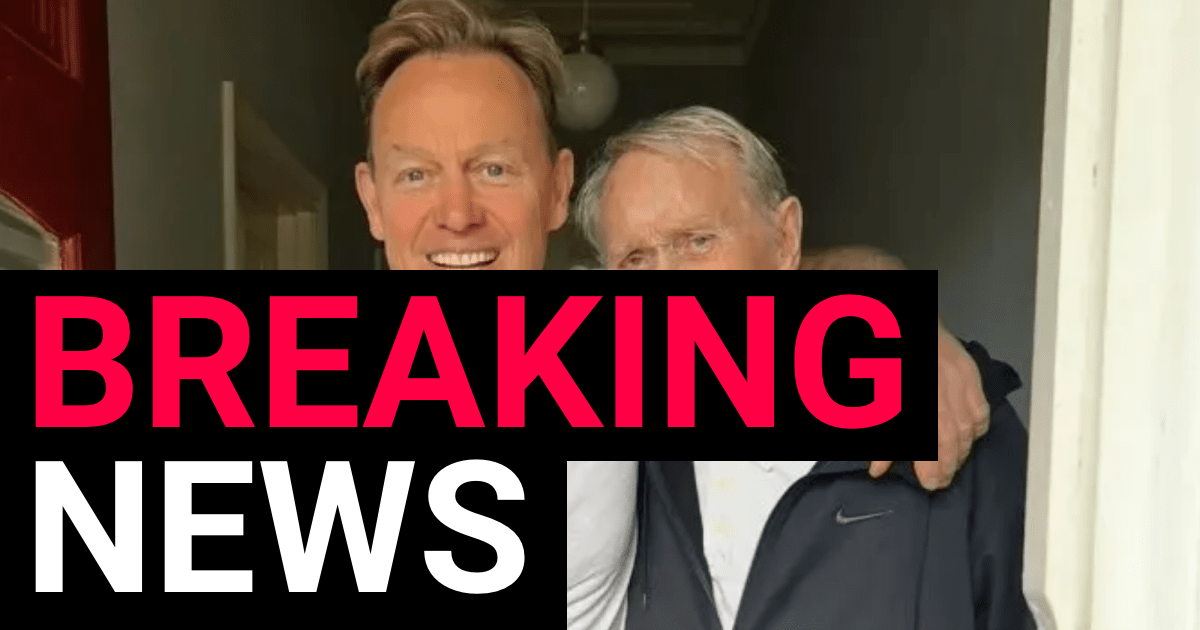
Jason Donovan’s father, Terence, has died aged 90 (Picture: Instagram/Jason Donovan)

Jason Donovan has announced that his dad, Terence, who starred alongside him in Neighbours, has died.

The Australian soap icon, 58, shared today that his father, 90, died ‘peacefully’ in Melbourne on Saturday.

‘It is with great sadness but also a sense of celebration of a long, full life that myself and my brother Paul announce our father Terence died peacefully last night here in Melbourne,’ his statement began.

‘Obviously this is an extremely emotional time and we ask you to respect our privacy.

Advertisement

‘We want to pay tribute to all the wonderful staff at Cabrini Hospital, Melbourne who looked after him in his final days.’

Ask Metro


Use AI to go deeper into the stories you care about – powered by Metro and trusted publications.

Advertisement

Jason described his dad as a ‘huge character’ and his ‘best friend’.

‘We will desperately miss him but we take comfort knowing we were all here by his side in his final days.

‘Knowing that he lived life to the max. Knowing that in life it’s either a daring adventure… or nothing at all!’

‘How lucky are we to have a dad like you,’ he concluded.

Advertisement

Born in London, Terence moved to Australia with his parents when he was 14, which is where he pursued acting after first working as a truck driver and a house painter.

In 1965, he married TV presenter Sue McIntosh, and they welcomed son Jason three years later before divorcing after seven years.

The veteran actor had numerous high-profile roles in Aussie police dramas Division 4 and Cop Shop in the 70s and 80s.

In 1990, he had a six-week guest role in Home and Away as the second actor to play Al Simpson, succeeding George Leppard.

Advertisement

That same year, he would join Neighbours as Doug Willis, with his on-screen family written out in 1994. Terence reprised the role in 2016, culminating in his character’s death, which he later said was not the way he wanted Doug to leave.

Finally, in 2022, Terence made another cameo alongside Jason in the then-finale of Neighbours, also appearing with granddaughter Jemma Donovan, who played Harlow Robinson between 2019 and 2022.

Jason, of course, famously played Scott Robinson in the soap opera before his music career took off. He appeared from 1986 to 1989.

As for the remainder of Terence’s career, he also had roles on Prisoner, Sons and Daughters, A Country Practice, and The Flying Doctors.

Advertisement

Film-wise, he appeared in Breaker Morant and The Man from Snowy River.

If you’ve got a soap or TV story, video or pictures get in touch by emailing us soaps@metro.co.uk – we’d love to hear from you.

Join the community by leaving a comment below and stay updated on all things soaps on our homepage.

Source link

Advertisement
Continue Reading

NewsBeat

Has the World Cup been a soft power failure for the US?

Published

on

Has the World Cup been a soft power failure for the US?

Hosting the Men’s Fifa World Cup is supposed to be one of the biggest soft power wins a country can score. When Germany hosted the tournament in 2006, it did so under the official slogan “a time to make friends”. It sought to transform its global reputation for being serious and reserved, presenting itself as a welcoming host instead.

Two decades later, the 2006 World Cup is still cited as one of the clearest examples of a country using a sporting mega-event to improve how the world sees it. In fact, the atmosphere was so optimistic that the tournament is fondly remembered in Germany as the “Sommermärchen” (the summer fairy tale).

Developed by American political scientist Joseph Nye in 1990, soft power is the idea that a country can win influence abroad through attraction rather than force. A nation seen as open, fair and welcoming gains real advantages such as more trade, tourism and goodwill in international politics.

Sporting mega-events are one of the most effective tools for building this kind of image because they put a country in front of a global audience for weeks at a time. Millions of people form impressions about a country from what they see and experience directly. This is one of the main reasons the US, alongside co-hosts Canada and Mexico, wanted the 2026 World Cup.

Advertisement

Hosting the tournament was supposed to project a US that is open to the world. Andrew Giuliani, head of the White House’s World Cup taskforce, explained in a July 8 press conference that months of preparation had gone into ensuring millions of visitors experienced “the hospitality that only Americans can offer and provide”.

The World Cup was also a chance for the US to build goodwill and boost a global image that has undergone strain in recent years due to the war in Iran and the Trump administration’s verbal attacks on traditional US allies. However, a string of controversies look set to turn the tournament into a lesson in how soft power can fail.

Florian Balogun, the US striker at the centre of a controversy sparked by Donald Trump intervening to suspend his red card.
Christopher Torres / EPA

Red cards and outrage

The most recent controversy came in early July when the US president, Donald Trump, personally called Fifa chief Gianni Infantino to request a review of a red card shown to US striker Folarin Balogun. This red card, which Balogun picked up in a knockout game against Bosnia and Herzegovina, should have resulted in an automatic one-match suspension.

But Fifa suspended the ban, allowing Balogun to play in the US national team’s ultimately unsuccessful last-16 tie against Belgium. This was an unprecedented decision. It sparked outrage worldwide and drew sharp criticism from European football’s governing body, Uefa. Many observers saw it as an example of political pressure shaping a sporting outcome.

Advertisement

Various other scandals had already occurred in the preceding weeks. Fifa-listed Somali referee Omar Artan was barred from entering the US over unspecified “vetting concerns”, despite holding valid documents. He was removed from the tournament altogether. Iraqi striker Aymen Hussein was detained for seven hours at a Chicago airport before being allowed to continue his journey.

Visa restrictions, including a travel ban covering 39 countries, have stopped fans from several qualifying nations from attending matches. And Iran’s team was made to base itself in Tijuana, Mexico, rather than the US. The Iranians were required to leave the US immediately after each of their matches, prompting their coach Amir Ghalenoei to call them “the most oppressed team” in the tournament.

Each incident is likely to work against the welcoming image the US hoped to project. This is an example of what researchers call “soft disempowerment”, a concept first developed to explain the criticism Qatar received when it hosted the 2022 Men’s Fifa World Cup. It is used to describe what happens when a host country’s own conduct before and during a mega-event pushes people away rather than attracts them.

Reports of migrant worker deaths during stadium construction, as well as bribery allegations and a last-minute reversal on allowing alcohol in stadiums, harmed Qatar’s efforts to use the World Cup to boost its international image. Research from 2025 concluded that, while Qatar held a visually successful tournament, social media scrutiny caused a persistent negative shift in how global audiences perceived the country.

Advertisement
Omar Artan sat on the shoulders of a crowd member as he is welcomed back to Somalia.
Omar Artan was given a hero’s welcome on returning to Mogadishu in Somalia afterUS authorities denied him entry to the 2026 World Cup.
Said Yusuf Warsame / EPA

Lessons for future hosts

The implications of soft disempowerment reach well beyond the 2026 World Cup. A growing number of countries consider hosting sporting mega-events a central pillar of their long-term national strategy. These include Morocco, which is set to co-host the 2030 World Cup alongside Spain and Portugal, as well as Saudi Arabia where the following tournament will be staged in 2034.

Soft power through sport depends on a country delivering on the promises it makes to the people an event brings through its door. Where politics visibly overrides fair process, or where visitors are met with suspicion rather than welcome, the same visibility that makes sport such a powerful tool of soft power becomes the mechanism of its undoing.

For prospective hosts planning their own turn on this stage, the 2026 World Cup may prove to be a far more instructive case study in failure than success.

Source link

Advertisement
Continue Reading

NewsBeat

France’s World Cup MELTDOWN after England humiliation: Furious Adrien Rabiot hits out at teammates’ ‘shameful’ attitude during dismal first half as L’Equipe gives THREE Premier League stars 2/10

Published

on

France star Adrien Rabiot hit out at his teammates' 'shameful' display against England

France star Adrien Rabiot slammed his teammates’ ‘unacceptable’ and ‘shameful’ attitude after Les Bleus exited the World Cup with a whimper in Miami.

After their semi-final elimination to Spain in Dallas, the tournament favourites aimed to restore some pride as they took on Thomas Tuchel‘s England in the dead rubber bronze final on Saturday afternoon.

But the 2018 champions unravelled in spectacular fashion in the Sunshine State, shipping four first-half goals to the Three Lions in a shocking performance. 

Didier Deschamps attempted to arrest the slide during the first-half hydration break, but all did not appear well in the French camp, with Man City star Rayan Cherki seen dismissively waving his coach away and electing to ignore his instructions.

Advertisement

Cherki, alongside fellow Premier League stars Ibrahima Konate and Malo Gusto, were given measly 2/10 ratings from French media outlet L’Equipe, which is known for its savage review of players. 

Your browser does not support iframes.

Advertisement

France star Adrien Rabiot hit out at his teammates’ ‘shameful’ display against England

Les Bleus, pictured with manager Didier Deschamps, shipped four first half goals as they lost 6-4 in the bronze final in Miami

Les Bleus, pictured with manager Didier Deschamps, shipped four first half goals as they lost 6-4 in the bronze final in Miami

French publication L'Equipe gave three Premier League stars a 2/10 rating

French publication L’Equipe gave three Premier League stars a 2/10 rating

Advertisement

And despite mounting a second half comeback to walk away with a more respectable 6-4 defeatl, Rabiot was equally critical of his teammates in the aftermath of their defeat in Miami.

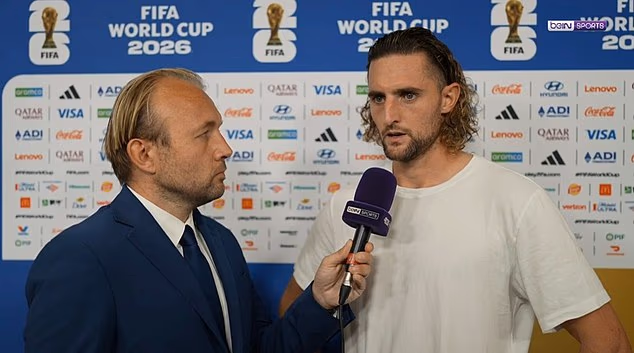
‘We started the first half quite shamefully (losing 0-4),’ he told BeIN Sports. 

‘I saw behaviour from some players that I’d never seen before. It’s a bit disappointing, because it was the last match to do well in this competition. 

‘There’s a lot of disappointment after the loss against Spain, but there was work to be done until the very end, and we can’t just be content with sloppy play like that.

Advertisement

‘We talked at halftime, we told ourselves we needed to show some pride, and it was much better in the second half, because in the first half, some of the behavior was unacceptable.’  

Rabiot’s rebuke comes after France captain Kylian Mbappe criticised his manager’s ‘sloppy’ tactics and his teammates’ poor communication after their elimination at the hands of Spain.

‘We were three against two in midfield, and against Spain, that’s hard,’ Mbappe admitted. ‘Fabian [Ruiz] and Rodri [Hernández Cascante] had plenty of time to play.

‘There was a lack of communication on the press. I think we should have done man-to-man press and force them to run with us.’

Advertisement

Mbappe also shared that he did not believe France had played the game they wanted, ‘technically, tactically’.

‘When you don’t do what you have to do in a World Cup semi-final, you don’t win,’ he added, in an apparent jibe at his teammates. ‘Spain respected their game plan and what the team usually does.

They like to control the ball and the tempo. Our plan was to press them high so they could not install their rhythm. Because they are better than us at controlling a game. We didn’t manage to do it. We were too sloppy technically. We could not hurt them when we could have.

‘Even when we recovered the ball, our first touches were not good enough. That gives a defeat. It is a huge disappointment. But if we are objective, we didn’t put all the ingredients to go to the final.’

Advertisement
France captain Kylian Mbappe's criticised his teammates after they lost 2-0 to Spain in Dallas

France captain Kylian Mbappe’s criticised his teammates after they lost 2-0 to Spain in Dallas 

Mbappe has been managed by Deschamps for the entirety of his international career, with the head coach overseeing his breakout World Cup debut in 2018.

The 1998 World Cup winner also handed Mbappe the armband three years ago, after stripping Antoine Griezmann of the honour in favour of the then-24-year-old.

Mbappe was also quick to ensure that he was held responsible for the defeat, adding matter-of-factly: ‘At the end of the day, you take all the glory when you win, and when you don’t win, you have to – sorry – to take the s***’.

Advertisement

Deschamps had been hoping to leave his post as manager of Les Bleus on a high, with the 2026 World Cup his last in charge of the national team.

Zinedine Zidane is expected to takeover from his former teammate, and will be tasked with exacting the huge potential within his star-studded squad. 

How much is David Beckham set to pocket from his World Cup brand deals? Take on our quiz in our newsletter HERE 

Source link

Advertisement
Continue Reading

NewsBeat

Thousands of homes in Kent are without water after ‘failure’ caused by shutdown at water treatment works

Published

on

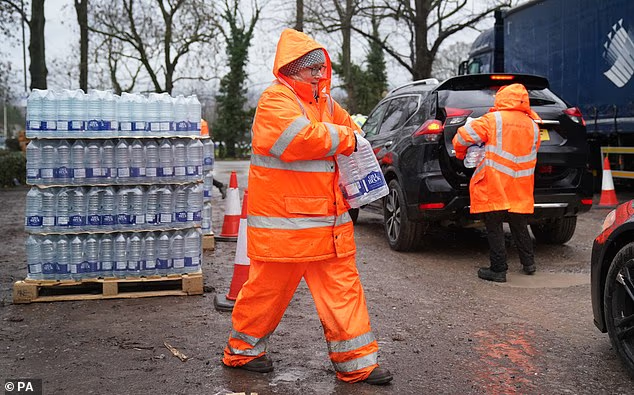
South East Water staff hand out bottled water at a water station in Kent on January 13, 2026

Thousands of homes in Kent are this morning without water because of a failure at a water treatment works. 

South East Water (SEW) said the ‘instrument failure’ in Tunbridge Wells yesterday morning caused a shutdown ‘for a brief period’. 

It left people scrambling to water stations set up at a Tesco store and rugby club in the town last night and this morning. 

The water firm said today that around 7,000 properties have been affected, with people waking up to either their taps running dry, low pressure, or intermittent supply. 

Advertisement

According to SEW, water supplies may not return until Sunday evening at the earliest as storage tanks need to be replenished to a higher level to ensure a continuous and stable supply.

The company apologised to those impacted.

SEW incident manager Robert Anthony-Scorse said: ‘An earlier instrument failure at our water treatment works in the Tunbridge Wells area caused the site to shut down for a short period this morning.

‘The site has managed to run uninterrupted this afternoon. However this, along with several days of high demand for drinking water, has impacted levels in our local drinking water storage tanks.

Advertisement

‘This means we’re unable to pump water to customers, particularly those on higher ground.’

Advertisement

South East Water staff hand out bottled water at a water station in Kent on January 13, 2026 

A SEW customer stocks up her wheeled trolley with bottles of water in Kent on January 13, 2026

A SEW customer stocks up her wheeled trolley with bottles of water in Kent on January 13, 2026 

He added: ‘We’re working hard to resolve the issue as soon as possible.

Advertisement

‘The site is in operation again and we are working hard to increase the storage levels to get the booster pumps back up and running.

‘We want to be sure that once supplies return to customers, this will be a stable, continuous flow.

‘To do this, we need to allow our storage tanks to replenish to a higher level, which unfortunately means the water supplies will not return until tomorrow evening at the earliest.’

SEW said in a statement this morning: ‘While the site is now stable, low storage levels from this disruption and high demand mean we cannot pump water to some areas, particularly on higher ground. 

Advertisement

‘Consequently, up to 7,000 properties face low pressure, no water, or intermittent supply. To ensure a stable, continuous flow, we must allow tanks to replenish. 

‘We continue to deliver bottled water to Priority Services Register customers, and bottled water stations are open at the following locations: Tesco Superstore, Pembury Road, Tunbridge Wells TN2 4NE Tunbridge Wells Rugby Football Club, St. Marks Recreation Ground, Tunbridge Wells TN2 5LS. 

‘We are very sorry to all customers impacted by this issue.’ 

Earlier this week, the water company was ordered to pay £30.5 million after investigations by industry watchdog Ofwat following previous supply interruptions affecting hundreds of thousands of households across Kent and Sussex.

Advertisement

Ofwat said the redress package concludes three investigations into the supplier and includes a previously proposed £22 million fine for water supply failures between 2020 and 2023, which impacted more than 286,000 people.

The regulator launched a second probe at the start of this year after further supply interruptions in Tunbridge Wells and across Kent and Sussex between November and January, which left up to 70,000 homes without water.

South East Water staff hand out bottled water at a water station in Maidstone, Kent, on January 13, 2026

South East Water staff hand out bottled water at a water station in Maidstone, Kent, on January 13, 2026

The third investigation followed the downgrading of SEW’s credit rating by Moody’s in May, which meant the firm was in breach of its licence condition.

Advertisement

SEW warned in its annual report this week that it needs to secure fresh financing to stay afloat after taking a £55 million hit from outages over the winter.

The water supplier to around 2.3 million customers in the south east of England said it was in discussions with lenders to agree a new loan facility.

It has enough cash to keep going until July 2027 but flagged that ‘shortly after’ it will need to get more financing. 

Source link

Advertisement
Continue Reading

NewsBeat

Five tips to avoid Europe’s new airport queues this summer

Published

on

Manchester Airport passengers face 6-hour queues at 3 hotspots

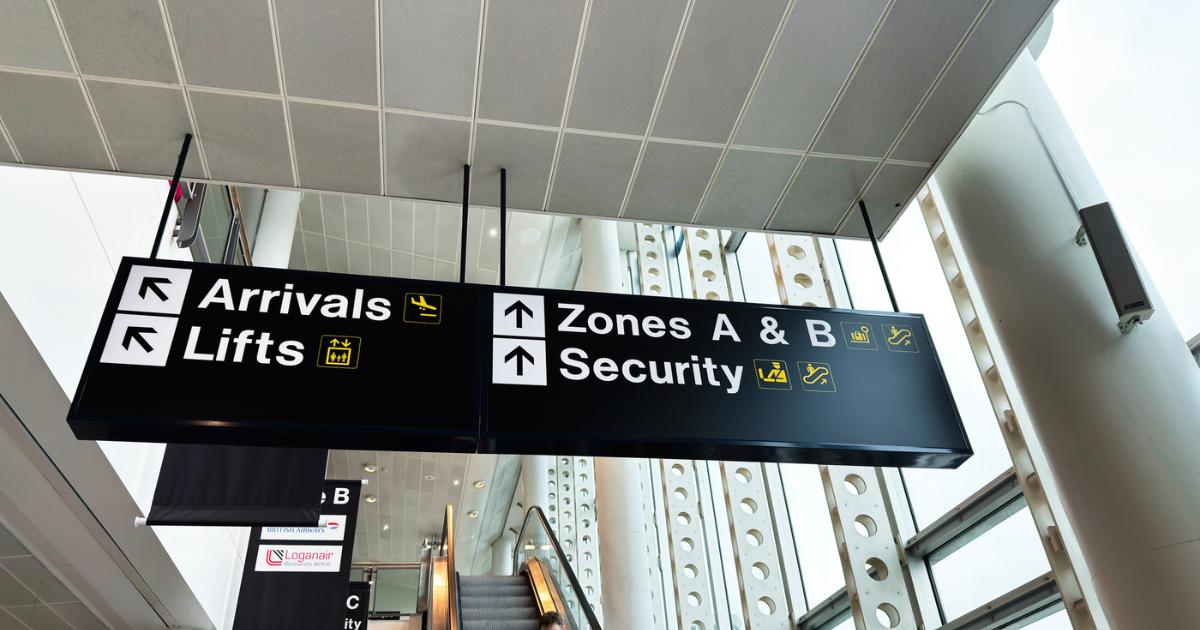
The European Union’s new Entry/Exit System (EES) is now in operation, replacing passport stamps with electronic checks that include facial photographs and fingerprint scans for most UK travellers.

While the new system is designed to improve border security, it also means passengers can expect longer waits at passport control, particularly during the busy summer holiday season.

To help travellers flying from Manchester Airport avoid unnecessary delays, the Association of British Travel Agents (ABTA) has shared several key pieces of advice.

Advertisement

Arrive with extra time

ABTA says travellers should expect passport control to take longer than before and should allow extra time when travelling through participating European countries.

Head to passport control as soon as possible

When flying home from Europe, passengers are advised to go straight to passport control after checking in and clearing security so the new EES checks are completed as early as possible.

Keep your travel documents handy

Border officials may ask where you are staying, how long you are visiting for and the purpose of your trip.

Having your accommodation details and travel documents easily accessible could help speed things up.

Advertisement

Be ready for biometric checks

Most UK passport holders travelling for holidays or short breaks will need to have a facial image taken and fingerprints scanned the first time they use the system.

Children under 12 will only need a facial scan.

Don’t fall for fake ETIAS websites

Another European travel requirement, known as ETIAS, is expected to launch later this year, but applications are not yet open.

ABTA is warning travellers not to use unofficial websites claiming to sell ETIAS permits, as they are fake.

Advertisement

The new EES system applies in most EU and Schengen countries, including Spain, France, Italy, Portugal and Greece, among the most popular destinations for passengers travelling from Manchester Airport.

Source link

Advertisement
Continue Reading

NewsBeat

Fleadh in Belfast to showcase Irish, Ulster Scots and South Asian culture

Published

on

Belfast Live

The 2026 event is set to be one of the most culturally diverse in its history, with cross-community participation and a celebration of traditions from across Northern Ireland and beyond

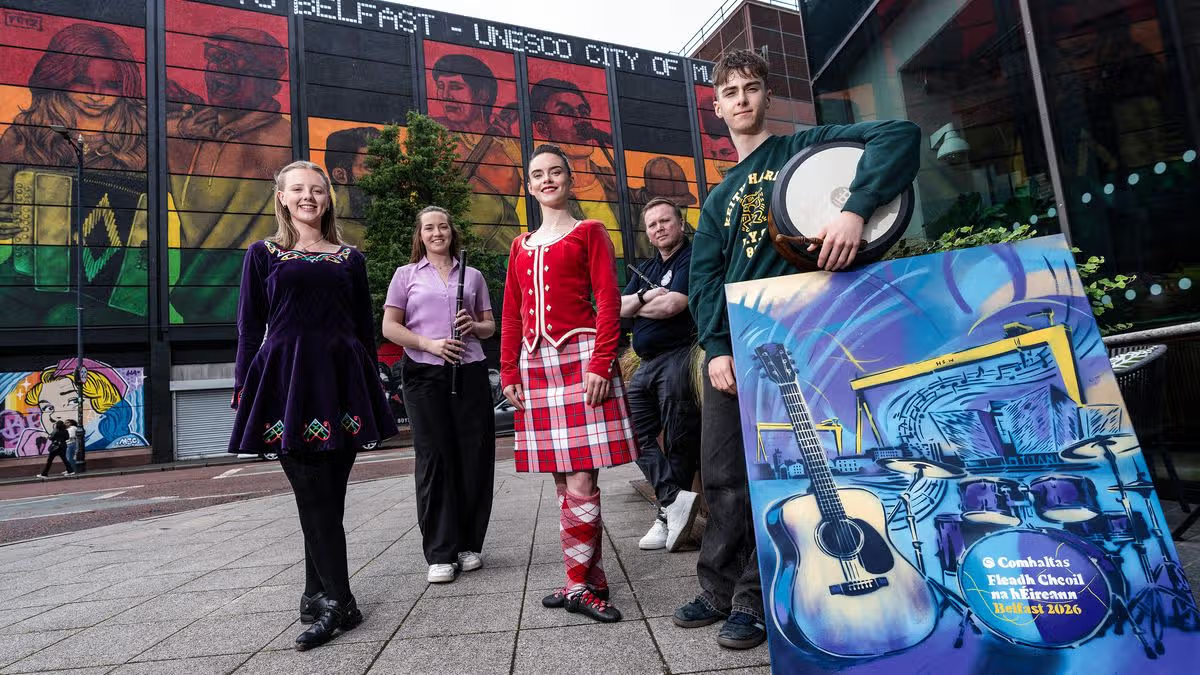
Belfast Fleadh will showcase music and dance from Ulster Scots, South Asian and other cultures, as part of the world’s largest celebration of traditional Irish music, song and dance.

Advertisement

Fleadh Cheoil na hÉireann is expected to bring around 800,000 visitors to the city from August 2-9 for the landmark cultural celebration. It is the first time the annual music festival has been held in Belfast and only the second time it has been held in Northern Ireland, after being hosted in Derry in 2013.

The 2026 event is set to be one of the most culturally diverse in its history, with cross-community participation and a celebration of traditions from across Northern Ireland and beyond.

Musicians and dancers from across the world aim to compete in the All-Ireland Fleadh music competition, with hopefuls from Ireland qualifying from county and provincial Fleadhs to earn their place.

As well as solo competitions for instruments such as fiddle, button accordion, uileann pipes, Irish harp and banjo, there are céilí band, grupaí cheoil, and accordion and pipe band competitions with participants from as far afield as the US, Australia, Dubai and Japan.

Advertisement

Traditional music sessions then emerge in pubs, restaurants, hotels and on streets across the city, welcoming musicians of all abilities.

In the centre of Belfast, the Gig Rig at City Hall will host large-scale outdoor performances with headline bands and acts as well as up-and-coming talents.

The opening ceremony of the Fleadh, titled Sharing Traditions, is a specially commissioned showcase designed to bring together Irish traditional music with Dhol drummers, Indian dancers, flute and pipe bands and Highland dancers.

Advertisement

Belfast composer Neil Martin will direct Connections, a multicultural performance on the Gig Rig in partnership with ArtsEkta. Mr Martin, an uilleann piper and cellist, will lead a cast of musicians and dancers in a performance blending Irish music with influences from Africa, South Asia, the Middle East and Latin America.

There will also be an Ulster Bands showcase in the Titanic quarter in recognition of the city’s Unionist and Ulster Scots culture, led by the Belfast Bands Forum.

Visit Belfast chief executive Gerry Lennon said the city is ready and “can’t wait” to welcome hundreds of thousands of visitors.

“As Ireland’s only Unesco City of Music, we’re incredibly proud that Belfast will become the first Unesco City of Music ever to host Fleadh Cheoil na hÉireann,” he said.

Advertisement

“That makes this year’s event even more special and underlines Belfast’s growing reputation as a world-class destination for music and culture.

“Belfast is the perfect host city for the Fleadh – compact, walkable and packed with incredible things to see and do.

“This is a city transformed: proud, vibrant and confident, with a well-earned reputation for knowing how to celebrate.

“This is a week-long celebration not to be missed. We’re encouraging everyone to gather family and friends, mark the dates in the diary and start planning now.

Advertisement

“We want visitors to have an unforgettable experience and to come back time and time again because, in answer to the great Van Morrison, it really is like this all the time.”

The Fleadh also features a programme of fringe events featuring dance, visual art, workshops, talks and storytelling.

One such fringe event will be presented by the NI Science Festival, called Neuromusicology, a live performance exploring the connection between the human brain and harp playing.

The MAC theatre will host a week-long Irish language programme, while the Corn Exchange will celebrate Ulster Scots language and cultural traditions.

Advertisement

An official Fleadh campsite for caravans and camping will operate with a dedicated shuttle service connecting visitors to the city centre in under 10 minutes.

A dedicated family campsite will also offer fully serviced facilities with 24-hour security for caravans, campervans and tents, alongside separate parking.

For all the latest news, visit the Belfast Live homepage here and sign up to our daily newsletter here

Source link

Advertisement
Continue Reading

NewsBeat

Everything you need to know for this year’s Foyle Cup parade

Published

on

Belfast Live

Need to know

Over 1,000 teams will be taking part in this year’s tournament

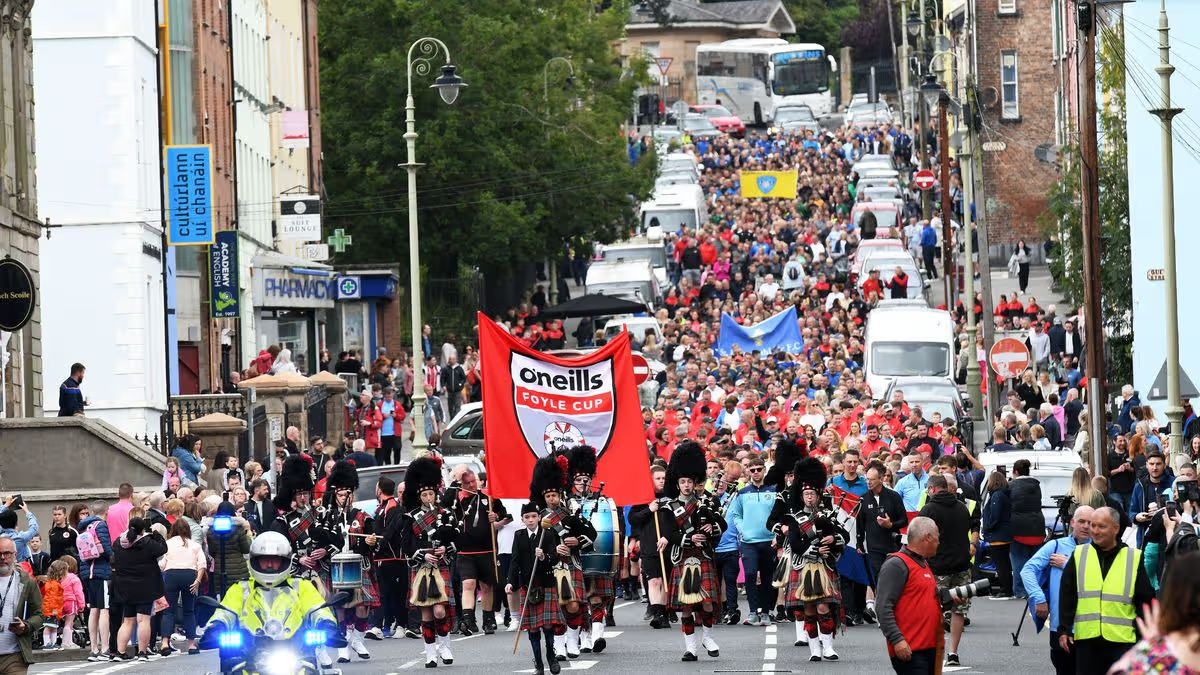
The head of the Foyle Cup parade making its way down Great James Street in Derry during a previous edition of the tournament(Image: Keith Moore)

Everything you need to know for this year’s Foyle Cup parade

  • This year’s Foyle Cup will see over 1,000 teams for the first time since it’s inception in 1992. The tournament has grown year-on-year and has become a staple in the Derry calendar. The city becomes buzzing with a sea of colour as youth football takes over our green spaces.
  • Hailed now as one of the most important and pivotal football events in the island of Ireland, the new ‘Six Days Festival of Football’ will see teams will travel from the UK, Republic of Ireland, Spain, America and Canada and 2026 will cater for more than 11,500 young soccer players and reach well in excess of over 250,000 spectators.
  • One highlight of the Foyle Cup is the parade, which officially kicks off the tournament. Parents and spectators line the streets to cheer on young players.
  • Participants can assemble from 9am outside the Martha Magee building, at the Ulster University Derry campus on the Rock Road. Any overflow of participants will be accommodated in the lower car park to join parade via main steps.
  • Parade departs campus at 10am via Northland Road, turn left onto Great James street, right turn onto Strand Road, through Waterloo Place and ends in the Guildhall Square. Traffic will be busy on Monday morning as thousands of young people gather with their teammates.
  • Free car parking is available at Ulster University Duncreggan Upper car park. Parking is encouraged at this location to ease traffic congestion around campus and is approximately a 5 minute walk to the parade departure point.
  • The Main University car park will only be available for disabled parking.
  • Mini-bus parking is available at the Foyle Arts car park, accessible at the Rock Road entrance.
  • Drivers are recommended to travel via Strand Road, left turn at traffic lights onto the Rock Road followed by left turn into the University car park.

For all the latest news, visit the Belfast Live homepage here and sign up to our daily newsletter here.

Source link

Continue Reading

NewsBeat

Boris Johnson says increasing MP security in wake of Widdecombe murder is ‘expensive and pointless’ – as it is revealed MI5 gave politicians advice on home safe rooms

Published

on

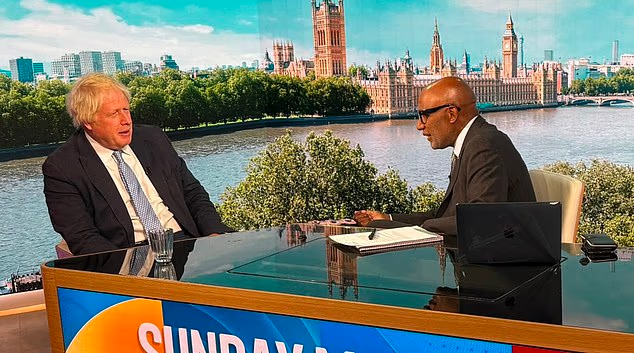
But former PM Boris Johnson cautioned against the idea of more security for MPs, telling Sky News' Sunday Morning with Trevor Phillips: 'It's probably expensive and pointless to try and raise everybody's level of security'

Advertisement

Ex-prime minister Boris Johnson has questioned whether MPs should have their security ramped up in the wake of the murder of ex-minister Ann Widdecombe

The former Conservative leader said the move, championed by Reform since Ms Widdecombe was found dead at her Dartmoor home 10 days ago, would be ‘expensive and pointless’.

Speaking to Sky News Mr Johnson said it would be better to work towards reducing the public anger directed at politicians.

He also praised Chancellor Rachel Reeves for giving as good as she got from a heckler earlier this year. 

Advertisement

The death of Ms Widdecombe has reignited the debate over the security of politicians, with her Reform allies including Nigel Farage demanding new taxpayer-funded guards.

Two serving MPs, Labour’s Jo Cox and the Conservative David Amess, have been murdered in the course of their work in the past 10 years, and the issue of threats aimed at politicians has grown at the same time. 

Today it was revealed MI5 has suggested vulnerable high-profile figures including politicians should consider creating a safe room in their homes to shelter from attackers.

New guidance issued by the security service’s National Protective Security Authority (NPSA) suggests they consider creating a secure area to evade a ‘potentially violent threat’ when it is not possible to flee.

Advertisement

But former PM Boris Johnson cautioned against the idea of more security for MPs, telling Sky News’ Sunday Morning with Trevor Phillips: ‘It’s probably expensive and pointless to try and raise everybody’s level of security’

The guidance was issued before the murder of former minister Ann Widdecombe at her Devon home 10 days ago

The guidance was issued before the murder of former minister Ann Widdecombe at her Devon home 10 days ago

Mr Johnson was asked on Sky News’ Sunday Morning with Trevor Phillips whether people are being put off standing for public office due to the danger.

Advertisement

He replied: ‘I think people are more verbally aggressive with each other than (before). Don’t you feel? 

‘I feel it’s got a bit coarser, a bit rougher. And that might put people off and they might not want their kids shouted at, that sort of thing. Right? 

‘And so what I think about all this is that actually it’s probably expensive and pointless to try and raise everybody’s level of security.

‘But what we could do is dial down the general level of invective.’ 

Advertisement

He went on the suggest MPs should ‘take it in your stride and fire back’, citing the example of Ms Reeves.

‘I think she’s been an appalling chancellor. But I thought Rachel Reeves was very good at that petrol station when she stood up to someone,’ he said.

The Chancellor was heckled during a TV interview about fuel duty in May by a van driver who shouted that the Government was ‘ruining the country’ and ‘get Keir Starmer out’.

The heckler appeared to be a Reform UK supporter as he shouted: ‘Nigel Farage. Go on Nigel.’

Advertisement

As he drove his vehicle away, which had two St George’s flags on the roof, he said out of the window: ‘I’ve got British flags on. Am I going to get arrested? We’ve got English flags on here, Rachel, am I going to get arrested?’

But she hit back, saying: ‘I love our country. I love our country, and one of the things about our country is good manners. Not very British.’

The NPSA guidance on safe rooms, released last year and last updated in June, suggests ‘high-risk individuals’ consider creating a ‘safer area’ in their home that is ‘large enough to accommodate those who live with you and be designed to offer as much delay as possible until the emergency services arrive’.

While it could be an existing space like a bathroom, bedroom or storeroom, it should ‘be protected by doors, windows and walls that are resistant against forced entry’.

Advertisement

Outgoing Prime Minister Sir Keir Starmer has said more must be done to ‘defend our democracy’, while his incoming successor Andy Burnham has also said a ‘serious review’ is needed into MPs’ security.


Advertisement

Advertisement

Source link

Continue Reading

Trending

Copyright © 2025