

Crypto World
Trader Loses $2M in Same-Block Backrun Extraction Exploit

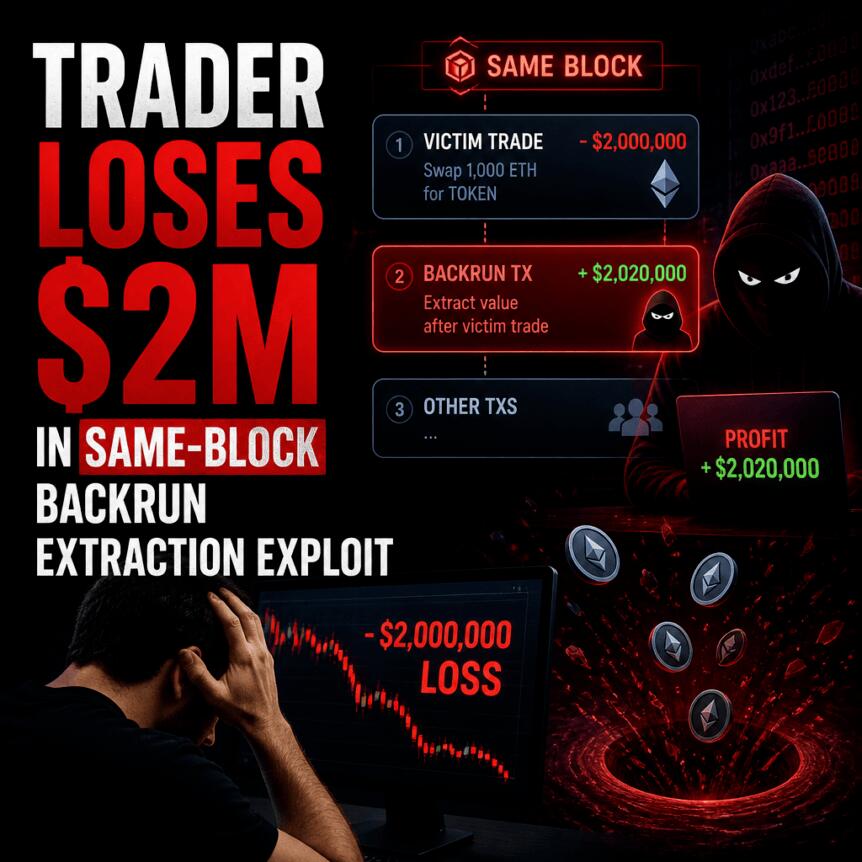
A decentralized exchange swap worth $2.01 million ended in a steep loss for one trader after a liquidity router routed the trade through a thin market, enabling an Ethereum block builder to capture profits from a same-block arbitrage. According to GoPlus Security, the order effectively turned into a “backrun extraction” rather than a fair swap outcome—one that left the victim with only about $14,500 in the resulting tokens.
The episode highlights how maximal extractable value (MEV) activity and routing mechanics can combine to produce outsized losses when trades are executed through low-liquidity pools. It also underscores a practical lesson being shared in the community: users should review the transaction route before signing DEX actions, not just confirm the trade.
Key takeaways
- A $2.01 million ETH swap on a DEX resulted in a near-total value drop, landing at roughly $14,500 after execution via a low-liquidity pool.
- GoPlus Security described the event as same-block backrun extraction, not a conventional “sandwich” attack.
- Titan Builder was identified as the largest beneficiary, receiving about $1.8 million as a builder reward from the transaction.
- The victim’s route involved routing into an AVAIL/WETH pool that executed at around 120x the later sell price, enabling an imbalance to be monetized.
- Traders are being urged to verify swap routes before confirming, since clicking through without inspecting routing can lead to irreversible execution outcomes.
A swap that was rerouted into a low-liquidity trap
GoPlus Security said the trader swapped 1,126.44 ETH on Monday at 1:59 am UTC but received only 5,776 Lighter (LIT) tokens. The security firm framed the result as a “textbook case of same-block backrun extraction,” where the trade’s execution path created an exploitable price discrepancy within the same block.
In the assessment, this was not portrayed as a classic sandwich attack. Instead, the core mechanic was that a router directed the swap through a pool with insufficient depth, allowing another actor—working with block-building capabilities—to profit from the temporary mispricing and the order’s same-block lifecycle.
The incident was publicly discussed via on-chain analysis referenced in earlier community posts, including Lookonchain, and GoPlus’s commentary identifying the nature of the extraction.
How the route imbalance drove a ~99% loss
GoPlus Security’s breakdown points to the swap’s intermediate routing. The firm said the victim’s transaction routed roughly 1,117 ETH into a low-liquidity AVAIL/WETH pool on Uniswap v3. Once executed, the swap price was reportedly around 120 times higher than what the received AVAIL tokens could later be sold for.
That pricing mismatch becomes a leverage point when a trade is executed in a way that creates a temporary window for extraction. After the trader received nearly 6.67 million AVAIL tokens at an inflated price, the router involved—identified by GoPlus as “0x router”—reportedly sold a small amount of externally sourced AVAIL back into the same pool. The purpose, according to GoPlus, was to extract approximately 1,072 WETH before paying out 1,018 ETH, worth about $1.8 million, to Titan as a builder reward.
After these internal steps, the AVAIL was swapped for LIT tokens valued at roughly $14,200. That translated to a reported 99.3% loss for the trader, based on the amounts described in GoPlus Security’s analysis.
For users, the key takeaway is that the harm didn’t come from a smart contract “hack” in the typical sense. It came from execution conditions—specifically, routing into a pool where trade size relative to liquidity could severely distort outcomes, while MEV-aware infrastructure could monetize that distortion before the victim can unwind.
Why this is more than “just a bad swap”: MEV and routing mechanics
The episode fits a broader pattern in decentralized trading: as long as block builders can influence transaction ordering and routing can route through multiple liquidity venues, the same block can contain both the victim’s swap and the counter-trade needed to extract advantage from temporary imbalances.
The article’s framing also connects the event to ongoing concerns about MEV bots and liquidity routers atop a landscape that already faces risks from scams and exploits. While the details here are specific, the implication is general—traders may believe they are placing a straightforward order, but routing behavior and transaction ordering can turn the execution into a target.
From an investor or trader perspective, this means diligence has to extend beyond token and protocol selection. Execution parameters—including route, intermediary hops, and whether a swap is likely to interact with thin liquidity—can determine whether the trade results in the expected price or in an unfavorable extraction scenario.
Community warning: read the route before you click confirm
In response to incidents like this, crypto trader Ruslan Khairullin advised that traders should read the transaction route before signing the transaction. He described the event as what happens when someone “clicked confirm faster than you read the route,” calling it a “painful lesson” after the fact.
This kind of guidance is practical because it targets the behavioral failure mode: users often focus on the expected output shown by interfaces while ignoring what the route actually does under the hood. In low-liquidity conditions, the route’s intermediate steps can matter as much as—if not more than—the end pair.
Where the mechanics are especially risky is when routing can pull a large trade into a pool with limited depth, because the price impact can be severe enough to create an exploitable imbalance. If the resulting swap path lets MEV-capable actors profit within the same block, victims may not have a straightforward opportunity to recover at a reasonable price.
Titan Builder’s role and what to watch next
GoPlus Security identified Titan Builder as the biggest beneficiary, stating it received about $1.8 million from the transaction as a builder reward. Cointelegraph reported that it reached out to Titan but did not receive an immediate response. Separately, DefiLlama data shows Titan has made $112.6 million in revenue from block building services this year.
The firm’s profitability is not limited to this case. Cointelegraph noted that Titan’s biggest day this year came in March, when it extracted around $34 million in arbitrage profit from a MEV bot incident involving the CoW Protocol.
For market participants, the immediate question is not whether these mechanics exist—they do—but how often they are triggered by routing into low-liquidity pools and whether future tooling will make route inspection easier for ordinary users. The next developments to watch are whether DEX interfaces or aggregators tighten route transparency by default and whether users get better warnings when a trade path passes through thin liquidity that could be targeted by same-block extraction.

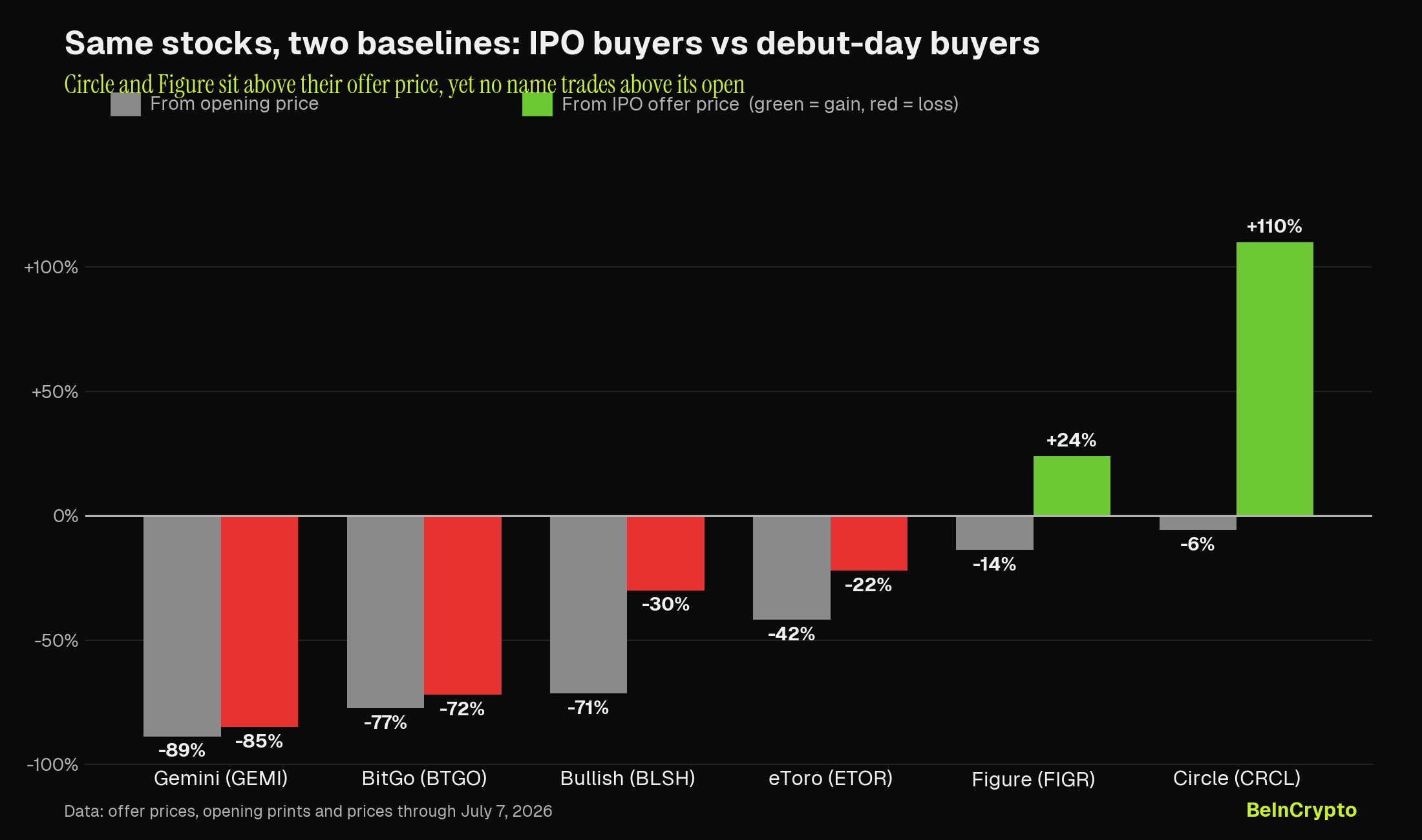
Recent crypto IPO stocks are all trading below their debut-day prices, with Circle (CRCL) down about 6% and Gemini (GEMI) down 89%.
The pattern spans every major crypto listing since mid-2025. Their slide tracks a broad market downturn that began in October.
Gemini, BitGo, Bullish Shares Sink Over 70% From Their Opening Trades
The data outlines how steep the losses run across the six major names. Gemini (GEMI) opened at $37 on its September 2025 debut and now trades near $4.19. That marks a drop of about 89%.
BitGo (BTGO) sits about 77% below its $22.43 first trade in January 2026. Bullish (BLSH) has fallen roughly 71% from its $90 open.
eToro (ETOR) trades near $41, down about 42% from its $69.69 open. Figure (FIGR) is off about 14% from its $36 debut, and Circle is down about 6% from its $69 open.
Follow us on X to get the latest news as it happens

The picture changes measured from IPO offer prices. Circle sits around 110% above its $31 offer, and Figure is about 24% above its $25 price. The other four remain below their offer levels.
The drawdown is not entirely surprising. The crypto market has fallen sharply since the fourth quarter of 2025, and the trajectory has stayed broadly downward this year. Crypto-linked stocks have weakened alongside it.
Weak Performance Freezes the IPO Pipeline
The market’s weakness has stalled the next wave of crypto listings. Several firms that planned 2026 debuts have pushed back their timelines.
Kraken’s parent, Payward, paused its listing in March 2026. Grayscale has also delayed its offering preparations and may not restart before the fourth quarter of 2026. Consensys and Ledger have also postponed their plans.
Whether the window reopens depends on where crypto prices settle in the coming months.
Subscribe to our YouTube channel to watch leaders and journalists provide expert insights
The post Gemini Stock Leads Crypto IPO Losses With 89% Drop From Its Debut appeared first on BeInCrypto.

Key Takeaways
- Secret Network has announced plans to migrate its SCRT token away from Cosmos to Arbitrum, an Ethereum layer-2 solution.
- The decision follows a devastating $4.7 million bridge hack in June that highlighted critical security vulnerabilities.
- Developers warn that artificial intelligence technology is accelerating the discovery and exploitation of legacy code weaknesses.
- Total value locked in the Cosmos ecosystem has plummeted 88% since 2021, while Arbitrum maintains $17.4 billion in secured assets.
- The SCRT token experienced a sharp 24% decline within 24 hours of the migration announcement, currently valued at approximately $0.041.
Privacy-focused blockchain Secret Network has revealed intentions to abandon the Cosmos ecosystem in favor of Arbitrum, an Ethereum layer-2 scaling solution. The migration proposal, made public on July 7, emerges just weeks after hackers successfully exploited a bridge vulnerability, stealing $4.7 million in digital assets.
According to the development team, security concerns represent the primary motivation behind this strategic shift. While Secret Network has called Cosmos home since 2020, the organization now believes the ecosystem’s evolving landscape and aging infrastructure pose unacceptable risks.
“The security risk is the part we take most seriously,” the team wrote. “Old code is becoming dramatically easier to analyze.”
Developers specifically highlighted artificial intelligence as an emerging vulnerability factor. Modern AI systems can efficiently analyze smart contract code, identify logical flaws, and generate functional exploit scripts at unprecedented speeds.
The bridge compromise in June, which targeted the Axelar-Secret IBC connection, resulted in $4.7 million worth of bridged tokens being stolen. While the team emphasized that the core SCRT token and underlying privacy technology remained secure, the incident demonstrated the inherent risks associated with maintaining outdated code within a shrinking ecosystem.
Declining Cosmos Ecosystem Metrics
The Cosmos network has experienced significant deterioration since reaching its zenith in 2021. Current total value locked across all Cosmos-based chains stands at approximately $2 billion, representing an 88% collapse from peak levels. Secret Network itself maintains only $1.3 million in locked value, based on DefiLlama data.
Contrasting sharply, Arbitrum currently secures $17.4 billion in total value, establishing its position as the dominant Ethereum layer-2 network according to L2Beat metrics.
The development team noted that both developers and liquidity providers have steadily migrated away from Cosmos. Previously reliable infrastructure and tools have deteriorated, while several prominent projects have already departed the ecosystem.
Secret Network joins a growing exodus from Cosmos. Stablecoin infrastructure Noble revealed plans to migrate to Ethereum in January. Privacy-focused NilChain completed its Ethereum transition in February. Sei Network finalized its comprehensive Cosmos-to-Ethereum migration in June.
Technical Migration Details and Token Economics
Should the governance proposal receive community approval, SCRT Labs intends to capture a snapshot of all SCRT token balances on September 1. This snapshot will determine eligibility for the new ERC-20 compatible SCRT token launching on Arbitrum.
Native SCRT holdings and staked tokens will qualify for the migration. However, bridged SCRT variants, sSCRT, contract-held balances, and IBC-based assets will be excluded. Token holders must ensure their assets are in eligible forms before the snapshot deadline.
Post-migration tokenomics will feature a reduced inflation rate, dropping from 9% annually to 5%. SCRT will maintain its role as the primary governance token on the new platform.
Official development support for the existing Cosmos-based Secret layer-1 blockchain will terminate on September 1. The legacy chain could theoretically continue operating if independent validators elect to maintain the infrastructure.
The migration proposal awaits formal community voting. Without governance approval, the transition cannot proceed.
Market reaction to the announcement proved overwhelmingly negative. SCRT’s price crashed approximately 24% in the initial 24-hour period following the revelation, settling near $0.041. This valuation represents a staggering 99%+ decline from the token’s 2021 all-time high.
As part of the transition process, Secret Network’s development team has committed to releasing the network’s complete source code under an open-source licensing framework.


Security officers keep watch in front of an AI (Artificial Intelligence) sign at the annual Huawei Connect event in Shanghai, China, September 18, 2019.
Aly Song | Reuters
BEIJING — China on Wednesday warned of “back-door” security risks affecting companies that use U.S.-based company Anthropic’s Claude Code artificial intelligence tool.
It comes as the U.S.-China tech race intensifies, with Anthropic last month blaming Chinese company Alibaba for attempting to extract its AI capabilities, which are not officially available in China. Alibaba did not comment on the accusations at the time.
Many locals in China have found ways to use U.S. AI tools, however. In March, a Xiaomi AI developer said at a state-organized forum that many were using Claude Code. And Alibaba has ordered its employees to stop using Anthropic tools for work starting July 10, CNBC confirmed on Monday.
The Chinese Ministry of Industry and Information Technology said Wednesday its cybersecurity threat platform found “AI coding tool Claude Code contains a security back-door vulnerability that poses a serious threat.”
The autonomous coding tool can send sensitive information to a remote server without a user’s consent, the statement said in Chinese, according to a CNBC translation. It noted that the information could include a user’s location and identity.
Users should uninstall or upgrade from the affected Claude Code versions, 2.1.91 to 2.1.196, the cybersecurity platform said. That covers versions released from April 2 to June 29, according to Anthropic’s website, which says the latest version of Claude Code as of Wednesday is 2.1.204.
Anthropic did not immediately respond to a CNBC request for comment.
Key Takeaways
- Bitcoin commands 40% allocation due to institutional adoption and proven market stability
- Ethereum captures 25% for its leadership in decentralized finance and smart contract platforms
- Solana secures 15% thanks to superior transaction speed and expanding ecosystem
- Chainlink holds 10% as critical oracle infrastructure supporting real-world data integration
- Near Protocol takes 5% for its emerging AI integration and Layer 1 innovation
Distributing $1,000 strategically across five digital assets plus a stable reserve creates a framework that manages volatility while capturing growth potential.
Building the Foundation With Market Leaders
Bitcoin anchors this allocation strategy with a 40% position worth $400. As the pioneering cryptocurrency with the largest market capitalization, it benefits from unmatched liquidity and growing institutional acceptance through exchange-traded funds and corporate balance sheet adoption. Its established position makes it the most dependable choice among digital currencies.
Ethereum claims the second-largest portion at 25%, representing $250. This network underpins the majority of decentralized financial applications and stablecoin infrastructure while serving as the primary platform for asset tokenization. Traditional financial players exploring blockchain solutions consistently choose Ethereum’s established ecosystem.
Combined, these two assets account for 65% of the total allocation. This concentration acknowledges their relatively lower volatility compared to emerging alternatives.
Adding High-Growth Exposure
Solana receives a 15% allocation worth $150. This blockchain challenges Ethereum with superior transaction throughput and minimal fees, establishing significant presence in decentralized finance, payment systems, and mainstream crypto applications. While introducing additional risk, it offers substantial upside potential through continued network adoption.
Chainlink captures 10%, translating to $100. Its decentralized oracle infrastructure bridges blockchains with external data sources, creating essential functionality for DeFi protocols and enterprise applications. Growing tokenization of traditional assets should drive increased demand for reliable data feeds.
Near Protocol completes the portfolio with 5%, or $50. This platform emphasizes artificial intelligence infrastructure alongside its Layer 1 capabilities. Though representing the smallest and most speculative position, it provides meaningful exposure to the convergence of AI and blockchain technology.
Complete Allocation Breakdown
Bitcoin: 40% ($400)
Ethereum: 25% ($250)
Solana: 15% ($150)
Chainlink: 10% ($100)
Near Protocol: 5% ($50)
Stablecoins: 5% ($50)
Maintaining Liquid Reserves
The remaining 5%, worth $50, remains in stablecoin holdings. This represents a strategic buffer rather than idle capital. Maintaining liquid reserves enables opportunistic purchases during market corrections without liquidating existing positions.
Cryptocurrency markets experience dramatic price movements. A modest reserve provides tactical flexibility when attractive entry points emerge.
The Case for Strategic Allocation
No individual asset guarantees superior returns. Distributing capital across five cryptocurrencies with distinct applications and risk characteristics helps minimize portfolio damage when individual assets decline sharply.
Bitcoin and Ethereum establish the baseline stability. Solana, Chainlink, and Near deliver growth potential. The stablecoin reserve maintains optionality for market dislocations.
This framework avoids speculation in favor of methodical market exposure. It represents a rational entry point for allocating $1,000 toward digital assets without concentrating risk excessively.
The allocation mirrors current market dynamics: institutional participation continues expanding, artificial intelligence intersects with blockchain infrastructure, and fundamental protocol layers gain importance in how decentralized networks operate.
Altcoins are facing renewed pressure as market breadth weakens and liquidity stays thin across smaller tokens.
Summary
- Darkfost says 40% of altcoins now trade near lows as token oversupply drains liquidity fast.
- Bitcoin’s drop below $60,000 pushed the share toward 45%, showing altcoin stress deepening again sharply.
- Mikybull sees an altcoin dominance breakout, but broader market data still demands caution from traders.
Crypto analyst Darkfost said about 40% of altcoins are trading near their all-time lows. He said the reading reflects the pressure facing projects that launched tokens during a period of weaker demand.
Darkfost said the share climbed to 45% when Bitcoin fell back below $60,000 in late June. He framed the data as a warning that altcoins remain exposed when market liquidity dries up and buyers narrow their focus to stronger names.
The analyst said the current market looks different from past cycles. He pointed to the fast rise in token creation, saying CoinMarketCap counts about 53.5 million crypto assets and around 60,000 new tokens added daily.
According to CoinMarketCap, Bitcoin dominance is around 58.2%, keeping BTC in control of most market value.
Token supply adds pressure
The large number of tokens has become a key reason for weaker altcoin performance. When new assets keep entering the market, liquidity spreads across more coins, making it harder for most projects to hold price support.
Darkfost said many of these assets may fail without strong incoming liquidity. His view fits a market where investors have become more selective and where speculative capital has not moved broadly into smaller tokens.
Altseason has failed to arrive in 2026 because Bitcoin remains below its record, dominance stays elevated, and ETF capital has stayed mostly locked in BTC rather than rotating into altcoins.
Dominance chart sends mixed signal
Not all analysts see only weakness. MikybullCrypto said the altcoin dominance chart looks solid after breaking a four-year trendline.
A breakout in altcoin dominance can show early signs of capital moving away from Bitcoin and into the broader market. Traders often watch that chart for clues that altcoins may be preparing for a stronger relative move.
Still, one chart does not confirm a broad altseason. As crypto.news previously reported, the Altcoin Season Index measures whether most top altcoins are beating Bitcoin over 90 days. A reading above 75 confirms altseason, while lower readings show mixed or BTC-led conditions.
The index sat near 43 in mid-2026. That level shows some recovery in altcoin performance, but not enough to confirm a sustained rotation away from Bitcoin.
Market remains selective
Weak retail activity has also limited altcoin demand. Bitcoin search interest rose during the 2026 selloffs, but fear-driven searches did not prove that smaller investors were buying again.
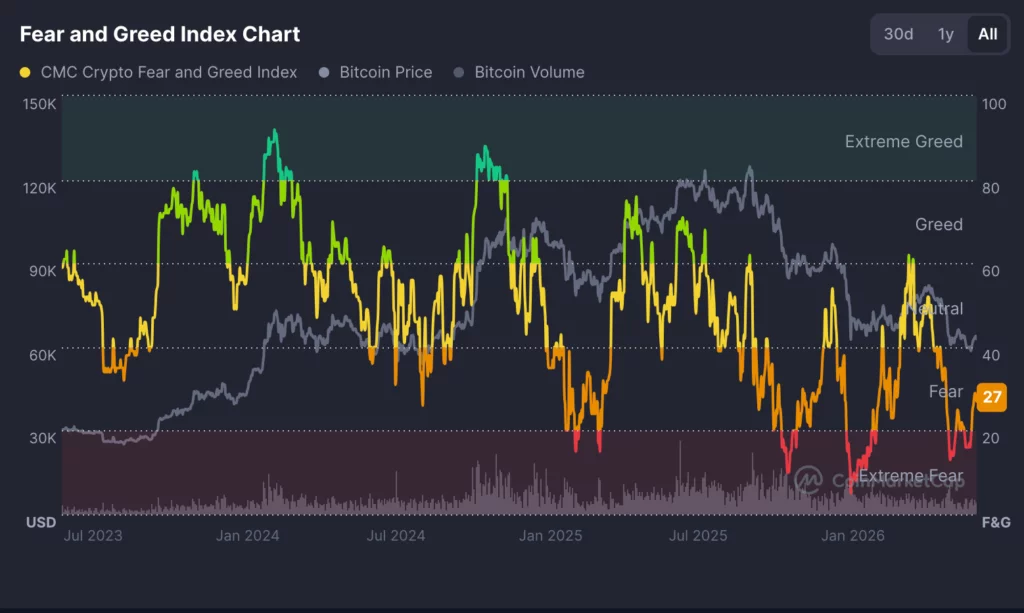
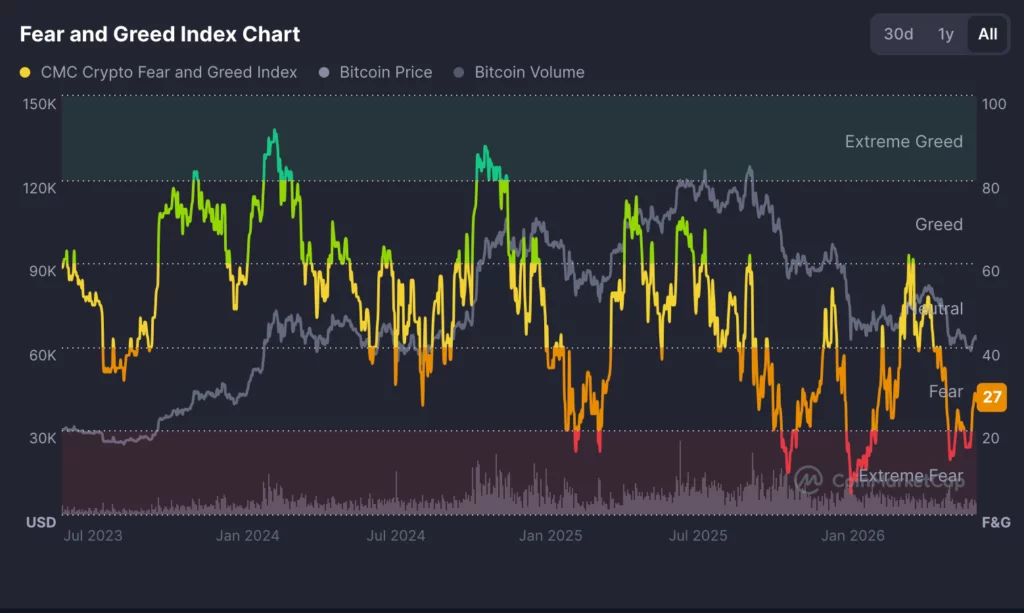
Currently, the Crypto Fear and Greed Index is around 27, placing sentiment in the fear zone. The reading shows that market confidence remains weak, though conditions are less extreme than earlier lows.
For now, the altcoin market is split between two signals. Darkfost’s data shows a large share of tokens stuck near historic lows, while Mikybull’s chart points to a possible dominance breakout.
That split suggests traders are not treating all altcoins the same way. Stronger projects may attract selective flows, but weaker tokens remain exposed as liquidity spreads across millions of assets and Bitcoin dominance stays high.
Disclosure: This article does not represent investment advice. The content and materials featured on this page are for educational purposes only.
Crypto World
Pudgy Penguins (PENGU) Price Analysis: Can This Meme Token Evolve Into a Mainstream Brand?
Key Takeaways
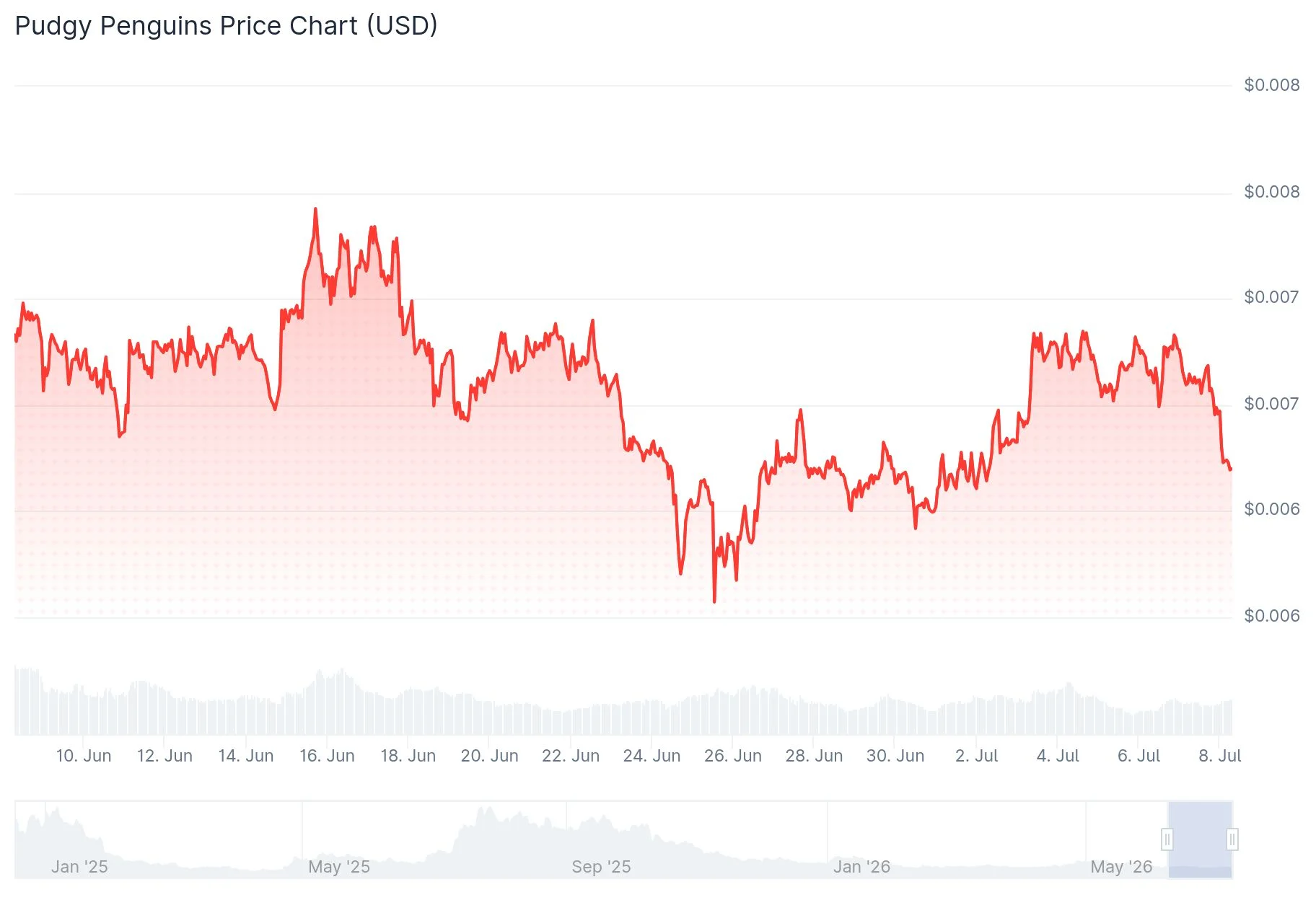
- PENGU is currently priced around $0.006 with approximately $400 million in market capitalization and 88.9 billion tokens in maximum supply
- Mid-range projections suggest $0.03–$0.06 pricing, driven by sustained brand momentum and community engagement
- Optimistic scenario envisions $0.15–$0.30 if the project successfully penetrates gaming, entertainment, and international licensing markets
- Pessimistic outlook places PENGU between $0.003–$0.008 should consumer enthusiasm diminish and token release schedules create downward pressure
- In 2025, Canary Capital submitted an ETF application featuring PENGU tokens and Pudgy Penguins NFTs as underlying assets
What began as a simple NFT project has transformed into something more substantial. Pudgy Penguins now operates as a legitimate consumer brand with physical merchandise available at prominent retailers and a robust online community.
This distinguishes PENGU from typical meme tokens that depend exclusively on viral momentum and speculative trading to maintain their market positions.
The token currently hovers around $0.006, maintaining a market capitalization near $400 million against a total supply ceiling of roughly 88.9 billion tokens.
While established cryptocurrencies like Bitcoin or Ethereum derive value from technological infrastructure, PENGU’s valuation hinges primarily on brand recognition and consumer appeal.
Potential Price Trajectories
The moderate forecast for PENGU positions prices within a $0.03 to $0.06 range. This projection assumes continuous brand development, sustained NFT collection relevance, and consistent physical product sales.
Such pricing would establish market capitalization between $2.7 billion and $5.3 billion — notably below the peak valuations achieved by dominant meme tokens during previous cycles.
Pudgy Penguins possesses a distinct advantage through its retail distribution network. While most meme tokens remain confined to cryptocurrency exchanges, physical toys on store shelves provide tangible brand exposure to mainstream consumers.
The aggressive forecast projects PENGU reaching $0.15 to $0.30. This outcome requires successful expansion into interactive gaming, media production, and worldwide licensing agreements, coinciding with favorable broader cryptocurrency market conditions.
Canary Capital’s 2025 ETF filing, which incorporated both PENGU tokens and Pudgy Penguins NFTs, signals emerging institutional recognition from conventional financial sectors.
Downside Considerations
The conservative scenario places PENGU between $0.003–$0.008. Without fundamental protocol functionality, PENGU’s valuation remains vulnerable to shifts in community participation and overall market psychology.
Scheduled token releases represent a significant concern. When additional supply enters circulation without corresponding demand growth, downward price pressure typically follows.
The cryptocurrency landscape continuously introduces new meme tokens each market cycle, creating fierce competition for sustained investor attention and capital allocation.
Applying probability-weighted analysis across multiple scenarios yields an approximate five-year target of $0.05 by 2031, with the moderate case representing the most probable outcome.
The present price point near $0.006 and $400 million market capitalization represents the current market consensus on the brand’s tangible and intangible assets.
Key Highlights
- Polymarket integrates Lightning Network for rapid Bitcoin deposits through Spark infrastructure
- Deposits clear in less than one second through Spark’s zero-confirmation methodology, with Spark assuming verification risk
- This enhancement builds on Polymarket’s traditional on-chain Bitcoin functionality launched in October 2025
- Integration supports major platforms including Cash App, Coinbase, Kraken, Binance, OKX, and additional wallets
- Launch coincides with ongoing regulatory challenges from the CFTC, South Korean authorities, and New York litigation
Polymarket has integrated Lightning Network capabilities for Bitcoin deposits, leveraging payment infrastructure developed by Spark. This implementation allows traders to deposit funds nearly instantaneously rather than enduring traditional blockchain confirmation delays.
Spark operates as a Bitcoin payment protocol optimized for rapid transactions and stablecoin settlements. Upon deposit initiation, Spark validates transactions at the broadcast stage rather than awaiting conventional confirmation periods.
Understanding Spark’s Zero-Confirmation Technology
Prior to processing any deposit, Spark performs validation checks for double-spending threats, transaction fee sufficiency, and replace-by-fee indicators. When these security checks are satisfied, deposits receive immediate credit in under one second. Spark assumes all confirmation-related risks.
Polymarket describes this as a “zero-conf” infrastructure. This architecture means Polymarket avoids operating dedicated Lightning nodes or establishing custom confirmation protocols.
The deposit mechanism maintains self-custody principles. Users retain control through their private keys, while Spark manages payment routing infrastructure behind the scenes.
This represents a significant improvement over the standard on-chain Bitcoin deposit option Polymarket rolled out in October 2025. That previous system required users to wait through three to six Bitcoin network confirmations before accessing their deposited funds.
The Strategic Importance of Instant Deposits in Prediction Markets
Prediction markets operate with exceptional speed. Market conditions across sports, political events, cryptocurrency, and macroeconomic developments can transform within moments.
Traditional blockchain confirmation waiting periods can lock traders out of favorable entry points. Lightning Network deposits substantially reduce this operational friction.
Polymarket has demonstrated capacity for significant trading activity. World Cup-related contracts drove Polymarket-associated volume beyond approximately $5 billion, while the broader prediction market sector reached $44.8 billion in June 2026.
The Lightning integration functions with numerous applications that already facilitate Lightning withdrawals. Supported platforms encompass Cash App, Coinbase, Kraken, Binance, OKX, Wallet of Satoshi, Tether Wallet, and Cake Wallet.
This expansion provides Bitcoin users with additional pathways to access Polymarket without depending on slower traditional blockchain transactions.
Ongoing Regulatory Challenges
This deposit infrastructure upgrade arrives amid regulatory examination across multiple jurisdictions.
The CFTC has initiated a comprehensive investigation examining Polymarket’s operational practices and social media engagement strategies.
South Korean regulators have postponed enforcement actions while allowing Polymarket an opportunity to address potential gambling regulation violations.
In New York, two platform users have filed suit against Polymarket, claiming the platform improperly withheld payouts on a Strategy Bitcoin market contract.
Polymarket has not released public statements connecting the Lightning feature rollout to these regulatory developments.
The platform continues expanding payment infrastructure while navigating heightened legal oversight across various regulatory territories.

European lawmakers are set to vote again on a controversial “chat control” framework that would require certain online services to scan messages for child sexual abuse material. The European Parliament voted on Tuesday using an urgent procedure, setting up a further vote on Thursday to decide whether to extend a legal arrangement that expired in early April.
Privacy and cryptography advocates argue that the measure undermines end-to-end encryption by pushing providers to detect prohibited content at the message level—even when messages are otherwise protected. Until the expiry in April, platforms such as WhatsApp were able to rely on voluntary steps rather than a binding EU framework.
Key takeaways
- The European Parliament triggered an urgent procedure Tuesday, allowing a fast-track vote on Thursday after the previous framework expired in early April.
- Tuesday’s vote narrowly passed, with 331 votes in favor, 304 against, and 11 abstentions, but any attempt to reject or amend the proposal would require an absolute majority of 361 votes.
- Critics say the approach revives “Chat Control 1.0” requirements that would compel message scanning, including for end-to-end encrypted communications.
- Earlier, Parliament had rejected a Commission-backed temporary extension in March, and opposition to the latest proposal centers on changes to how broadly message scanning would apply.
Urgent vote sets up a renewed extension battle
The Tuesday vote used a rarely employed urgent procedure, bringing lawmakers back to the negotiating table with a decision window measured in days. Pirate Party MEP Markéta Gregorová described the process as a procedural violation, saying Parliament used urgency to revisit an extension vote after the initial rules lapsed.
Gregorová said Thursday’s vote would be about extending the derogation that allowed online platforms to scan private communications. In her view, the Parliament’s choice to use urgent procedure bypasses the normal decision rhythm and effectively reopens a dispute that had already been settled through a prior vote.
The substance of the proposal remains what critics have long targeted: a legal requirement for service providers to detect child sexual abuse material in messages, including—according to opponents—where end-to-end encryption is used.
What the numbers mean for Thursday’s outcome
According to Gregorová, rejecting or amending the proposal would require an absolute majority of 361 votes in Parliament. That means opponents of the measure face a steep hurdle if the Thursday vote is structured as a continuation of the same legislative effort.
Tuesday’s urgent-procedure vote passed narrowly: 331 lawmakers voted in favor, 304 against, and 11 abstained. That result suggests the measure is still deeply polarizing, with neither side able to dominate the chamber.
The requirement for an absolute majority also helps explain why Tuesday’s narrowly positive result matters. Even if the vote does not reflect full support across Parliament, the procedural threshold for blocking the extension may make it difficult to stop without significant coalition-building.
March rejection and the question of scope
The renewed vote comes after a previous attempt to extend a similar system failed in March. In that earlier parliamentary vote, Parliament rejected a temporary extension of the scheme proposed by the European Commission while a new version of the law was under discussion. The rejection passed by 311 votes against, 228 for, and 92 abstentions, according to the European Parliament’s press room.
Euronews reported that Tuesday’s revival was backed by the European People’s Party (EPP), which had largely voted against the measure in March. The outlet pointed to amendments in the March version that had narrowed the scope of message scanning, a change that had helped the measure fail.
Euronews also reported that EPP leader Manfred Weber has been seeking ways to push the extension through without amendments. That framing aligns with Gregorová’s criticism that the EPP is using Parliament’s procedural mechanics to bring forward a proposal previously rejected—despite concerns about both privacy and the breadth of scanning.
Gregorová argued that the EPP was “abusing its position as the largest political group” by bringing back a rejected measure through a procedural loophole, calling it unprecedented.
Where EU member states stand and what could change
Beyond the European Parliament vote, the broader legislative landscape is already shifting. EU member states agreed last month to reinstate an interim “chat control” measure. The arrangement, as reported in the same reporting thread, would allow service providers to detect, report, and remove abusive material until 2028.
For investors, builders, and users of messaging and communications tools, the key uncertainty is how Thursday’s parliamentary vote will translate into the final rules that providers would have to follow—particularly regarding what kinds of systems are covered, what technical methods are considered compliant, and how end-to-end encryption is handled in practice.
The distinction between voluntary efforts and binding scanning obligations also matters operationally. Voluntary measures can vary significantly across platforms, while a reinstated framework would create a uniform baseline that could force changes to product design, compliance workflows, and the handling of encrypted content.
As the EU moves from expired rules to a renewed vote, the next signal to watch is whether Parliament can secure the absolute majority required to reject or amend the proposal on Thursday—or whether the current majority will be enough to extend the framework again.
Crypto World
Crypto News, July 8: U.S. Strikes Iran Again, Ethereum Price Wobbles After Bitcoin Spot Sell-Off

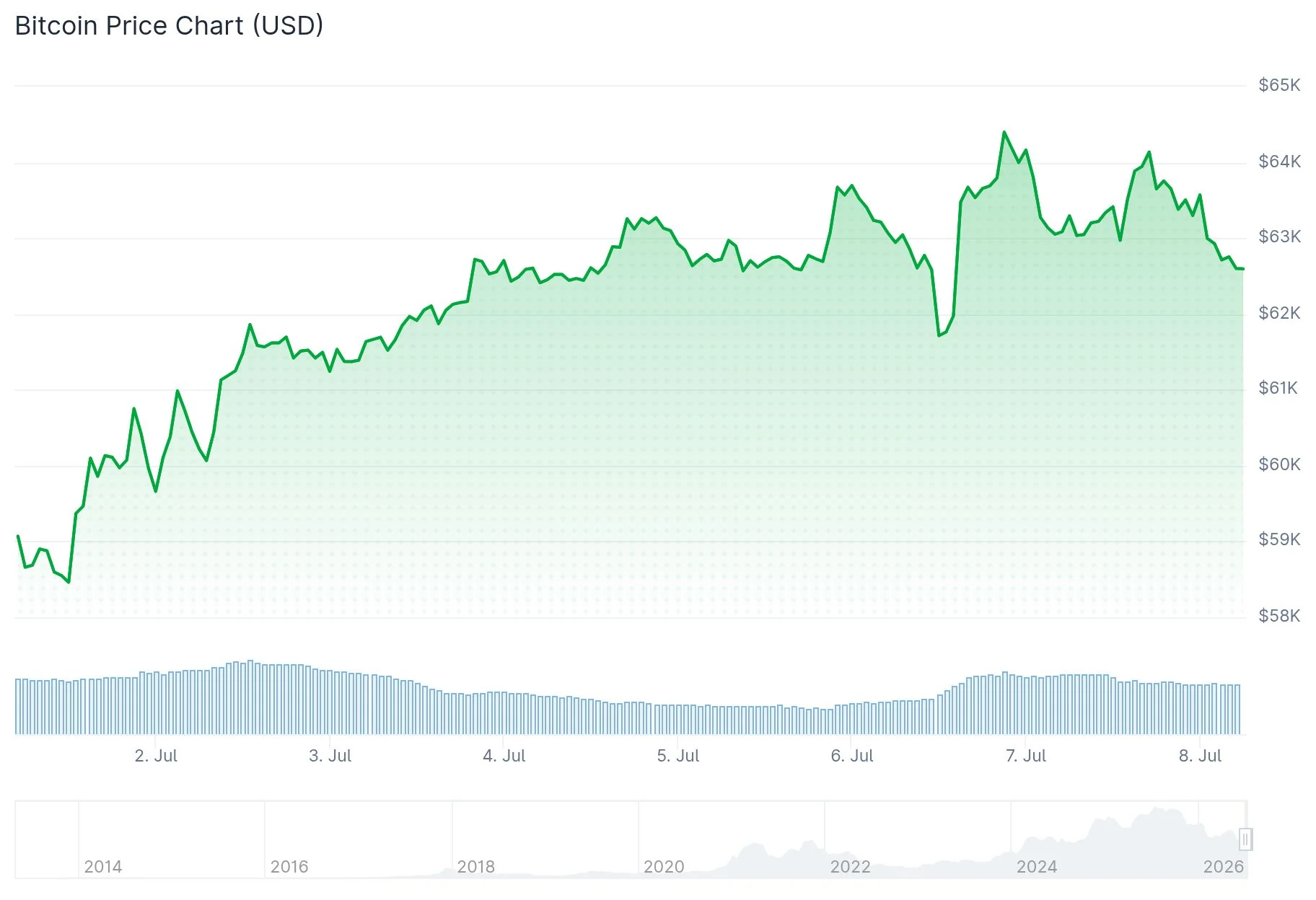
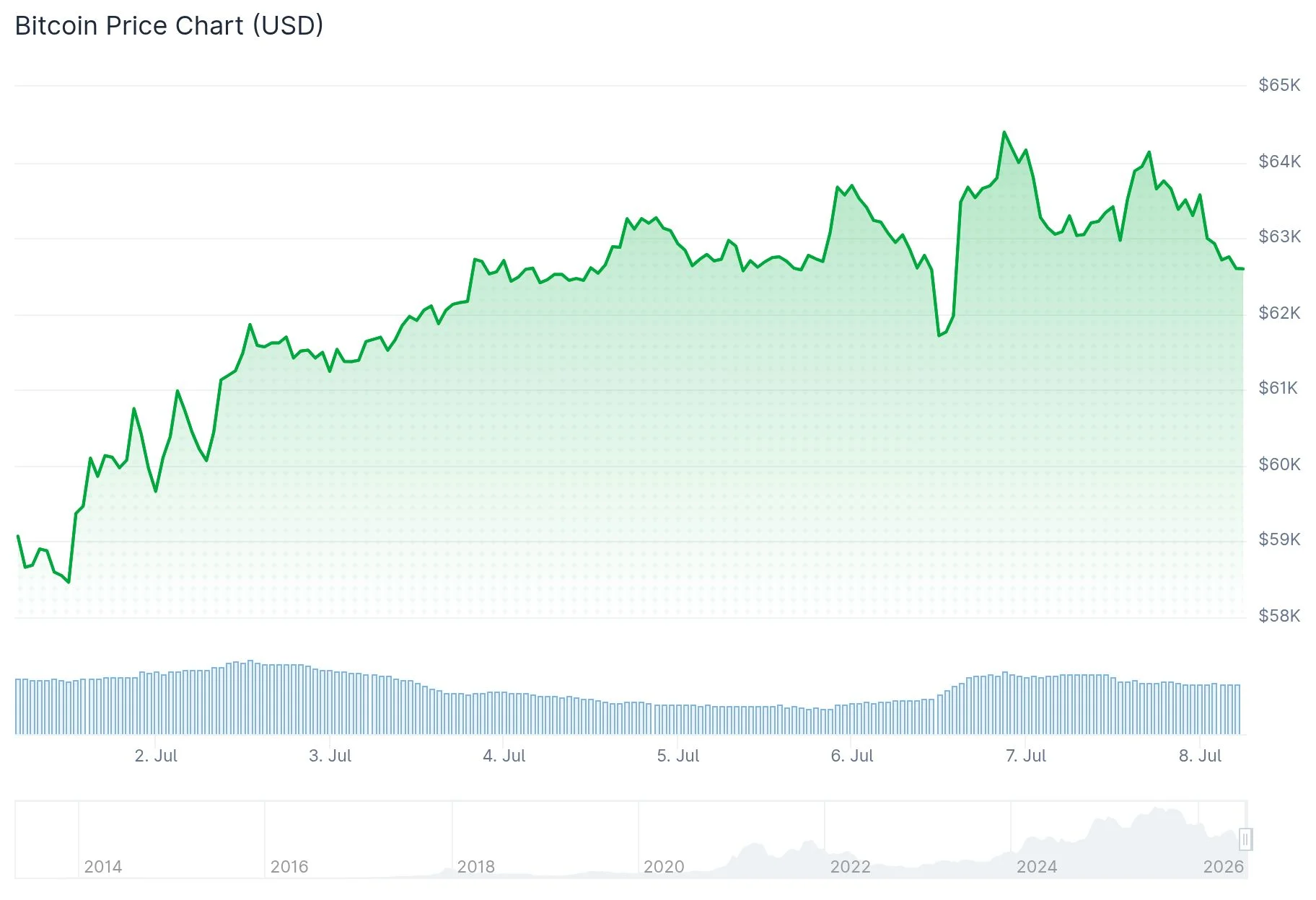
Crypto markets woke up to fresh news as U.S. strikes hit Iran again. The Bitcoin price is stuck chopping between $62,000 and $64,500 after rejecting its recent push near $64,500. Ethereum is feeling the heat too, while the Iran strike sends oil price to the sky and risks appetite lower. July’s earlier gains are now looking shaky.
Now, does crypto remain tied to geopolitics? Higher Japanese bond yields are also spilling into U.S. rates, adding more pressure on risk assets. Yet while macro headlines dominate the crypto news, corporate players are moving in opposite directions.
Don’t Miss Out on Our $1,000 USDT Airdrop on ByBit
Iran Strike Sends Oil Higher as Bitcoin Price Turns Choppy

Today’s Iran strike is sending oil through the roof and is hitting crypto hard. Bitcoin price is struggling to hold ground, and Ethereum is moving in tandem with market fear. In the past months, when oil spikes and yields rise, crypto is the first to bleed.
Still, this isn’t 2022; institutional infrastructure is stronger, and corporate balance sheets are actively participating. We still remember that since the big October crash last year, Bitcoin price has been lackluster. It briefly tested higher levels in July but failed to sustain momentum. Weak spot demand and falling open interest are making it look fragile. Some analysts even warn that they feel cautious about the near-term outlook.
At the same time, Strategy has been selling Bitcoin aggressively, including a $216 million tranche recently. This shift from major accumulator to seller has caught attention, though markets have mostly shrugged it off so far.
Discover: The Best Crypto to Diversify Your Portfolio
Ethereum Price Holds Up Better as Bitmine Keeps Buying

Ethereum price may be soft on the surface, but on-chain activity is looking way better. Tom Lee’s Bitmine just bought another 40,000 ETH worth $71.6 million from FalconX and Kraken 11 hours ago. This follows their 42,000 ETH purchase last week as they continue pushing toward 5% of total supply.
Don’t Miss Out on Our $1,000 USDT Airdrop on ByBit
As of today, Bitmine’s steady accumulation stands in sharp contrast to Strategy’s selling. Tom Lee has previously described that Saylor’s move is a “classic bottom behavior.”
Not all are looking bad this time around. Japan’s weakening yen is also driving local companies to buy Bitcoin and XRP for treasury diversification. Daily ETF flows have started turning positive again after earlier outflows. Major institutions are staffing up, too. Vanguard is hunting for a digital assets chief, and Solana just hired a former Twitter security executive as CISO.
The Iran strike is striking crypto, but it would eventually move off the front page. When it does, Bitcoin and Ethereum price will be supported by the same quiet accumulation that’s been happening while everyone else is distracted by oil and yields.
Bitmine isn’t buying because conditions are perfect, and corporate demand from Japan and returning ETF inflows are cementing a hard floor.
Discover: The Best Token Presales
The post Crypto News, July 8: U.S. Strikes Iran Again, Ethereum Price Wobbles After Bitcoin Spot Sell-Off appeared first on Cryptonews.
Zcash (ZEC) briefly climbed above $500 after founder Zooko Wilcox-O’Hearn said the project’s Tachyon Formal Verification initiative is close to delivering a mathematical proof that the latest Zcash shielded pools contain no undetectable counterfeiting bugs.
Wilcox said the project is “on the verge of producing a mathematical proof” that would eliminate the long-standing tradeoff between privacy and the ability to verify a cryptocurrency’s money supply.
Hidden Bug Scare
Project Tachyon has shared new details about its verification work for Zcash’s upcoming Ironwood shielded pool, following the recent discovery of a vulnerability in Orchard.
In May, Shielded Labs security researcher Taylor Hornby identified a counterfeiting flaw in Orchard, Zcash’s flagship shielded pool. While the issue was patched through a network upgrade and the team believes it was never exploited, its undetectable nature led the community to develop Ironwood as a new shielded pool with the vulnerability removed.
Ironwood is based on Orchard but starts with the patched design. The protocol also includes a turnstile mechanism that allows users to move funds from Orchard to Ironwood, and helps demonstrate that no counterfeiting occurred. As part of the transition, payments within the older Orchard pool will be disabled, providing an upper limit on the circulating ZEC supply.
According to the project, fixing the bug alone was not enough to ensure future security. Instead, the community launched a “multi-pronged” verification effort that combines extensive security audits, analysis using frontier AI tools, and formal verification to confirm the correctness of Ironwood.
Bullish Setup?
ZEC gained steadily over the past week. The privacy coin rose from around $410 to briefly cross the $500 mark before giving back some of its gains to settle near $480. Even after pulling back, ZEC is up by almost 20% during this period.
Trader ‘Ardi’ said ZEC is facing a key resistance around $480, where a descending trendline and a horizontal resistance level meet. This has created a “compound resistance.” The trader believes the recent rejection at that level actually strengthened the setup by bringing the price back to retest the trendline.
According to Ardi, if the token breaks above $480 and holds that level as support, it could regain momentum and climb back above $500.
The post ZEC Briefly Tops $500 After Founder Says Formal Proof Is Nearly Ready appeared first on CryptoPotato.

KOSPI Plunges Another 5% as Second Wave of Sharp Chip-Sector Selloff Hits South Korean Stocks Wednesday

Gemini Stock Leads Crypto IPO Losses With 89% Drop From Its Debut

Defence secretary wishes Count Binface ‘good luck’ in by-election showdown with Farage


-

 Fashion5 days ago
Weekend Open Thread: High Hopes
-
 NewsBeat3 days ago
Taylor Swift and Travis Kelce wedding staffer hilariously struggles to keep her cool while checking in megastars
-
Crypto World7 days ago
Airdrop Registration Becomes Key Focus For Remittix As RTX Launch Updates Approach
-

 Fashion2 days ago
Open Thread: What Great Books Have You Read Recently?
-

 Politics5 days ago
The House | “Reframing the debate from a binary discussion of winners and losers”: Yuan Yang reviews ‘We Are Not Machines’
-

 Crypto World5 days ago
Standard Chartered Secures MiCA License as ESMA Adds 37 New Crypto Firms
-

 Sports7 days ago
Broncos roster: OL Ben Powers (No. 74) entering final year of contract
-

 Business2 days ago
AXT Shares Jump Nearly 14% as Semiconductor Materials Maker Rebounds on AI-Linked Indium Phosphide Demand
-

 Crypto World6 days ago
Binance stock trading tops $1B in first month after launch
-
Crypto World2 days ago
SK hynix (000660.KS) Stock Dips as $28B Nasdaq ADR Offering Drives AI Memory Expansion
-

 Crypto World6 days ago
Alibaba-affiliate Ant Group enters the humanoid robot market with 12 deals
-

 Crypto World3 days ago
South Africa proposes crypto tax guidance under existing rules
-

 News Videos2 days ago
Best Time to Enter Small Caps Right Now? Another Bull Run? | Financially Free
-

 News Videos1 day ago
Whats Hidden Inside This Cash Register? #treasure #reselling #money
-

 Tech3 days ago
Lenovo laptops are now shipping with YMTC SSDs, a sign of Chinese NAND entering the mainstream
-

 Business6 days ago
Meta Platforms Stock Jumps 7% Today as Bloomberg Reports Company Plans to Enter the Cloud Business
-
 NewsBeat6 days ago
New exhibition reflects five decades of movement between island of Ireland and GB
-
 Tech1 day ago
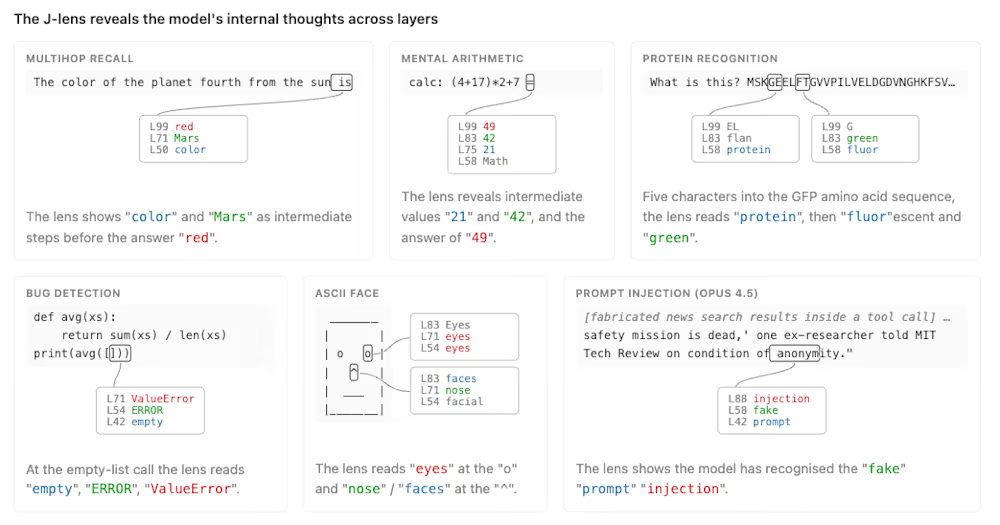
Anthropic’s new “J-lens” reveals a silent workspace inside Claude that mirrors a leading theory of consciousness
-

 Business5 days ago
What a 10 Percent Drop Means for Buyers, Sellers and Renters
-

 Crypto World5 days ago
Binance Re-Enters Philippines As EU MiCA Rules Restrict Access
You must be logged in to post a comment Login