Connect with us
DAPA Banner
DAPA Coin
DAPA
COIN PAYMENT ASSET
PRIVACY · BLOCKDAG · HOMOMORPHIC ENCRYPTION · RUST
ElGamal Encrypted MINE DAPA
🚫 GENESIS SOLD OUT
DAPAPAY COMING

Business

Cockatoo Island iron ore mine owner in administration

Published

on

Cockatoo Island iron ore mine owner in administration

The owner of a mothballed iron ore mine on Cockatoo Island has tumbled into administration, with insolvency practitioners assessing a sale or recapitalisation.

Continue Reading
Click to comment

You must be logged in to post a comment Login

Leave a Reply

Business

Work on Devon tungsten mine project set to ‘ramp up’ ahead of 2027 opening

Published

on

Business Live

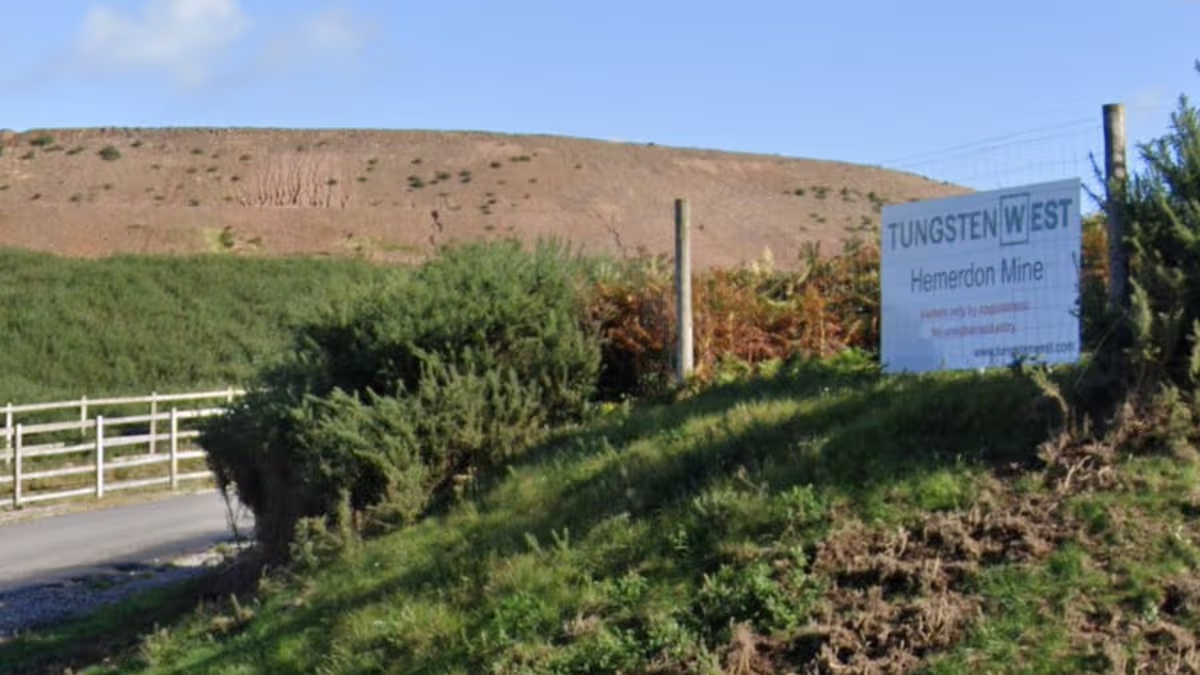
Tungsten West is looking to restart production at Hemerdon near Plymouth

The entrance to Tungsten West's Hemerdon Mine, in Plymouth

The entrance to Tungsten West’s Hemerdon Mine, in Plymouth(Image: Google)

A company looking to revive a mine in Devon that holds a rare critical metal says it is preparing to “ramp up” work at the site in the coming weeks. AIM-listed Tungsten West is working to restart production at the Hemerdon tungsten and tin mine near Plymouth – one of the largest tungsten resources in the world.

Tungsten West acquired the site through a receivership process in 2019 following the collapse of previous operator Wolf Minerals and is hoping to open the site for production in spring next year.

Advertisement

It is understood Hemerdon could produce up to 20 per cent of the global supply of primary tungsten outside of China once operational. Tungsten is used by many manufacturing companies, including in the automotive and defence sectors.

Ahead of the project commission, Tungsten West said on Wednesday it had started an “enhanced programme” of stakeholder engagement, including with the local community and regulators.

Jeff Court, chief executive of Tungsten West, said: “We are making rapid progress on the restart of Hemerdon with the first phase of recommissioning starting this month.

“This marks another significant milestone towards full project commissioning in Q1 2027, and I would like to thank the team, our partners, stakeholders and shareholders for the hard work that has been undertaken to date to reach this step.”

Advertisement

Tungsten West has already hired 100 people to work at Hemerdon and is targeting total recruitment of 350 by early 2027. The project is also expected to be completed within budget, the company added.

In February, Tungsten West raised more than £41m in a share sale, raising funds from new institutional investors and existing shareholders to finance the Devon project.

Mr Court said at the time the funds were the “cornerstone” for the restart of operations at Hemerdon.

“We are extremely pleased that the market has shown such strong support for the company”, he said. “We welcome new shareholders and the increased investment from our pre-existing shareholders, who both strongly believe in the vision we have for the company.”

Advertisement
Continue Reading

Business

Sandisk: I'm Catching The Falling Knife; Here's How

Published

on

Sandisk: I'm Catching The Falling Knife; Here's How

Sandisk: I'm Catching The Falling Knife; Here's How

Continue Reading

Business

KOSPI Plunges Another 5% as Second Wave of Sharp Chip-Sector Selloff Hits South Korean Stocks Wednesday

Published

on

KOSPI Plunges Another 5% as Second Wave of Sharp Chip-Sector

SEOUL, South Korea — South Korea’s benchmark KOSPI index plunged again Wednesday, falling 409.52 points, or 5.35 percent, to 7,246.79, extending a punishing two-day rout that has now wiped out a significant portion of the index’s extraordinary gains from earlier this year, as investors continued dumping shares in chipmakers Samsung Electronics and SK Hynix.

Wednesday’s decline followed an even more dramatic session Tuesday, when the KOSPI plunged more than 8 percent intraday and triggered South Korea’s sixth circuit breaker of the year, halting trading for 20 minutes after the index fell below key psychological levels in rapid succession. Tuesday’s session ultimately closed down 4.91 percent, but the selling resumed almost immediately Wednesday, with the index opening sharply lower and continuing to slide through the afternoon session, according to Korean market data.

The renewed selloff has come despite, and in some ways because of, historically strong earnings results from Samsung Electronics, the country’s largest company and a dominant force within the KOSPI index. Samsung reported preliminary second-quarter operating profit of 89.4 trillion won, or approximately $58.6 billion, a nearly 19-fold increase from the same period last year and a figure that exceeded consensus analyst estimates. Rather than lifting the broader market, the announcement triggered what traders described as a classic “sell the news” reaction, with investors concluding that expectations for the AI-driven memory chip boom had already been fully priced into share values well before the results were formally announced.

Samsung Electronics and SK Hynix, which together account for roughly 53 percent of the KOSPI’s total market capitalization, bore the brunt of the selling pressure across both sessions. On Tuesday alone, Samsung shares fell as much as 9.75 percent while SK Hynix tumbled 10.58 percent, with foreign and institutional investors net-selling a combined total exceeding 3.5 trillion won, or roughly $2.3 billion, even as retail investors stepped in as net buyers in an unsuccessful attempt to defend the market against the broader wave of selling. SK Square and Samsung Electro-Mechanics posted even steeper declines, falling 13.11 percent and 11.82 percent respectively during Tuesday’s rout.

Advertisement

Analysts at Samsung Securities pointed to three primary factors behind the sharp pullback. The first was straightforward profit-taking following an extraordinary run in memory semiconductor stocks, with Samsung Electronics and SK Hynix shares having soared 177 percent and 305 percent respectively during the first half of 2026. The second factor centered on growing concern that memory semiconductor companies may have already reached peak profitability, with some investors betting that year-on-year earnings growth will slow in the second half of the year due to a high base-effect comparison against this year’s exceptionally strong results. The third and most significant factor, according to the firm’s analysis, involved broader doubts about the long-term sustainability of artificial intelligence infrastructure investment worldwide, with the delayed initial public offering of OpenAI and Meta Platforms’ expansion into cloud computing cited as additional negative signals weighing on sentiment toward AI-linked companies globally.

The scale of Tuesday’s volatility was reflected in South Korea’s fear gauge, the Kospi 200 Volatility Index, known as VKOSPI, which spiked to 85.88 during the session, a reading reflecting extreme investor anxiety. The tech-heavy KOSDAQ index also fell sharply, closing down 3.64 percent at 816.21, while South Korea’s won weakened against the U.S. dollar, settling at 1,524.20 won per dollar.

Tuesday’s circuit breaker marked the 12th such trading halt in South Korean market history and the first in seven trading sessions since a similar episode on June 26. According to the Korea Exchange, a Level 1 circuit breaker is triggered when the KOSPI falls at least 8 percent from the previous day’s close and remains at that level for one minute, automatically suspending trading in all stocks for 20 minutes to help cushion the market from severe shocks. A more severe Level 2 halt would be triggered by a 15 percent decline, while a full Level 3 shutdown of trading for the remainder of the day would require a 20 percent drop, thresholds Tuesday’s session did not reach.

The rout in South Korea has rippled across the broader Asia-Pacific region, contributing to declines in Japan’s Nikkei 225, which fell more than 2 percent Tuesday to 68,256.96, its steepest drop in weeks, as chip-related suppliers including Kioxia Holdings, SUMCO and Taiyo Yuden each fell more than 11 percent. Hong Kong’s Hang Seng Index and mainland China’s Shanghai Composite posted more modest declines of 0.51 percent and 1.26 percent respectively, suggesting the most acute selling pressure remained concentrated in markets with the heaviest direct exposure to memory chip and semiconductor equipment companies.

Advertisement

Despite the severity of the two-day selloff, some analysts have pushed back against the notion that the underlying memory semiconductor cycle has peaked. Samsung Securities said it does not believe the current AI investment cycle has run its course, forecasting that the market could demonstrate renewed resilience if major U.S. technology companies reaffirm their AI investment plans during upcoming earnings reports later this month. The firm noted that even after roughly 150 trillion won in net selling by foreign investors during the first half of 2026, the overall proportion of foreign ownership within the KOSPI has actually increased, from 36 percent at the start of the year to around 40 percent, suggesting continued underlying confidence in Korean equities among international investors despite the recent volatility.

The KOSPI’s dramatic swings this year have also been amplified by structural factors specific to the South Korean market. According to Finimize, margin borrowing in KOSPI shares stood at 29.7 trillion won as of the Friday before the selloff began, close to a late-June record, raising the risk that sharp declines could trigger cascading margin calls and forced selling, further amplified by daily-reset leveraged exchange-traded funds that mechanically sell more of the underlying stocks following steep down days.

Even accounting for this week’s sharp losses, the KOSPI remains up substantially for the year, having posted the strongest growth rate among major global stock indices during the first half of 2026, rising roughly 100 percent on the strength of robust memory semiconductor performance. Whether Wednesday’s continued decline represents a healthy correction within that broader rally, or the start of a more prolonged reassessment of AI-related valuations across the region’s technology sector, remains a central question for investors as they await further signals from upcoming earnings reports at major U.S. technology companies later this month.

Advertisement
Continue Reading

Business

Why Micron’s Stock Dip Is a Buying Opportunity

Published

on

Micron Price Targets Can’t Keep Up With the Stock

Why Micron’s Stock Dip Is a Buying Opportunity

Continue Reading

Business

NATO leaders meet in Ankara as US ceasefire with Iran teeters

Published

on


NATO leaders meet in Ankara as US ceasefire with Iran teeters

Continue Reading

Business

Great Southern Fuel Supplies in $10m Pilbara BP buy

Published

on

Great Southern Fuel Supplies in $10m Pilbara BP buy

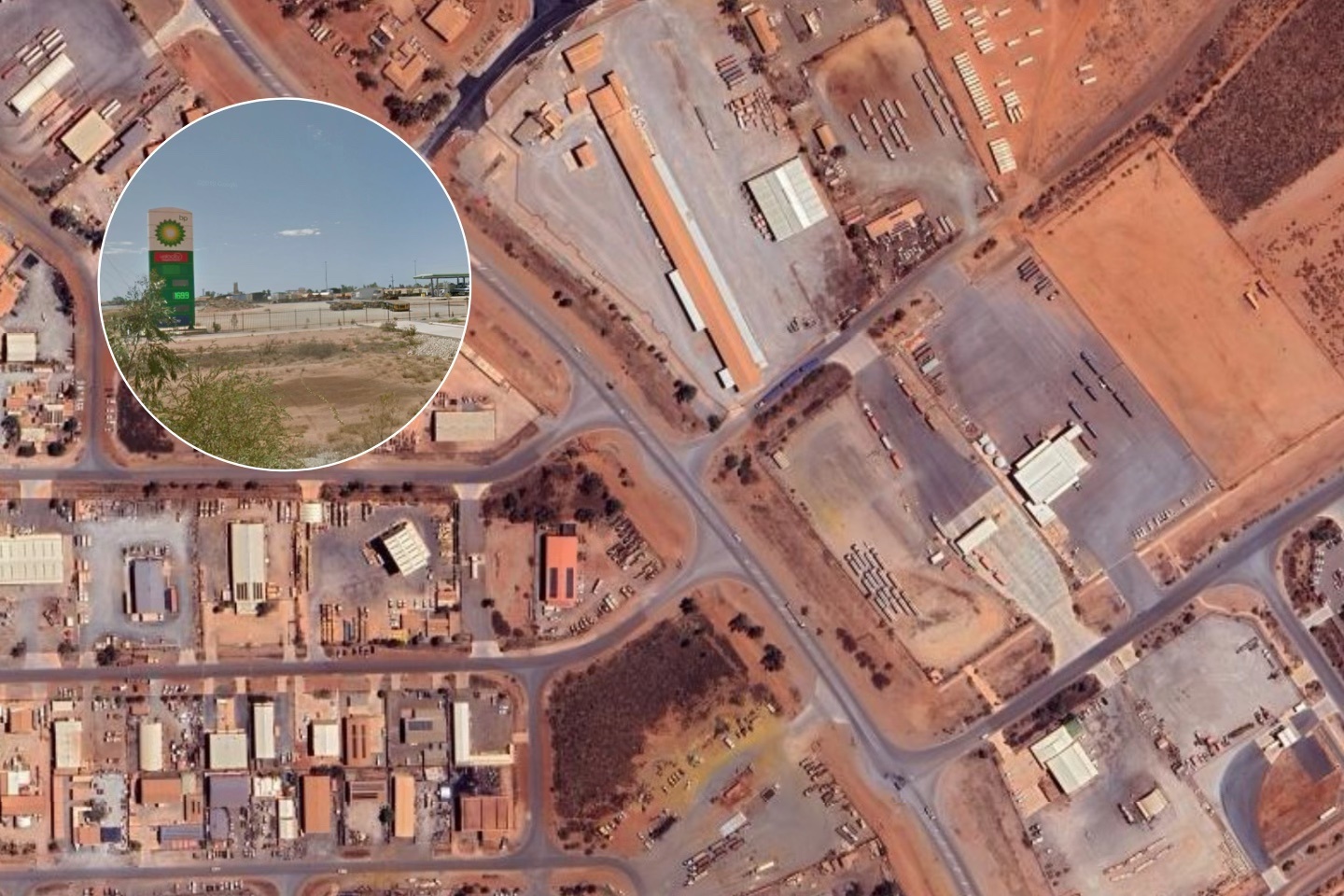
Great Southern Fuel Supplies directors have purchased a 2.3 hectare BP fuel station in Port Hedland’s Wedgefield Industrial Precinct for $10.3 million. 

Allan and Faye McWhirter established the bulk fuel and lubricant distributor in Lake Grace 50 years ago. 

It now operates or supplies more than 85 of Western Australia’s rural BP retail outlets, as well as delivers to metropolitan retail sites and BP commercial accounts. 

HM Horizon Pty Ltd bought 1 Hematite Drive, Wedgefield from Acure Funds Management Ltd in May, according to RP Data.

Advertisement

HM Horizon is owned by the McWhirters, an Australian Securities and Investments Commission filing shows.

Allan, Faye, Steven McWhirter, and Dianne and Aaron Harvey are named as directors. 

Acure Funds Management’s directors are linked to Perth-based Acure Asset Management, including managing director Angelo Del Borrello, and non-executive directors Gianni Redolatti and Chris Allen

In 1976, the McWhirters stumbled into the fuel transportation industry through a house purchase that happened to have a fuel station attached to it.

Advertisement

Great Southern has grown to encompass major depots at Katanning, Narrogin, Albany, Corrigin, Koorda, Wongan Hills, Geraldton, Kalgoorlie, Kewdale, Moora, Merredin, Jerramungup, Carnamah and other regional locations.

Starting as a one-truck operation with a 166-litre drum, the company now drives majority Volvo trucks with the ability to hold 146,000 litres. 

With the founders in their 80s, they plan on passing their business down to Steven (or Steve) and Dianne.

Advertisement

The Forrestfield-based company employs around 250 staff. 

Advertisement
Continue Reading

Business

Unite Group cuts student rents to boost occupancy

Published

on

Unite Group has cut asking rents in Leicester, Nottingham and Sheffield to lift occupancy. What the student rent cuts mean for UK landlords and SMEs.

The country’s biggest student landlord has been cutting asking rents to fill its halls before September, a move that tells smaller landlords and property investors a good deal about where pricing power in Britain’s rental market now sits.

Unite Group, which operates some 200 student halls across the UK, said “targeted pricing initiatives” at a number of its buildings had delivered a “strong” couple of months of bookings.

The company now expects its buildings to be between 94 per cent and 96 per cent full when the new academic year begins, an upgrade on previous guidance that pointed towards the “lower end” of a 93 per cent to 96 per cent range.

The discounting has been concentrated in cities such as Leicester, Nottingham and Sheffield, where a wave of new development has swung the balance between supply and demand in students’ favour. According to Unite’s trading update published on Tuesday, 86 per cent of its beds are now reserved for the 2026/27 academic year, up from 85 per cent at the same point last year.

Fuller buildings have come at a cost, however. Unite had expected to push through rent increases of 2 to 3 per cent next year. Reflecting those “targeted adjustments to pricing in select markets”, its rental growth forecast has been pared back to between 1 per cent and 2 per cent.

Advertisement

The two effects broadly cancel each other out, leaving revenue and profit predictions unchanged. Income is set to grow by between 0 and 2 per cent, while adjusted earnings per share is still expected to fall to between 41.5p and 43p, compared with 47.5p last year.

Joe Lister, Unite Group chief executive, said: “We have seen strong progress in reservations for the 2026/27 academic year since our last update in May. This reflects our strong direct marketing and sales performance together with targeted adjustments to pricing in selected markets.”

Investors were unimpressed. Unite shares, already down 38 per cent over the past year, fell a further 2.7 per cent, or 14p, to 506p in early trading.

For the SME landlords and HMO operators who still house the majority of Britain’s students, the signal is hard to ignore. When the largest operator in the market is discounting to fill rooms in Leicester, Nottingham and Sheffield, smaller landlords in those cities are competing against a cheaper, newer product. Local supply, rather than national demand, is increasingly what sets the rent.

Advertisement

It is a dynamic already visible in the wider lettings market, where advertised rents outside London have slipped for the first time since 2019 as more properties come to market and tenant demand cools.

Regulation is adding to the squeeze. The Renters’ Rights Act, which came into force on 1 May, allowed students on existing tenancies to leave with two months’ notice under transitional arrangements, a change Unite says has seen some students exit their contracts early. For private landlords, the legislation is rewriting the business case for buy-to-let altogether.

Unite’s response is to concentrate its firepower where demand is most reliable. The group is targeting £300 million to £400 million of disposals this year as it repositions its portfolio towards the strongest universities, building on partnerships such as its £250 million joint venture with Newcastle University.

For smaller operators without that luxury, the lesson from the market leader is a sobering one: in 2026, even the biggest landlord in the country cannot raise rents where the cranes have been busy.

Advertisement

Amy Ingham

Amy is a newly qualified journalist specialising in business journalism at Business Matters with responsibility for news content for what is now the UK’s largest print and online source of current business news.

Advertisement
Continue Reading

Business

South Indian Bank shares tumble 9% after four-day rise; RBI clears Mahesh Pai as MD & CEO

Published

on

South Indian Bank shares tumble 9% after four-day rise; RBI clears Mahesh Pai as MD & CEO
South Indian Bank shares fell nearly 9% to an intraday low of Rs 43.27 on Wednesday, snapping a four-session winning streak as investors booked profits after the stock’s recent rally.

The stock had gained about 30% over the past three months, driven by optimism over leadership clarity and improving sentiment toward the banking sector.

Meanwhile, the bank said the Reserve Bank of India (RBI) has approved the appointment of Mahesh Muralidhar Pai as its Managing Director & Chief Executive Officer for a three-year term, effective October 1, 2026.

In a regulatory filing, the bank said the RBI, through its letter dated July 7, 2026, conveyed its approval for Pai’s appointment. The proposal will be placed before the bank’s Board of Directors at its meeting scheduled for July 16, 2026. The appointment will subsequently be subject to shareholders’ approval in accordance with the provisions of the Companies Act, 2013, and the SEBI Listing Regulations.

Advertisement

Share Price Trend and Technical Indicators

South Indian Bank’s stock has delivered a strong performance in recent months, gaining around 30% over the past three months. Following Wednesday’s decline, the bank commands a market capitalisation of Rs 12,478 crore. The stock’s 52-week high stands at Rs 49.90.

On the technical front, the stock’s 14-day Relative Strength Index (RSI) is 66.2, indicating positive momentum while remaining below the overbought threshold of 70. Generally, an RSI reading below 30 is considered oversold, while a reading above 70 signals overbought conditions.
However, the trend remains mixed as the stock is trading below four of its eight key Simple Moving Averages (SMAs), reflecting some near-term technical weakness.
In terms of shareholding, Foreign Institutional Investors (FIIs) increased their stake in the bank to 24.21% in the March 2026 quarter, up from 20.94% in the previous quarter. Meanwhile, Mutual Funds trimmed their holdings marginally to 11.29% from 11.90% during the same period.
(Disclaimer: Recommendations, suggestions, views and opinions given by the experts are their own. These do not represent the views of Economic Times)

Continue Reading

Business

Global Market: Momenta Global debuts nearly flat in Hong Kong after $751 million IPO

Published

on

Global Market: Momenta Global debuts nearly flat in Hong Kong after $751 million IPO
Shares of Chinese autonomous-driving software developer Momenta Global made a muted debut on the Hong Kong Stock Exchange on Wednesday, reflecting cautious investor sentiment despite the company’s successful HK$5.89 billion ($751 million) initial public offering, according to Reuters.

The stock opened at HK$301, slightly above its IPO price of HK$295.60. It climbed to an intraday high of HK$314.80 before easing to trade around HK$299, indicating that early gains were short-lived as investors assessed valuations in the technology sector.

IPO debut tests appetite for Chinese AI firms
According to Reuters, Momenta’s market debut is being closely watched as a gauge of investor demand for Chinese artificial intelligence and advanced technology companies. The listing also comes at a time when Hong Kong is facing a record wave of lock-up expirations following a strong first half for new share offerings.Market participants noted that investors have become more selective after a busy IPO period, with valuations in AI and technology stocks drawing closer scrutiny.

Strong cornerstone backing supports listing
Momenta attracted a high-profile group of cornerstone investors ahead of the offering, underscoring international interest in China’s AI sector.
Existing investor Mercedes-Benz participated alongside global asset managers including BlackRock, GIC, Fidelity International, Oaktree Capital Management, Franklin Templeton and ChinaAMC. Chinese investment firm Boyu Capital also backed the offering, according to the company’s prospectus.Reuters reported that analysts viewed the strong lineup of cornerstone investors and the pricing of the IPO at the top end of the marketed range as evidence of continued global interest in China’s AI industry, even as broader market sentiment remains measured.

Mixed performance for Hong Kong’s new listings
Momenta’s listing coincided with several other IPO debuts in Hong Kong, which delivered mixed performances.

Advertisement

Visual AI company Reconova fell sharply at the open, while mining autonomous-driving technology firm Eacon posted modest gains. Trench-cover manufacturer Baogai opened flat, whereas silicon carbide chipmaker BasicSemi recorded stronger early gains.

The varied performance highlighted investors’ increasingly selective approach toward newly listed companies, particularly within the technology sector.

Company focuses on autonomous driving technology
Founded in 2016 by former Microsoft researcher Cao Xudong, Momenta develops advanced driver-assistance software for automobile manufacturers. Its technology enables vehicles to perform functions such as steering, braking, lane changes and parking, while still requiring drivers to remain attentive and ready to assume control.

According to the company’s prospectus, vehicles equipped with Momenta’s software exceeded 680,000 by the end of 2025. Its customer and partner roster includes Toyota, Mercedes-Benz, SAIC Motor, General Motors, BYD and Audi.

Advertisement

IPO proceeds earmarked for expansion
Reuters reported that Momenta plans to allocate around 60% of the IPO proceeds toward research and development to strengthen its autonomous-driving technology.

Another 20% will be invested in robotaxi services, while 10% will support its mass-produced vehicle business. The remaining 10% has been earmarked for worki

MomentaReuters

Momenta’s market debut is being closely watched as a gauge of investor demand for Chinese artificial intelligence and advanced technology companies.

ng capital and general corporate purposes.

The allocation underscores the company’s strategy of expanding both its core driver-assistance business and its presence in the emerging autonomous mobility market.

Advertisement
Continue Reading

Business

Digital trade reform leaves UK SMEs behind, research finds

Published

on

Digital trade reform leaves UK SMEs behind, research finds

Small firms were meant to be the biggest winners from Britain’s shift to paperless trade. Three years on, government-commissioned research has found them “untouched” by the reforms, while large companies and shipping carriers quietly pocket the savings.

The Electronic Trade Documents Act 2023 made the UK the first G7 country to give digital trade documents full legal status, promising smaller exporters lower courier fees, less administration and better access to trade finance.

The scale of the potential prize is hard to overstate. The World Trade Organisation estimates that a typical cross-border transaction requires the exchange of 36 documents and 240 copies of the paperwork. The government suggested the reforms could generate £1.4 billion in net benefits for importers and exporters over ten years, with bilateral trade with a country such as the US rising by 6.8 per cent for non-agricultural goods.

Yet evidence gathered by Ipsos for the Department for Business and Trade, drawn from 23 interviews with traders and industry experts in March, tells a different story. Awareness of the reforms among small business owners is “low”, and most simply follow whatever their courier asks for rather than driving change themselves.

The researchers concluded that widespread adoption of electronic trade documentation would only happen “once Customs authorities, carriers, and ports stopped issuing physical paper.” The common view among experts was that “voluntary adoption by small businesses would not scale, and that progress depended on co-ordinated action by the government and large supply chain actors.”

Advertisement

The big players are not waiting. Use of electronic bills of lading, the legally binding document that acts as receipt, contract and proof of ownership in one, has doubled since 2023, but largely thanks to major commodity traders and shipping lines. Nine of the biggest carriers, representing 75 per cent of global capacity, have committed to 100 per cent digital adoption by 2030.

For the SME owner, the practical catch is worse than the awareness gap. Even where digital documents are legally accepted, Customs, health authorities, banks and couriers “still require paper originals for some steps”, so early adopters end up running costly hybrid paper and digital processes. Overseas banks and trading partners may reject UK digital documents simply because they lack the software to verify them.

Nor did Whitehall’s sales pitch land. Government messaging about “improved access to trade finance” did not resonate with owners, who were far more interested in direct savings on courier fees and less red tape, a familiar refrain from firms already frustrated by post-Brexit border checks and paperwork.

The findings have prompted the British Chambers of Commerce, which has repeatedly warned that small exporters are being left behind while larger firms surge ahead, to call for paper documentation to be phased out and for closer co-ordination with the UK’s leading trading partners.

Advertisement

William Bain, head of trade policy at the BCC, said: “This research paints a clear picture: that governments, globally, must work together better to advance digital trade.

“It is a travesty that far too few SMEs are taking advantage of the time and cost savings that a shift to using online documentation can bring.

“This is not just about authorities passing laws to digitise documents, it also needs them to get behind the drive to increase take up. This should include a timeline for phasing out paper-based documentation.

“More resources also need to be invested in implementation by the government. Our chamber network is ready to work in partnership with them to raise awareness and fully embed digitisation into our trade culture.”

Advertisement

With Britain nursing a £74 billion slump in goods exports since Brexit, the stakes for getting smaller firms trading efficiently are considerable.

A government spokesperson said: “Making trade paperless saves businesses a lot of time and money, which is why the UK was the first G7 country to give electronic documents full legal status.

“We want more business across the country to benefit from these changes, and are working hard to address remaining barriers so we can make digital trade simpler, faster and more efficient.”


Jamie Young

Jamie Young

Jamie is Senior Reporter at Business Matters, bringing over a decade of experience in UK SME business reporting.
Jamie holds a degree in Business Administration and regularly participates in industry conferences and workshops.

When not reporting on the latest business developments, Jamie is passionate about mentoring up-and-coming journalists and entrepreneurs to inspire the next generation of business leaders.

Advertisement

Continue Reading

Trending

Copyright © 2025