FIRST-time parenting is exhausting – but Cherelle Mukoko, from south London, was crippled by anxiety and dark doubts about whether she had made a mistake with her firstborn.
Her once active life felt so far away as she cared for baby Zuri at home alone while her husband worked, saying: “It felt like I was constantly running on empty.”
Cherelle Mukoko felt like she was constantly running on empty while caring for her newborn baby ZuriCredit: SuppliedA cheap daily pill was a gamechangerCredit: Supplied
It wasn’t until she started taking a daily pill that her whole outlook changed, after it finally gave her the much needed sleep she’d been missing.
Cherelle’s experience is not unique, says Well pharmacist Wendy Lee, but that doesn’t mean new parents need to suffer.
Advertisement
“The transition into becoming a new mum places an extraordinary load on both the body and mind,” says Wendy.
“Sleep deprivation alone is one of the biggest factors that impact mood regulation, concentration, and emotional resilience.
“When a mother is waking multiple times a night, often for months, the brain doesn’t get the chance to properly reset, which over time can lead to heightened anxiety, irritability, and a sense of overwhelm.”
Cherelle started taking magnesium on the advice of a medical professional and noticed a change overnight.
Advertisement
“The results were phenomenal,” she says.
“I slept the best I’ve slept for years, solidly and deeply all night long.”
Research published in the journal BMC Complementary Medicine and Therapies found that when insomnia sufferers took magnesium supplements they fell asleep an average of 17 minutes quicker.
And a study of 4,000 adults, published in the journal Sleep, linked an increased intake of magnesium to better sleep quality and duration.
Advertisement
It’s not all that magnesium is good for – in fact, it’s involved in “over 300 enzymatic reactions in the body”, Dr Carrie Ruxton, dietitian from the Health & Food Supplements Information Service (HSIS), tells Sun Health.
But millions of us are deficient, she claims; One in five Brits in their 20s have low levels, as do half of women aged 11 to 18.
The NHS says that adult men need 300mg of magnesium per day and adult women need 270mg.
Although the NHS says most people should be able to get magnesium from food – such as green leafy veg, nuts and wholegrains – there are some groups who may benefit more than others from taking a magnesium supplement.
Advertisement
This includes people with gut conditions like Crohn’s disease and IBS, and people taking medications like diuretics and antibiotics.
Dr Ruxton says “people with high stress levels, those who consume excessive amounts of alcohol or sugar, and those with a diet low in leafy greens, beans and pulses, nuts and seeds tend to be more at risk of inadequate magnesium levels”.
According to Dr Ruxton, in the early stages of magnesium deficiency someone might experience loss of appetite, nausea, vomiting, fatigue or weakness.
“As things get worse, numbness, tingling, muscle contractions and cramps, seizures, personality changes, abnormal heart rhythms and heart spasms could set in,” she says.
Advertisement
Sleep saviour
Cherelle started taking magnesium on the advice of a medical professionalCredit: Supplied
Cherelle was experiencing insomnia as a new mum but felt she was pushed beyond her physical and emotional limits.
Before kids, Cherelle had been incredibly active – waking at 6am to travel an hour just to run in Hyde Park.
But once she became the primary care-giver for her little one, Cherelle says: “I felt completely drained.
“The lack of sleep was overwhelming. I would wake up already exhausted, dreading the day because I just didn’t have the energy.
Advertisement
“I was constantly on edge, always thinking about what I had to do next.
“My nervous system just wouldn’t switch off. Some nights I didn’t get any sleep at all.
“I was constantly on high alert, sleeping with one eye open to make sure nothing was going wrong.
“I started questioning everything, all my life decisions. Was I truly cut out to be a mum? Had I made a terrible mistake?
Advertisement
“I’d wanted children for as long as I could remember, but I was on my knees, absolutely exhausted.
“I remember messaging him [her husband] saying I needed to get away. I was at my absolute worst.”
The relentless cycle of exhaustion and anxiety pushed Cherelle to her limits and she went on a weekend health retreat without her family.
She says: “One of the practitioners at the retreat recommended I try magnesium, as a spray to start with, to help with my feelings of anxiety and the sleeplessness.”
Advertisement
When Cherelle had such incredible results from the magnesium, she wondered if it were simply because she was away from her normal life.
Back home, she bought Be Well Magnesium 375mg (£7.49, or 4p per daily capsule), taking one every night.
Cherelle says things have “shifted in a noticeable way” after being able to get better rest, which she credits the magnesium for.
Now a mum-of-two, currently caring for her six-month old, Zaire, at home, Cherelle says: “I can go for a walk with my baby, and I even have the energy to go to the gym. That feeling alone is huge.
Advertisement
“It feels like I have a part of myself back – I feel more capable, more present, and more in control of my day.”
Wendy says: “It is believed that magnesium can help individuals experiencing tiredness and fatigue as it supports energy release.
“It can help with sleep by promoting relaxation and calming the nervous system, improving both sleep onset and sleep quality.”
Dr Ruxton says: “Magnesium helps regulate the sleep hormone melatonin, which has the job of maintaining our circadian rhythm – or body clock – and sleep-wake cycles.
Advertisement
“Magnesium also binds to GABA receptors in the brain, which has calming effects and reduces the excitability of neurons, which can help us fall asleep.”
Sleep is sometimes poor if you are stressed, thanks to a stress hormone called cortisol.
“Magnesium helps temper the effects of stress by regulating what’s known as the hypothalamic-pituitary-adrenal (HPA) axis and reducing cortisol levels,” says Dr Ruxton.
For all the benefits of magnesium – from more energy to less intense PMS and all-round better heart health – experts reveal why a magnesium supplement could be your secret saviour…
Advertisement
1. Blood sugar levels
Magnesium may help reduce blood sugar spikesCredit: Getty
When you eat, the sugar in your food enters the bloodstream and travels to cells, where it gives them energy.
If this process is faulty – for example, if you have diabetes or are at risk of the condition – then you may have too much sugar in your blood.
This can be dangerous, leading to nerve damage, eye problems and diabetic ketoacidosis.
Keeping blood sugar levels stable can be beneficial for anyone, though – not just diabetics.
“One of magnesium’s jobs in the body relates to managing insulin and glucose control,” says Dr Ruxton.
This can help your body respond more efficiently to sugar, potentially reducing the size and frequency of blood sugar spikes.
With fewer blood sugar spikes, your energy should be more consistent.
Advertisement
Research published in the journal Diabetes Care suggests that people who consume magnesium could also have a 22 per cent lower risk of type 2 diabetes.
A separate study by Harvard School of Public Health found that healthy women with higher magnesium intakes have lower fasting insulin levels, meaning they are less sensitive to insulin in their bodies and have a reduced risk of developing type 2 diabetes.
Dr Ruxton says: “People with type 2 diabetes and insulin resistance lose more magnesium in their urine than the general population, so they should also consider a daily supplement.”
2. Energy and muscles
Magnesium can help keep your muscles strong and healthyCredit: Getty
Whether you’re a regular at gym classes, love running or spend your weekends on a bike, a magnesium supplement could support your fitness goals.
Advertisement
“Magnesium is essential for making energy in the body, which is particularly important for someone who is physically active,” says Dr Ruxton.
“We also need magnesium to ensure our muscles function properly.
“Working alongside calcium, magnesium is essential for healthy muscle contraction as well as relaxation.”
Emily adds: “Magnesium supports muscle health by reducing soreness and helping with regeneration too.”
Advertisement
A study published in the Journal of Sports Science found that when professional male cyclists took 400mg of magnesium every day for three weeks, they experienced improvements in muscle recovery after a tough race.
This was compared to cyclists taking a placebo.
Dr Ruxton says: “When we exercise and sweat, we lose magnesium, as well as other minerals like sodium, potassium and chloride.
“Topping up our magnesium is therefore important in maintaining healthy hydration and avoiding fatigue due to dehydration.”
Advertisement
Your heart is also a muscle and needs nutrients to keep it ticking.
SUPPLEMENTS are a great way to make sure you’re getting enough essential nutrients.
But with so many to choose from, it can be hard to know which ones are best to take.
IN YOUR 20S
Advertisement
Ashwagandha – Known for its adaptogenic properties, ashwagandha may help support mental well-being and reduce anxiety by managing cortisol (stress hormone) levels. It’s a go-to for stress relief and better sleep.
Iron – For women who menstruate, iron helps replenish red blood cells, which are especially important for energy and focus.
Vitamin B complex – Supports energy production and can be especially beneficial for those following vegetarian or vegan diets.
IN YOUR 30S
Folic acid – Essential for women considering pregnancy, folic acid is recommended for fetal development. Intake is generally advised even if you’re not actively trying to conceive, as it supports overall cellular health by helping the body produce and maintain new cells, particularly red blood cells.
Calcium and vitamin D – These work together to support bone health, a foundation for the years to come. Women begin losing bone density as early as their mid-30s, so it’s important to ensure adequate intake.
IN YOUR 40S
Magnesium – Known as ‘nature’s relaxant’, magnesium helps regulate mood and can ease symptoms like irritability, muscle tension, and sleep disturbances. Magnesium glycinate, in particular, is gentle on the stomach and can be helpful for better sleep.
Omega-3 fatty acids – These support heart health and may also help with mood regulation, given their anti-inflammatory properties. Omega-3s are beneficial in combating hormonal changes that can impact mood.
IN YOUR 50S
Vitamin E: Known to help reduce hot flashes and support skin elasticity, vitamin E may offer relief from some common menopausal symptoms.
Calcium and vitamin K2: These support bone density as vitamin K2 works synergistically with calcium to guide the mineral to bones rather than arteries. While bone density decreases for most people with age, women are at a higher risk of developing osteoporosis compared to men due to hormonal changes during menopause that impact bone density.
A study by Kyushu University that followed 1,000 middle-aged adults for 17 years found that those taking the highest levels of magnesium had a 37 per cent lower risk of developing dementia than participants taking the least amount.
Those who consumed more than 550mg per day also had ‘brain ages’ nearly one year younger by the age of 55 than those taking 350mg, which is about average, in a study published in the European Journal of Nutrition.
The results were more pronounced in women – especially those post-menopause – than men.
Lead author Dr Khawlah Alateeq, from Australian National University, said: “Our study shows a 41 per cent increase in magnesium intake could lead to less age-related brain shrinkage, which is associated with better cognitive function and a decreased risk or delayed onset of dementia in later life.
Advertisement
“This means people of all ages should be paying closer attention to their magnesium intake.”
Magnesium and stress – which can increase the risk of depression – are connected.
A research review published in the journal Nutrients suggests that stress can deplete magnesium. But on the flipside, magnesium deficiency could enhance the body’s susceptibility to stress.
Advertisement
In a small eight-week study by Shahid Sadoughi University of Medical Sciences, supplementing with 500mg of magnesium daily improved symptoms of depression in people who had a magnesium deficiency.
Another study published in the journal PLOS One found an even lower dose of 248mg of magnesium per day decreased symptoms of depression and anxiety.
4. PMS
Magnesium may be able to help minimise PMS symptomsCredit: Getty
For women, monthly headaches, cramps and mood swings can really get in the way of life.
But magnesium could help to minimise some symptoms of premenstrual syndrome (PMS), according to research in the journal Magnesium Research.
Advertisement
“While further well-designed clinical studies are needed to fully determine the effects of magnesium on PMS symptoms, it is known to help with tiredness and fatigue often experienced during menstruation,” says Emily.
If you suffer from PMS migraines, magnesium could offer some relief as it may help to control the release of brain chemicals such as glutamate while keeping nerve cells stable, Emily says.
“This can then prevent the overactive nerve signals that cause migraines,” she adds.
“Research published in the journal Biomedicine & Pharmacotherapy shows that those who suffer from migraines often have low levels of magnesium.”
Advertisement
5. Bones and teeth
Magnesium help keep bones and teeth strongCredit: Getty
Worried about falls, especially as you’re getting older?
Strong bones not only help to improve your posture and reduce your risk of falls, but they’ll also be less likely to fracture or break if you do take a tumble.
It’s perhaps unsurprising, as 50 to 60 per cent of the body’s magnesium is found in the bones.
Emily says: “Magnesium plays an important role in building and maintaining strong bones and teeth by supporting their structure and strength.
Advertisement
“It also helps the body use calcium and vitamin D effectively, which are both key for healthy bone development.”
According to the Royal Osteoporosis Society, it’s not yet clear whether low magnesium levels increase your risk of breaking a bone, but it is thought to be a risk factor for osteoporosis – a condition that weakens the bones, making them more susceptible to fractures.
A study published in the British Journal of Nutrition found that women with the highest magnesium intake reduced their risk of fractures by 62 per cent, while the risk reduction in men was 53 per cent.
Women who met the recommended intake were 27 per cent less likely to suffer a fracture.
Advertisement
Some research has also shown that magnesium might help lower the risk of arthritis.
A study by Guangzhou University of Chinese Medicine found that women who had ‘normal’ levels of magnesium in their diets – between 181 and 446mg per day – were less likely to get rheumatoid arthritis, but any less or more was linked to an increased risk.
Types of magnesium
It’s possible to take too much magnesium so be mindful of your dosesCredit: Getty
There are different types of magnesium, so picking the ‘right’ one can feel like a minefield.
The most common types include:
Advertisement
Magnesium citrate
Magnesium oxide
Magnesium chloride
Magnesium lactate
Magnesium malate
Magnesium taurate
Magnesium L-threonate
Magnesium sulfate
Magnesium glycinate
Magnesium orotate
Magnesium glycinate is more easily absorbed by the body than other types.
“Additionally, due to the addition of the amino acid glycine, it’s known for its calming effects,” says Dr Ruxton.
Magnesium citrate is one of the more common supplement formulations, though it sometimes has a mild laxative effect.
“It can potentially help with easing constipation and is usually best taken earlier in the day,” the expert adds.
Magnesium L-threonate, meanwhile, “has potentially beneficial effects on brain and nervous system health”, Dr Ruxton says.
Advertisement
Scientists at Nanjing Medical University say it could help manage brain disorders like depression, Alzheimer’s and age-related memory loss.
Animal research suggests it may be the most effective type of increasing magnesium concentration in brain cells, but further studies are needed.
Magnesium supplements are available from most high street pharmacies and supermarkets, and range widely in price.
You can buy budget-friendly pills from as little as 6p per tablet in Boots (£3.30 for a bottle of 60), but some other varieties, like Heights, can cost more than £20 for a month’s supply.
Advertisement
Check the box of any supplements you buy to see what it is most recommended for. You can also speak to a pharmacist or your GP about specific formulations.
Watch your intake too. Taking high doses of magnesium (more than 400mg) for a short time can cause diarrhoea.
While rare, it is possible to overdose on the mineral.
Symptoms include digestive issues, nausea, muscle weakness, low blood pressure, urine retention and respiratory distress, according to the Office of Dietary Supplements.
Advertisement
Cardiac arrest – when the heart suddenly stops beating – is also possible.
Playing to an audience restricted to those with a Bolton postcode and in aid of Bolton Hospice, he delighted the packed hall.
David Pye, who was one of the lucky ones to have got a ticket said: “It was so good to see Peter back where it all began in his home town to a crowd made up of fellow Boltonians – and he didn’t disappoint.
“After announcing it was his first time back performing at The Albert Halls for 22 years, the first half of his show had a distinctly local feel.
Advertisement
“For anyone who has seen his latest show on his record-breaking tour, the first part of this show was different and without wanted to spoil it for anyone going, it takes a trip down a local Memory Lane.
“I have seen Peter loads of times, from big arenas to intimate warm-up shows and conversation fundraisers and this was as funny as ever. Peter was on top form on home turf.”
And even The Bolton News and local gets a mention as part of the act!
Those with tickets can book a Phoenix Nights themed meal at The Albert beforehand.
Advertisement
The Albert Halls is a venue he last performed at in 2003, recording the iconic Peter Kay: Live at the Bolton Albert Halls, which to this day is the biggest-selling stand-up DVD of all time in the UK.
And for those who are going to see the comic, you will be in for a treat as no one other than Boltonians would really get it.
Last year he appeared with fellow Boltonian Sara Cox at The Lowry Theatre for an ‘in conversation with’ and that was again for Bolton Hospice and also The Crescent Foodbank.
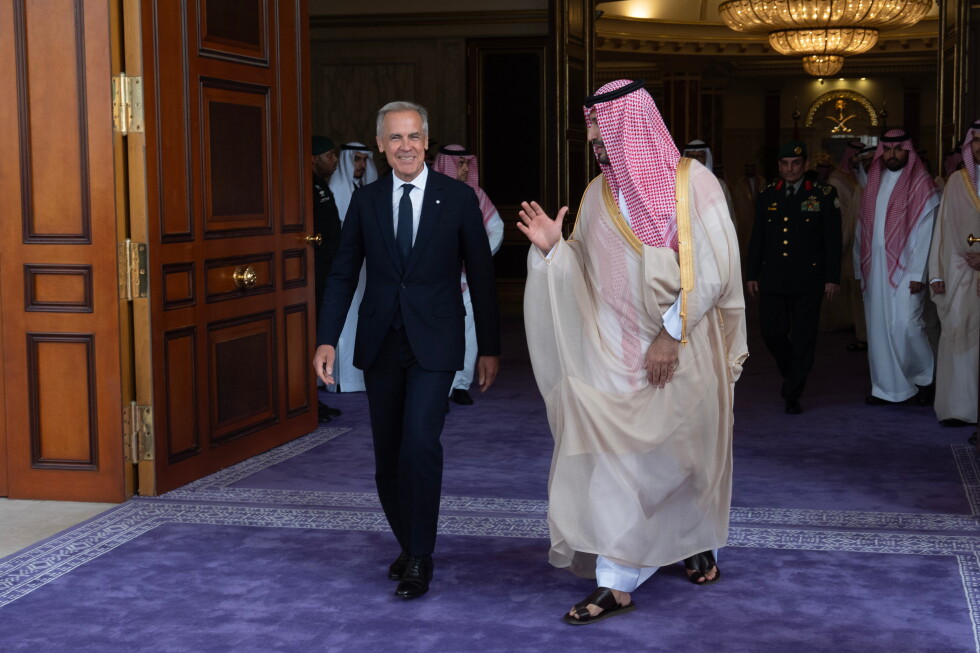
TORONTO (AP) — Canadian Prime Minister Mark Carney defended his trip to Saudi Arabia despite its poor human rights record and said on Thursday, during his visit to the kingdom that publicly condemning countries from afar is “an ineffective strategy.”
During the visit — the first by a Canadian leader to Saudi Arabia in 26 years — Carney met with Saudi Crown Prince Mohammed bin Salman, the kingdom’s de facto ruler.
Carney has been seeking to expand his country’s economic ties beyond its heavy reliance on the United States, and diversify trade and attract investments against the backdrop of U.S. President Donald Trump’s tariffs and threats to the U.S.-Mexico-Canada trade agreement.
“Lecturing countries from afar is an ineffective strategy,” Carney told reporters in the Saudi city of Jeddah. “It’s satisfying, but it’s ineffective.”
Advertisement
He stressed that engagement “doesn’t mean that we agree with everything that a country is doing.”
Saudi Arabia’s human rights record drew global scrutiny after the 2018 killing of Washington Post columnist Jamal Khashoggi. A U.S. intelligence assessment concluded Prince Mohammed likely approved the operation, which Saudi Arabia denies.
In Jeddah, Carney also said that the world is becoming more dangerous and divided and that Canada must expand its partnerships elsewhere, beyond the U.S., its largest trading partner.
The visit contrasts with the approach by former Canadian Prime Minister Justin Trudeau, whose government publicly criticized Saudi Arabia’s human rights record in 2018, triggering a diplomatic rift that lasted five years.
Advertisement
The criticism prompted Riyadh to expel Canada’s ambassador, suspend new trade and investment and recall thousands of Saudi students. The countries restored full diplomatic relations in 2023.
Carney said he cares deeply about human rights and Canadian consular cases, citing a case he said he raised with Turkish President Recep Tayyip Erdogan during a meeting on the sidelines of the NATO summit in Ankara, Turkey’s capital this week.
“Because I was with the president, it was addressed favorably. If I sat in Ottawa … I wouldn’t have had that conversation. I wouldn’t have had that impact. That’s a small example,” Carney said.
Canada’s Foreign Affairs Minister Anita Anand, who accompanied Carney to Saudi Arabia, said she also raised human rights and consular cases during her meetings.
Advertisement
Sign up for Morning Wire:
Our flagship newsletter breaks down the biggest headlines of the day.
Advertisement
For its part, Saudi Arabia has sought to attract foreign investment as Prince Mohammed pursues an ambitious plan to diversify the kingdom’s economy beyond oil
Saudi Investment Minister Fahad Al-Saif called Canada “a trusted long-term partner” and said Saudi investors offer “patient capital.”
Advertisement
Also Thursday, Carney attended a ceremony for 13 commercial agreements and memorandums of understanding between Canadian and Saudi companies and institutions, including engineering firms Hatch and AtkinsRéalis — agreements the prime minister’s office said are worth more than 1 billion Canadian dollars ($710 million).
Nelson Wiseman, a professor emeritus at the University of Toronto, highlighted the practical side of Carney’s policies.
“Carney says he is taking the world as it is,” Wiseman said. “It doesn’t mean looking beyond human rights; it means being realistic about what preaching about it to authoritarian leaders can accomplish.”
Kebbell Developments wanted to relax the “trigger for the delivery” of a connecting road and bridge in Eastfield, Scarborough, but coastal councillors said they were not convinced by the company’s arguments.
Planning officers had recommended allowing the construction and occupation of dozens more houses to avoid pausing construction works. However, members of the Scarborough and Whitby Area Committee said they were minded to refuse the application following concerns from residents and the division councillor.
Cllr Eric Broadbent said: “I think the Channel Tunnel is probably easier to build than this bridge.
Advertisement
“I can’t support this application, and the developers should get their heads together, get it built, and do the residents of Deepdale a favour.”
However, officers said that plans for the construction of the bridge were underway and were “satisfied that developers are fully committed to the bridge and we expect a formal application in the very near future”.
Committee members said they remained sceptical, but instead of refusing the delay, they agreed to postpone a decision until “substantive” plans for the bridge were provided.
The site, on land north of Eastfield, received outline planning permission in 2013 for up to 1,350 properties.
Advertisement
In 2023, a hybrid application was approved for around 657 dwellings on land east of Deepdale, and it is the conditions attached to that permission for which a change was sought.
The new scheme would allow for 693 houses to be occupied “prior to construction of the link road and bridge to allow construction of the current phase to be completed”.
Speaking at the meeting, a planning officer said a “compromise solution had been proposed by the applicant” and that the revised proposal was “a reasonable and sensible compromise”.
Officers added that “a specialist bridge design company has been engaged by the company, with a formal submission to be made later this year”.
Advertisement
Eastfield councillor Tom Seston said: “The issue with the link road and the bridge was raised with me as soon as I was elected and it’s been a sore spot for many residents on the development.
“The lack of delivery of basic infrastructure in certain parts of the development and developers not fulfilling their promises has been a long-running issue, while I appreciate that not all the issues are linked to one single developer.
“The behaviour of various companies has left a bad taste in residents’ mouths, and they feel neglected by these companies.”
Councillors were advised that the issue was complicated by different developers working simultaneously at the site.
Advertisement
Officers noted that there had been “a previous allowance, three or four years ago, to delay the construction of the bridge”.
“Denying Kebble this application may not result in the bridge being delivered any sooner, and this situation is not entirely of Kebble’s making, as there are several companies at work here.”
The planning committee agreed to postpone a decision until September and instructed officers to seek clarification on the developer’s plans for the bridge.
To Planet Glue, that far-flung place where life-forms with exalted titles discuss a project to repair the Palace of Westminster.
It could cost £39billion and will not start until 2032 at the earliest. Some officials have already toiled on it for 14 years.
In that time they have developed their own language, burrowing so far into the bureaucratic subsoil that normal bodily functions have withered.
The blind cusk eel swims at such dark depths that its eyes no longer work.
Advertisement
Likewise, officials attached to parliamentary ‘R&R’ (restoration and renewal) have lost all sense of scepticism about costs. Yesterday’s event was a meeting of the public accounts committee, one of Parliament’s better outfits.
What a feast R&R has become for officials and prospective contractors. For more than a decade the Establishment has accepted that the palace needs a fortune spending on its crumbling towers and tangled pipes; as the years pass it becomes hard to remember how many billions of pounds are involved.
Thus the figures rise, like the girl in the old Nimble bread adverts, and no one complains.
Before the committee sat two of the project’s current managers: Charlotte Simmonds, ‘managing director at R&R client team’ and ‘senior responsible officer’, plus Russ MacMillan, ‘chief executive of the R&R delivery authority’. What curlicues to flourish on LinkedIn!
Advertisement
Charlotte Simmonds, ‘managing director at R&R client team’ and ‘senior responsible officer’. What curlicues to flourish on LinkedIn, writes Quentin Letts
Charlotte and Russ – the committee uses Christian names, please – both spoke the lingo: resilience, full decant, EMI (enhanced maintenance and improvement), strategic estates, design maturity, next levels, retiring the risks, consent groups, iterate, sub-boards, external dependencies, mitigations, moving into delivery, upticks, following due process, granular level, delegation levels, escalating up to the clerks, triangulation, scenario planning and, naturally, best practice.
Charlotte did a lot of hand-waving. She may have thought this helped to convey a sense of executive purpose. To me it simply suggested a bluffer. They had come to try to frighten the MPs into approving phase one of the works, which would be capped at £3billion. Peanuts! If parliamentarians did not agree to this by the end of the year there was going to be terrible trouble. Things were going to become more expensive, just you see.
Advertisement
Holiday companies use a similar tactic when you start booking a trip and the message flashes up, ‘only two rooms left at this price’. You panic and press the button and wrongly think you have bagged a bargain.
Sir Geoffrey Clifton-Brown (Con, N Cotswolds), 73, who chairs the committee and who is a chartered surveyor, was curious how the £3billion figure for phase one had been reached.
Charlotte rattled through some of the costings: £320million on designers, £90million on surveys, £70million on a temporary jetty on the Thames, £328million for storing ‘heritage works’, by which she meant either oil paintings or perhaps Sir Geoffrey himself. Just clearing the scaffolding and clutter from the palace’s current spine road was going to cost £30million. These were astonishing sums, produced almost with pride.
Planning permission alone was going to take a year. Nothing moves slowly in officialdom, you see. The longer they delay, the longer their class stays in a job.
Advertisement
Catherine McKinnell (Lab, Newcastle N) suggested that it all sounded rather vague. ‘There’s lots of potential for elasticity in there.’ Russ’s eyes bulged, not so much in indignation, I think, as surprise. It was as if no one had ever put such a point to him. Sarah Hall (Lab, Warrington S) expressed mild doubt about the supervision of costs. Charlotte, with a wave of the hand: ‘It would obviously be profiled.’ Eh?
‘Experts’ were invoked a lot. ‘We draw in independent experts,’ yacked Charlotte. ‘We have also utilised consultancy support.’ Now the prices perhaps started to make more sense. She insisted phase one was ‘a really pragmatic way to get momentum on this programme’.
Translation: once MPs have swallowed this initial £3billion there will be no turning back and we can really open the gold taps.
In her initial complaint, Mueller argued that Sheen had been ordered to furnish her with a monthly $55,000 from April 2010 onwards, but alleged that in July 2011 he began making either partial or no payments.
Sheen’s representative argued that Mueller was ‘not entitled to any child support’ because he had cared for the children while she battled addiction.
Advertisement
Now, in court documents obtained by the Daily Mail, the pair have arrived at an arrangement in which he will pay her far less than the amount she first demanded.
Under the terms of their agreement, Sheen owes Mueller a total of $500,000, half of which is due by July 10, with the remainder to be paid by September 1.
The Daily Mail has contacted Sheen and Mueller’s representatives for comment.
Advertisement
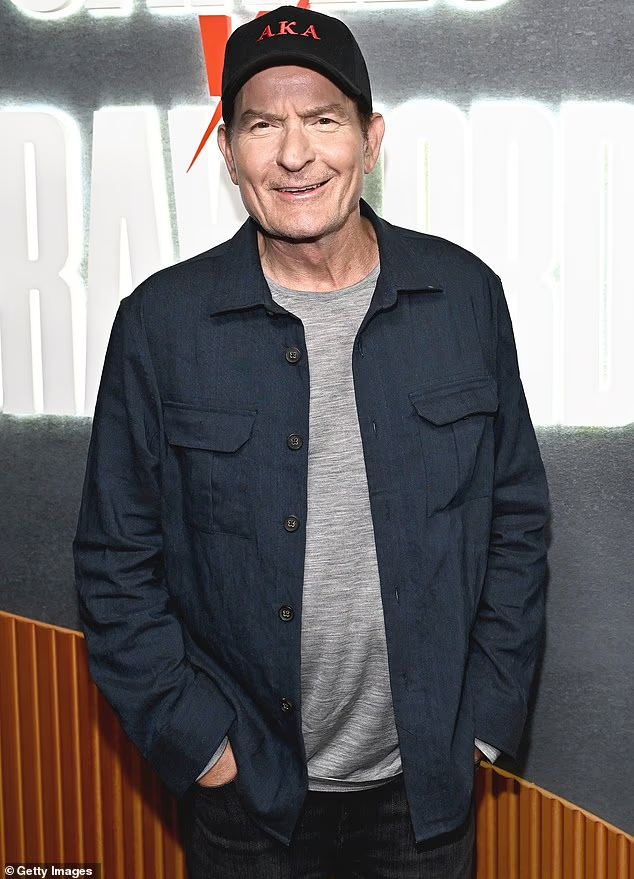
Charlie Sheen, pictured last September, has been ordered to pay $500,000 to his second ex-wife Brooke Mueller as their legal battle draws to an end
Mueller sued Sheen for over $15 million this past December, insisting he owed her back child support for their 17-year-old twins Bob and Max; she is pictured with her sons in 2016
Mueller and Sheen exchanged vows in 2008, commencing a turbulent marriage buffeted by their respective substance abuse struggles until they divorced in 2011; pictured 2009
Mueller and Sheen exchanged vows in 2008, commencing a turbulent marriage buffeted by their respective substance abuse struggles until they divorced in 2011.
Sheen has retained his sobriety since 2018, while Mueller relapsed in 2023 and has confessed to another ‘slip’ since but remains committed to staying on the wagon.
The agreement they have just struck over child support covers the period from March 1, 2011 to July 1, 2026, after which any financial responsibility for Bob and Max rests with whichever parent has ‘physical custody’ at the time, per court documents.
Although Mueller and Sheen technically have joint custody, the exact terms are contingent on Mueller’s ability to remain sober.
Advertisement
When Mueller first sued Sheen this past December, she demanded an eyewatering sum of $15,386,243, comprised of $8.9 million in back child support from March 2011 to December 2025 and a further $6.4 million in interest.
Mueller insisted that her ex-husband provide her with the sum stipulated – plus $25,000 in attorney’s fees – within 30 days.
Sheen’s representative retorted: ‘Brooke has been in and out of rehab for the past 15 years, while Charlie has had 100% custody of the kids, which is why she is not entitled to any child support,’ according to TMZ.
Earlier last year, Mueller remarked that Sheen remained ‘my first call for help,’ saying: ‘He’s always there to help me and pick up the pieces’; pictured 2008
Advertisement
She explained that they held dramatically different views of sobriety, which he appeared to attribute more to willpower than she did; Mueller and Sheen pictured at the 2008 Emmys
Earlier last year, Mueller remarked that Sheen remained ‘my first call for help,’ saying: ‘He gets it. He’s always there to help me and pick up the pieces.’
Nevertheless she explained that they held dramatically different views of sobriety, which he appeared to attribute more to willpower than she did, via People.
‘He knows his whole addiction history, and [thinks]: “If I can just stop without one AA meeting or without needing any whatever, then why can’t you?”‘ she said.
Advertisement
‘I think he thinks it’s more about just making a choice, and then with the addiction [mindset], sometimes we don’t have a choice,’ Mueller added.
‘But if I look back at our marriage, he was always one that could shut it off and turn it off and go to sleep, and I would be taking the car sneaking out to Skid Row.’
She allowed that the circumstances were ‘unfair’ to her sons, whom she said had gotten ‘used to’ the ‘sad reality’ that ‘Mommy is going to relapse again one day.’
Along with the twins he had by Mueller, Sheen shares two daughters with Richards – Sami, 22, an OnlyFans model, and Lola, 21, a born-again Christian.
Lily Allen made sure to steal the spotlight as she wowed in a racy black two piece at the Silver Clef Awards at the Royal Albert Hall on Thursday night.
The West End Girl hitmaker, 41, showcased her incredible figure in the plunging lace black bralette and matching skirt which featured an elegant train.
Completing the look with a pair of black heels, she wore her dark locks in a stylish up do and accessorised with drop diamond earrings.
Lily, who was awarded the Icon Award during the evening, was joined by fellow pop star royalty Mel C, who kept it simple in a long black dress which featured a leg slit.
Advertisement
Little Mix star Jade Thirlwall also turned heads on the carpet as she opted for a glamorous red off the shoulder midi dress and black heels.
Jessie J ditched the dress and instead opted for a stylish oversized white shirt, black tie and black Capri trousers.
Lily Allen looked sensational in a plunging lace black bralette at the star-studded Silver Clef Awards at the Royal Albert Hall on Thursday night
Advertisement
She was joined by a glamorous Jade Thirlwall (L) and Mel C (R) who both wowed on the red carpet
The West End Girl hitmaker, 41, showcased her incredible figure in the plunging lace black bralette and matching skirt which featured an elegant train
The Silver Clef Awards is Nordoff and Robbins’ largest annual fundraising event and since 1976 it has raised over £17million for the charity.
This year, which marks the 50th anniversary, saw Lily receive the Icon Award and Jade receive the award for Best Female, while Mel C received the Global Impact Award.
Advertisement
Jessie J took home the Outstanding Achievement in Music Award, Pink received the O2 Silver Clef Award and Rachel Chinouriri was presented with the Best New Music Award.
Other legendary artists who have been honoured over the years include David Bowie, Annie Lennox, Ed Sheeran, Stormzy, Dame Shirley Bassey, Sir Paul McCartney, George Michael, Kylie Minogue, The Rolling Stones, Oasis and Coldplay.
Speaking about receiving the award last week, Jade said: ‘I’m so proud to stand among so many groundbreaking and inspirational women in music and am truly honoured to win this award.
‘I’ve always believed in using my voice for good in both my music and beyond. It means the world to me to be recognised by Nordoff and Robbins.
Advertisement
‘They do such incredible work using the power of music to bring comfort, connection and joy to people.’
Mel C said: ‘Receiving the Global Impact Award at the O2 Silver Clef Awards is such an honour.
Lily received the Icon Award after her hit album West End Girl was released at the end of last year
Completing the look with a pair of black heels, she wore her dark locks in a stylish up do and accessorised with drop diamond earrings
Advertisement
The star looked in great spirits as she laughed with fans
Jessie J ditched the dress and instead opted for a stylish oversized white shirt, black tie and black Capri trousers
Jessie J took home the Outstanding Achievement in Music Award
Pop star royalty Mel C, who kept it simple in a long black dress which featured a leg slit
Advertisement
This year, which marks the 50th anniversary, saw Jade receive the award for Best Female
Mel looked overcome with excitement as she waved to fans
She accessorsied with chunky gold jewellery
The singer couldn’t wipe the smile off her face as she posed with the award and balanced it on her head
Advertisement
Sam Fender also received the Best Live Act Award
Franz Ferdinand received the Best Group Award as they posed with their presenter Peter Capaldi
Jessie previously said: ‘To be recognised with the Outstanding Achievement in Music Award is incredibly humbling’
Jessie J looked happier than ever as she posed with her award
Advertisement
Lily smiled with her award amid her sell out tour of the UK
Lily read her pre-written speech on stage off of her phone
She oozed glamour in her racy look
Peter Capaldi opted for a quirky white polka dot shirt and black suit
Advertisement
David Gray received the Best Male Award
The Seventeen Going Under hitmaker was snapped during his speech
The artist kissed his award
John Bishop smartened up for the evening
Advertisement
John posed with David Gray during the ceremony
David Gray opted for an all black look
Mark King wore a stylish pair of shades, black shirt and blue trousers
Pink made a rare appearance at the awards ceremony
Advertisement
She was every inch the rocker at the event
Mel C flashed her washboard abs as she threw her award in the air after winning
Mel couldn’t wipe the smile off her face as she posed for a picture with Richard E. Grant
Andy Burnham graced the stage to make a speech
Advertisement
‘Music has always been my way of connecting with people all over the world, so it’s amazing to be recognised by Nordoff and Robbins, not just for the songs, but for the impact beyond them.’
Price Tag hitmaker Jessie J said: ‘To be recognised with the Outstanding Achievement in Music Award is incredibly humbling. I’m so grateful to everyone who has supported and shared this incredible journey with me.
‘Music and performing live has connection at its heart, so I’m proud to be recognised by the O2 Silver Clef Awards and support the amazing work Nordoff and Robbins do in music therapy.’
Rachel Chinouriri said: ‘I’m really happy to be receiving the Best New Music Award at this year’s O2 Silver Clef Awards and to stand alongside such special artists.
Advertisement
‘Nordoff and Robbins help so many people through music therapy, which motivates me to make meaningful music that can inspire others to believe in themselves.’
Pink gushed: ‘I feel so honoured to receive this award. I’ve always tried to use my voice, on and off stage, to advocate for the causes closest to my heart, and I’m proud to support an organisation that turns compassion into real action every single day.
‘This recognition from Nordoff and Robbins means so much to me, not just as an artist, but as someone who believes deeply in the power of music to create change.’
Congratulating the women, CEO of Nordoff and Robbins, Maria Neophytou said: ‘I’m thrilled that these five incredible women will receive O2 Silver Clef Awards this year.
Advertisement
‘They are all exceptional talents and we look forward to honouring them at the Royal Albert Hall in July.
‘In this 50th anniversary year, the O2 Silver Clef Awards are as important as ever for us. With the support of these amazing artists, the wider music industry and beyond, we will make this year one to remember, raising vital funds for Nordoff and Robbins so we can continue delivering life changing music therapy, training and research.’
Sam Fender also received the Best Live Act Award, Ludovico Einaudi took home the Innovation in Music Award and Max Richter received the Contemporary Music Award.
Trisha Goddard has revealed she has returned to hospital for steroid injections on Wednesday amid her incurable stage 4 breast cancer battle.
The broadcaster, 68, was diagnosed with metastatic breast cancer in 2023 and also suffered from Raynaud’s syndrome, a condition that causes reduced blood flow to the fingers and toes.
The condition can be a side effect of some cancer treatments, particularly chemotherapy, and can change the colour of the skin, causing burning or numbness.
Trisha gave a new update on Instagram alongside a montage of pictures of her smiling on a hospital bed.
Advertisement
She wrote: ‘Ho-hum…. Another day – another procedure! This time… Steroid injections in da batty to banish aches and pains that b**** Cancer left me as a nice ‘I Wuz Here’ when dem was zapped to hell by radiation treatment!
‘One of the few massive needles I’m always really glad to see! Cos every time a nurse holds my hand and sweetly warns me that there’s going to be ‘A little prick’– Me tell them, No sweat!
‘Pah! I’ve encountered some bigger pr***s in my past….. And dem was all over dis Batty for waaay longer than 15 minutes, Babes….
‘Until me came to my senses, got feisty as f*** and divorced the hell outta them!’
Advertisement
Trisha Goddard, 68, has revealed she has returned to hospital for steroid injections on Wednesday amid her incurable stage 4 breast cancer battle
The broadcaster was diagnosed with metastatic breast cancer in 2023 and also suffered from Raynaud’s syndrome, a condition that causes reduced blood flow to the fingers and toes
Trisha gave a new update on Instagram alongside a montage of pictures of her in hospital
Advertisement
Last year, she made history by becoming the first person with incurable cancer to enter the Celebrity Big Brother house.
Making sure she was fit and well ahead of entering the house, she told Daily Mail: ‘I went to the infusion centre on April 1. I call it my spa room.
Advertisement
‘I had a soupcon of chemo and targeted hormone therapy, one little bag after the other. I have a port catheter [in her chest] and I get plugged in.
‘Then the next day I flew over to the UK. I had to wear compression garments – tights and a sleeve on my arm – and I took disinfectant wipes for the seats, tables, armrest and loo.
‘My oncologist is brilliant, a rock star, and so sweet. He said, ‘I’m going to help you do this because your message [of hope] is so great.’
She had an ultrasound scan when she got to England to check she had not developed a deep vein thrombosis – she hadn’t – and a medical.
Advertisement
Trisha had signed up for Celebrity Big Brother to prove to patients they should ‘not be scared of living’ after being diagnosed with stage four cancer.
Share or comment on this article:
Trisha Goddard, 68, reveals she’s back in hospital as she gives update on incurable stage 4 breast cancer
I WAS in Hartlepool at the count on the night Hartlepool people elected the football club mascot as their directly elected mayor.
The people who lived there, who voted for him, just wanted to stick two fingers up at the entire political establishment here in the UK.
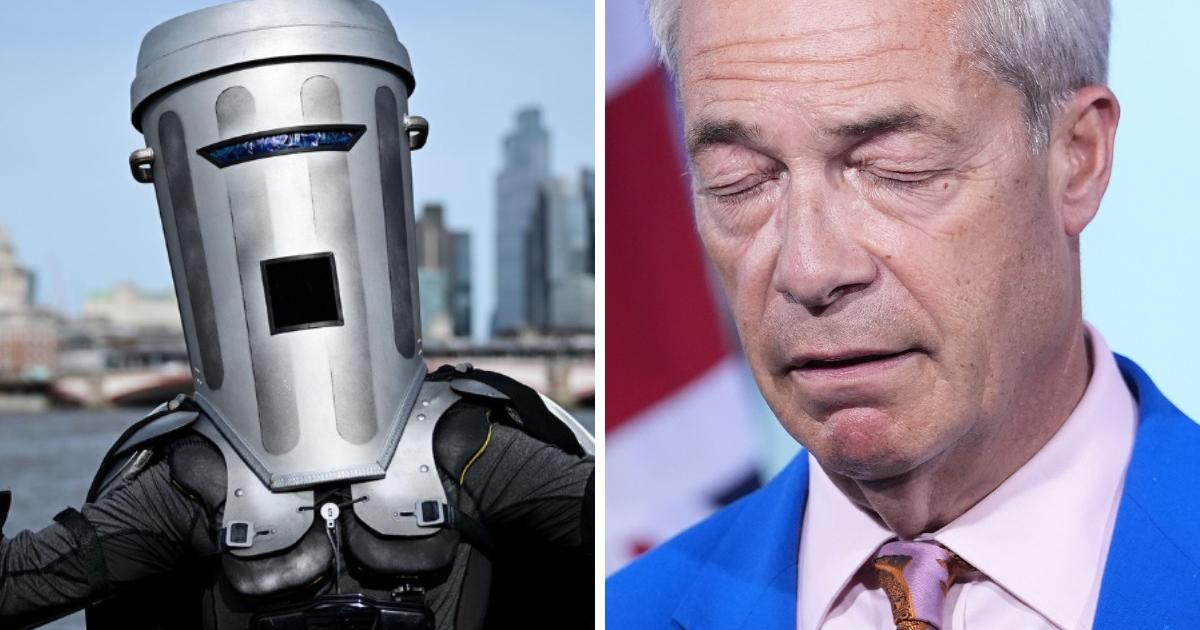
I have watched Count Binface, Jon Harvey, debate at the Cambridge Union on the internet. He appears to be articulate and intelligent. I would vote for him instead of Zippy, if I was a resident of Clacton.
Advertisement
Nigel Boddy,
Witney Court,
Greencroft Close,
Darlington
Advertisement
Hope new Travellers’ policy leads to better outcomes
IT will be interesting to see if the new Traveller policy aimed at a “less confrontational” response when a fleet of trucks and caravans rocks up unannounced actually leads to a better outcome.
For the policy to work those Travellers being offered an alternative site would need to reciprocate with good behaviour and a proper clean up when leaving.
The restoration of Ethel Ward playing field cost taxpayers £2,500 and by all accounts was a most unpleasant task. No doubt those who had to deal with human faeces and animal carcasses found that experience most confrontational.
Feel strongly about an issue? Write us a letter. Please write no more than 250 words and you must provide your full name, address and mobile number. Send your views by email to: letters@thepress.co.uk
Write a comment
Advertisement
Join the debate and leave a comment in our comments section below this article – we may use your comments for a follow up article.
A trio of teenagers were arrested after they were caught on video giggling as they tossed a lit firework into a California apartment.
A fire started at a home in Citrus Heights on June 30, according to the local police department.
Officials found a mattress ablaze in a bedroom when they arrived.
The flames were kept under control by fire crews but not before smoke damage destroyed everything inside the room, according to a fundraiser.
Advertisement
The room was a nursery for the unborn son of Anthony Cadena and Lellises Morgans, who lived at the property.
Two young girls could be seen lurking outside the home in video footage, appearing to point at the camera that captured the incident.
After finding an open window, the girls looked inside and looked around before lighting a firecracker and tossing it inside.
A dog could also be heard barking as they tossed the small explosive through the window.
Advertisement
Camera footage captured teenage girls giggling as they tossed a lit firecracker into a home in Citrus Heights, California, on June 30
The teenagers tossed the firework into a room built as a nursery for a baby boy named Noah, who was expected in two weeks
They took off before the footage cut to the noise of the fire alarm blaring.
Advertisement
According to ABC10, officials said the incident began after a prior disagreement involving a girl who lives in the home.
No one was hurt.
Anthony told the outlet that he was home at the time playing a video game when his wife called, telling him the house was on fire.
He found the nursery in flames and, with the help of a bystander, was able to contain the fire with a garden hose before first responders arrived.
Advertisement
‘Seeing someone actually do that to someone’s house… they saw it was a baby room… just to see that these girls just don’t care about anything… it’s unbelievable, honestly, that they would do something like that,’ Morgans said.
Anthony Cadena said his wife Lellises Morgans called him while he was at home playing video games telling him that the house was on fire
No one was injured in the fire but smoke destroyed everything they had set up for their baby
A GoFundMe was launched to help support the family, which has raised nearly $24,000
Advertisement
According to a GoFundMe set up to help cover the cost of rebuilding the nursery for little Noah, the expecting parents need to completely start over.
‘As they prepare for the arrival of their baby, they are now faced with the unexpected expense of replacing the nursery, baby essentials, and repairing the damage to the room caused by the fire,’ reads the fundraiser.
Nearly $24,000 has been raised, exceeding its goal of $20,000.
Advertisement
Share or comment on this article:
Trio of California girls filmed hurling lit firecracker in baby’s nursery window after hearing dog barking
A teenager has died after getting into difficulty in water at a beauty spot popular with hikers. He is now one of seven to die in the area commonly known as the Waterfall Country in the last seven years.
Sean Kanyoza, 19, a student from Swindon, had travelled to the Pontneddfechan falls in Bannau Brycheiniog – one of the most popular waterfall hikes in the country – with friends on Saturday, June 27.
What should have been a day of fun turned to tragedy when Mr Kanyoza died after he’d entered the water beneath the waterfall at Ystradfellte and got into difficulty.A teenager has died after getting into difficulty in water at a beauty spot popular with hikers. He is now one of seven to die in the area commonly known as the Waterfall Country in the last seven years.
Advertisement
Sean Kanyoza, 19, a student from Swindon, had travelled to the Pontneddfechan falls in Bannau Brycheiniog – one of the most popular waterfall hikes in the country – with friends on Saturday, June 27.
What should have been a day of fun turned to tragedy when Mr Kanyoza died after he’d entered the water beneath the waterfall at Ystradfellte and got into difficulty. Read more here















































You must be logged in to post a comment Login