Radar, a startup backed by American Eagle CEO Jay Schottenstein that helps retailers manage in-store inventory and cut back on theft and lost merchandise, reached unicorn status with its latest funding round, CNBC has learned.
The company, founded in 2013 by Spencer Hewett, raised $170 million at a valuation of over $1 billion in its series B funding round, which was co-led by Gideon Strategic Partners and Nimble Partners with participation from Align Ventures.
The company also counts Schottenstein among its investors. He said American Eagle was the first retailer to implement Radar’s technology across its stores.
Through Radar, “American Eagle has unlocked greater inventory visibility, empowered our associates and sharpened our insights,” said Schottenstein. “With inventory digitized in real-time, we have enabled our creative, operations and technology teams to place their focus on creating seamless, customer-first experiences that define the American Eagle brand.”
Advertisement
Radar also works with Gap‘s Old Navy and other major retailers, covering more than 1,400 stores.
When Hewett started the company with a boost from venture capitalist Peter Thiel’s fellowship for young entrepreneurs, his goal was to create a better way to do instant checkout, but the strategy evolved to inventory management. Using hardware mounted to the ceilings of brick-and-mortar stores, Radar’s technology can read any radio-frequency identification, or RFID, tag with 99% accuracy, the company said.
The tech addresses one of the most challenging aspects of running a retail business: inventory management. Between figuring out how much product to make, deciding where to send it and then keeping track of it once it arrives, retailers face a persistent challenge in overseeing their inventory. Errors can lead to lost sales and crush profit margins.
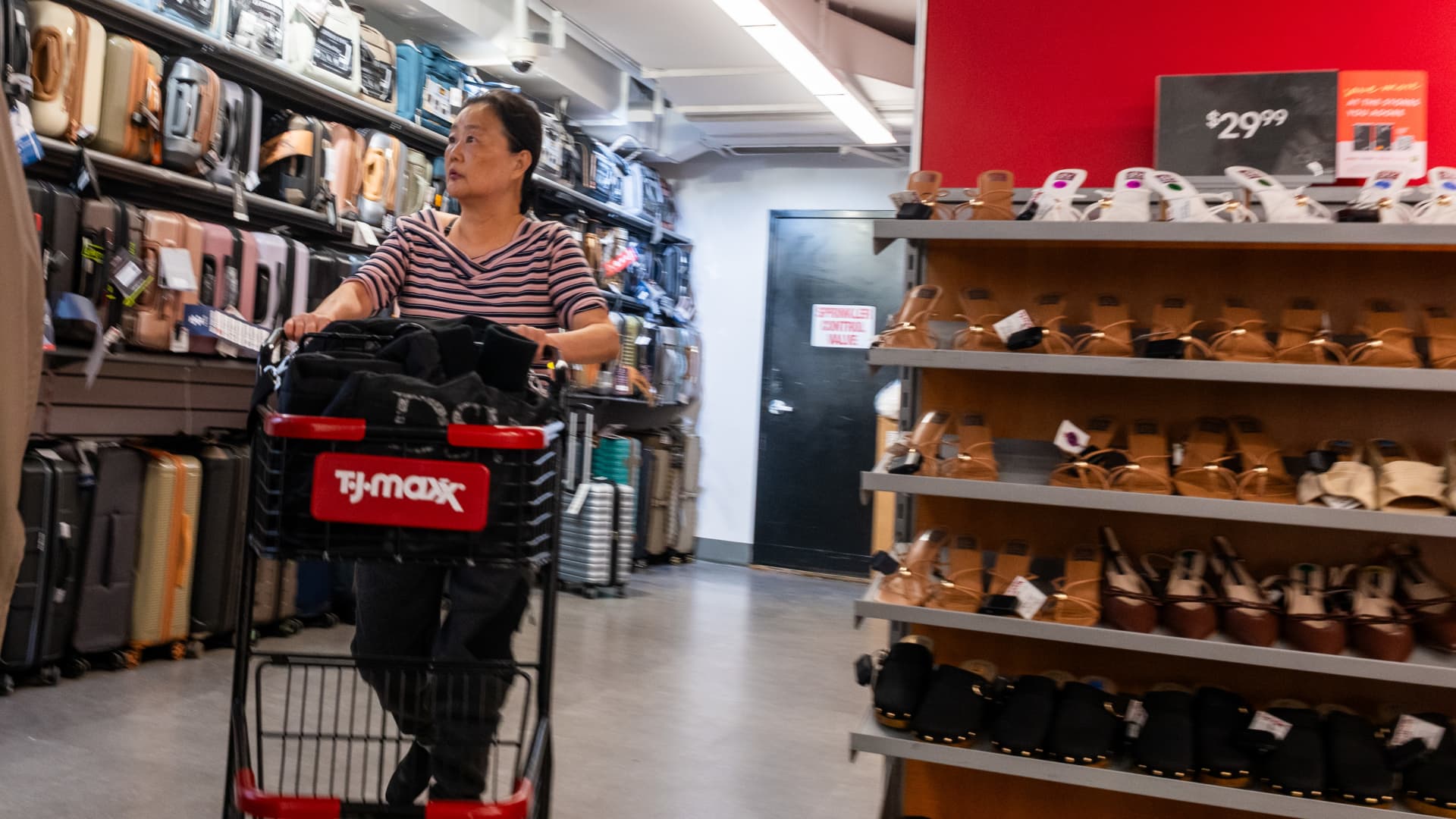
Radar primarily functions at the store level. It enables in-store employees to quickly hunt down an item a customer wants, addressing a pain point among shoppers who come to a store to buy a product listed as available online only to find it’s actually out of stock.
Advertisement
“If a customer asks them, ‘I want this in a different size’ they can immediately see where in the store it is, no matter where it’s been moved, and get it for the customer,” Hewett told CNBC in an interview. “It gives them certainty that they can actually help the customer without them, like, saying we might have it in the back and disappear for like 15 minutes and then come back and be like, ‘Okay, actually the inventory system said we had it, but we don’t have it. I can’t find it.’”
As a result, some of Radar’s retail clients who offer a buy online and pick up in store option have seen order cancellation rates go from 25% to 3%, said Hewett.
The tech also helps managers to keep a better eye on deliveries and more easily identify shrink, or inventory loss from theft, error or damage. Shrink sometimes comes from would-be customers stealing merchandise, but it’s murkier than that in many cases. It also frequently results from employees across the supply chain taking items or from administrative error.
For example, if a store expects a shipment of 100 T-shirts but receives 80, either because of theft at a distribution center or a packing error, it can be hard for a store manager to identify it, leading to out-of-stocks and lost sales.
Advertisement
“You don’t have the labor hours to go and count every box that gets shipped, so you have to accept what they say is there and assume it’s true,” said Hewett. “With Radar, like, you actually have a real time check to make sure that it is true, and then flag it immediately if it’s not.”
The company declined to share overall customer data showing the effectiveness of the tech, but Hewett said one of his clients saw a 60% reduction in shrink after launching Radar at one of its stores.
When measuring shrink, companies tend to look at it on a net basis, factoring in both overages and shortages. One company may have a 15% shortage and a 15% overage, reflecting a net shrink of 0%, but that would also mean inventory was off by 30% for the customer, Hewett said.
“Sizes and colors matter, like, if you don’t have my size, I’m not going to buy it, therefore, that’s a lost sale, and it shows up in your revenue and margin,” Hewett said. “We effectively eliminate that issue to make sure you’re always in stock in the sizes and colors and products that you want to have.”
Shares of Naukri-parent Info Edge sharply surged another 5% on Wednesday, extending a 19% rally in just two days after the company released its quarterly business update for Q1 FY27, with brokerages issuing bullish calls for the stock.
The company’s shares jumped to Rs 1,217.80 apiece on the NSE on Wednesday, the highest level seen by the stock in around five months. The sharp gains over the two sessions added more than Rs 12,456 crore to the company’s market capitalisation, pulling it up to nearly Rs 78,740 crore.
Info Edge Q1 business update
Info Edge on Tuesday reported that its standalone billings stood at Rs 737 crore for the April-June quarter of the ongoing financial year 2027, marking a 14% year-on-year (YoY) increase from Rs 644.2 crore reported in the corresponding quarter of the previous financial year.
Segment wise, its recruitment solutions category recorded a nearly 18% YoY rise in billings to Rs 553 crore, while 99acres posted a 17% YoY rise to Rs 110 crore during the quarter under review. Jeevansathi and Shiksha meanwhile posted a 14% YoY rise and a 23% YoY fall in billings to Rs 40 crore and Rs 35 crore, respectively.
Nomura in its note highlighted that Naukri’s nearly 18% YoY growth in billings was much higher than its expectations of a 10% rise. This came after a 10.8%, 11% and 9.5% YoY growth in billings in Q2, Q3 and Q4, respectively, of the financial year 2026.
The 17% YoY growth in 99acres’ billings also beat Nomura’s expectation of a 14% YoY growth. The overall 14% surge in billings was higher than the international brokerage’s estimate of 10% growth.
Live Events
“Naukri billing growth in Q1 FY27 improved its trend seen in FY26 and specifically Q4 FY26. We think premium hiring (jobs in niche skills with higher pays especially in tech) with higher ARPUs and a renewed focus on consumer business (new AI-led offerings including resume maker, mock interviews and jobseeker agents) may have led to this strong growth despite a possible weakness in the Middle East market due to the ongoing conflict,” Nomura said. Nomura maintained its ‘Buy’ rating on the shares of Info Edge with a target price of Rs 1,320 apiece, implying an upside potential of nearly 14% from the stock’s previous closing price of Rs 1,159.45 apiece on NSE.
Goldman Sachs on Info Edge
Goldman Sachs also maintained its ‘Buy’ rating on the shares of Info Edge, but increased its target price to Rs 1,400 apiece, implying an upside potential of nearly 21%.It increased FY27-29 revenue estimates by up to 3%, and net income estimates by up to 4%, ET Now reported. Goldman sees sustained mid-teens billings growth as a re-rating catalyst.
Advertisement
Meanwhile, Citi upgraded its rating on the stock to ‘Buy’ from ‘Sell’, and increased its target price to Rs 1,400 apiece.
(Disclaimer: Recommendations, suggestions, views and opinions given by the experts are their own. These do not represent the views of The Economic Times)
Euro zone government bond yields climbed to their highest levels in nearly a month on Wednesday as a sharp jump in oil prices heightened inflation concerns and prompted investors to increase bets on further interest rate hikes by the European Central Bank, according to Reuters.
Germany’s benchmark 10-year government bond yield rose 5 basis points to 3.034%, marking its highest level since July 11. Bond yields move inversely to prices.
The move followed a sharp escalation in geopolitical tensions after the United States and Iran exchanged military strikes. According to Reuters, Iran’s Revolutionary Guards said they targeted U.S. military sites in Bahrain and Kuwait after Washington carried out strikes on Iran in response to attacks on tankers in the Strait of Hormuz. The U.S. also revoked a licence that had allowed Iran to export oil.
The renewed tensions sent energy prices sharply higher, with Brent crude rising around 3% to $76.50 per barrel, hovering near its highest level in two weeks.
Advertisement
Oil prices had retreated significantly in recent months after peaking at $126 per barrel in late April. Prices declined after the U.S. and Iran reached a framework agreement in mid-June to end their conflict, paving the way for further negotiations on sanctions and enabling energy shipments to resume through the Strait of Hormuz.
Live Events
The rebound in crude prices revived concerns over inflation, leading traders to increase expectations for additional ECB tightening. Money markets were pricing in around 31 basis points of rate hikes by the end of the year, up from approximately 25 basis points a day earlier. Germany’s two-year government bond yield, which is particularly sensitive to changes in ECB policy expectations, also climbed 5 basis points to 2.637%, its highest level since June 22.Analysts attributed the rise in bond yields to the surge in oil prices following the U.S. decision to revoke Iran’s oil export waiver. The increase in energy costs is expected to keep short-dated government bonds under pressure as investors bring forward expectations for another ECB rate increase later this year.
The latest market moves underscore how geopolitical developments and energy prices continue to influence inflation expectations and monetary policy outlooks across the euro zone.
Agencies
Analysts attributed the rise in bond yields to the surge in oil prices following the U.S. decision to revoke Iran’s oil export waiver.
China is promoting the yuan as a stable alternative to the US dollar, which has reached multi-decade highs driven by strong economic data and Federal Reserve rate hikes. Chinese officials are advancing yuan internationalization through expanded use in global trade and cross-border transactions.
The dollar’s appreciation has pressured emerging markets and prompted countries to reconsider currency strategies. China remains optimistic about the yuan’s role as a reserve currency, while the US sustains dollar dominance through monetary policy, leaving the international monetary system at a potential inflection point.
China is promoting the yuan as a competitive alternative amid the rising strength of the US dollar. As the dollar reaches multi-decade highs, Chinese officials emphasize the yuan’s stability and resilience, encouraging greater international use. The Chinese government has taken steps to internationalize the yuan, including expanding its use in global trade and investments, aiming to lessen reliance on the dollar. This move aligns with China’s broader strategy to establish the yuan as a viable global currency.
China’s push to position the yuan as a “stable alternative” to the dollar comes at an ironic moment: the offshore yuan actually weakened to around 6.79 per dollar in June, reversing two months of gains, as a stronger dollar and softer PBoC fixings pressured the currency. Beijing’s pitch rests on trade settlement, the CIPS payment system, and the e-CNY digital currency, but yuan assets remain illiquid under capital controls, limiting genuine reserve-currency appeal.
For Thailand, the dollar still dominates baht movements, driving roughly 40-50% of the currency’s swings, while a stronger baht continues squeezing Thai export competitiveness against regional rivals like Vietnam. Yuan internationalization matters less for the exchange rate than for infrastructure: the Bank of Thailand is a founding participant in mBridge, the multi-central-bank digital currency platform where the digital yuan already accounts for roughly 95% of settlement volume, embedding Thailand institutionally in China’s alternative-payments architecture regardless of near-term currency moves.
Meanwhile, the US dollar’s strength is driven by robust economic data and Federal Reserve interest rate hikes. The dollar’s appreciation has impacted emerging markets and global trade, prompting countries to reassess their currency strategies. Despite these dynamics, China remains optimistic about the yuan’s potential to serve as an alternative reserve currency, bolstered by continued reforms and growing cross-border usage.
Advertisement
Overall, the contrasting currency strategies highlight the shifting landscape of global finance. China’s focus on strengthening the yuan aims to diversify and reduce dependence on the dollar, while the US maintains its dominance through monetary policy. The coming months will be critical in determining how these influences shape the international monetary system.
The pipeline of future Lionesses is under serious threat, with new research revealing that three quarters (76%) of female grassroots players expect to walk away from their team, or the sport altogether, within five years unless fresh funding is found.
The findings, published by Starling Bank as it launches the fifth year of its Kick On initiative, paint a bleak picture of the amateur women’s and girls’ game. Almost every coach surveyed (97%) said their club needs more money, with girls being turned away, missing matches and dipping into their own pockets simply to play.
It is a stark contrast to the professional game, where women’s football has become big business, attracting record broadcast deals and headline sponsorships. At grassroots level, however, the old inequalities persist: two fifths (40%) of female players say their team does not receive the same funding as male sides, while nine in ten coaches (90%) believe they could offer far more opportunities to girls if the money were there.
The research lays bare the personal cost of the shortfall. Girls and women have spent an average of £212 of their own, or their parents’, money over the past year on essentials such as kit and equipment (31%), transport to games and training (27%), and medical treatment or physio (21%).
Many are simply going without. A quarter (25%) have missed training or matches because their team could not afford access to a nearby pitch, and 23% have missed out because of a lack of kit or equipment. That attrition risks undoing the progress set out in the FA’s 2024-28 women’s and girls’ strategy, which followed a four-year period in which female participation grew by more than 50%.
Advertisement
The encouraging news for clubs is that Britain’s small business community appears ready to step up. Starling’s research found that three in five (62%) SME leaders would be interested in sponsoring a women’s or girls’ team, and most recognise the commercial upside: 61% say it would help them support their local community, 48% cite increased brand awareness and 44% point to an improved reputation.
The barrier, it seems, is perception rather than appetite. SMEs believe grassroots sponsorship costs 35% more than it actually does, estimating £1,144.50 against a real average of £845. For firms already weighing up ways to support their local community, a shirt sponsorship may be considerably more affordable than they assume.
To close that gap, Starling, one of the challenger banks that now dominate SME lending, will matchmake 2,000 business sponsors with grassroots teams in their area and subsidise the cost of kit sponsorship, with each sponsor’s name featuring on the front of the team’s shirts.
The campaign is fronted by Arsenal and England forward Alessia Russo MBE, alongside former Lioness Jill Scott MBE, whose Manchester coffee shop BOXX2BOXX will sponsor a local side.
Advertisement
“We have built so much momentum in the women’s game, but years of progress will quickly unravel if grassroots teams can’t access more financial support,” said Russo. “Sponsorship unlocks everything from kit, equipment and transport, to access to suitable pitches, something I experienced first-hand earlier in my career. Local businesses have the power to help young players reach their full potential, and potentially go pro!”
Scott added: “Times are tough for girls’ grassroots teams right now, as well as for SMEs. It’s amazing to hear how many small businesses want to sponsor the teams that desperately need it, and how many recognise the broader benefits of sponsorship too. With a career as a player and an entrepreneur, I’m proud to support Starling’s Kick On initiative again this year and I’m really looking forward to helping a team near me get some much-needed funds.”
Since 2023, Kick On has provided more than 15,000 sets of kit to female grassroots players, and Starling aims to double the running total to 32,000 sets this year. The wider stakes are clear: Sport England’s Active Lives research has consistently shown that girls remain less active than boys, and grassroots football is one of the most effective routes to closing that gap.
Ellie Cross, women’s football advocate at Starling Bank, said: “Our Kick On campaign has uncovered the issues that still remain in the women’s game, from body image issues and low self-esteem to unequal pitch access and a lack of female coach role models. We want to help clubs address their funding difficulties through partnerships with local businesses that will hopefully stand the test of time.”
Advertisement
For teams that miss out on kit this year, Starling has produced a free Sponsorship Guide and Sponsorship Proposal Template to help clubs secure backing themselves. UK amateur women’s and girls’ teams, and Starling business customers, can apply via the Kick On with Starling page before applications close at 11:59pm on 17 July 2026.
Amy Ingham
Amy is a newly qualified journalist specialising in business journalism at Business Matters with responsibility for news content for what is now the UK’s largest print and online source of current business news.
Tungsten West is looking to restart production at Hemerdon near Plymouth
09:55, 08 Jul 2026Updated 10:01, 08 Jul 2026
The entrance to Tungsten West’s Hemerdon Mine, in Plymouth(Image: Google)
A company looking to revive a mine in Devon that holds a rare critical metal says it is preparing to “ramp up” work at the site in the coming weeks. AIM-listed Tungsten West is working to restart production at the Hemerdon tungsten and tin mine near Plymouth – one of the largest tungsten resources in the world.
Tungsten West acquired the site through a receivership process in 2019 following the collapse of previous operator Wolf Minerals and is hoping to open the site for production in spring next year.
Advertisement
It is understood Hemerdon could produce up to 20 per cent of the global supply of primary tungsten outside of China once operational. Tungsten is used by many manufacturing companies, including in the automotive and defence sectors.
Ahead of the project commission, Tungsten West said on Wednesday it had started an “enhanced programme” of stakeholder engagement, including with the local community and regulators.
Jeff Court, chief executive of Tungsten West, said: “We are making rapid progress on the restart of Hemerdon with the first phase of recommissioning starting this month.
“This marks another significant milestone towards full project commissioning in Q1 2027, and I would like to thank the team, our partners, stakeholders and shareholders for the hard work that has been undertaken to date to reach this step.”
Advertisement
Tungsten West has already hired 100 people to work at Hemerdon and is targeting total recruitment of 350 by early 2027. The project is also expected to be completed within budget, the company added.
In February, Tungsten West raised more than £41m in a share sale, raising funds from new institutional investors and existing shareholders to finance the Devon project.
Mr Court said at the time the funds were the “cornerstone” for the restart of operations at Hemerdon.
“We are extremely pleased that the market has shown such strong support for the company”, he said. “We welcome new shareholders and the increased investment from our pre-existing shareholders, who both strongly believe in the vision we have for the company.”
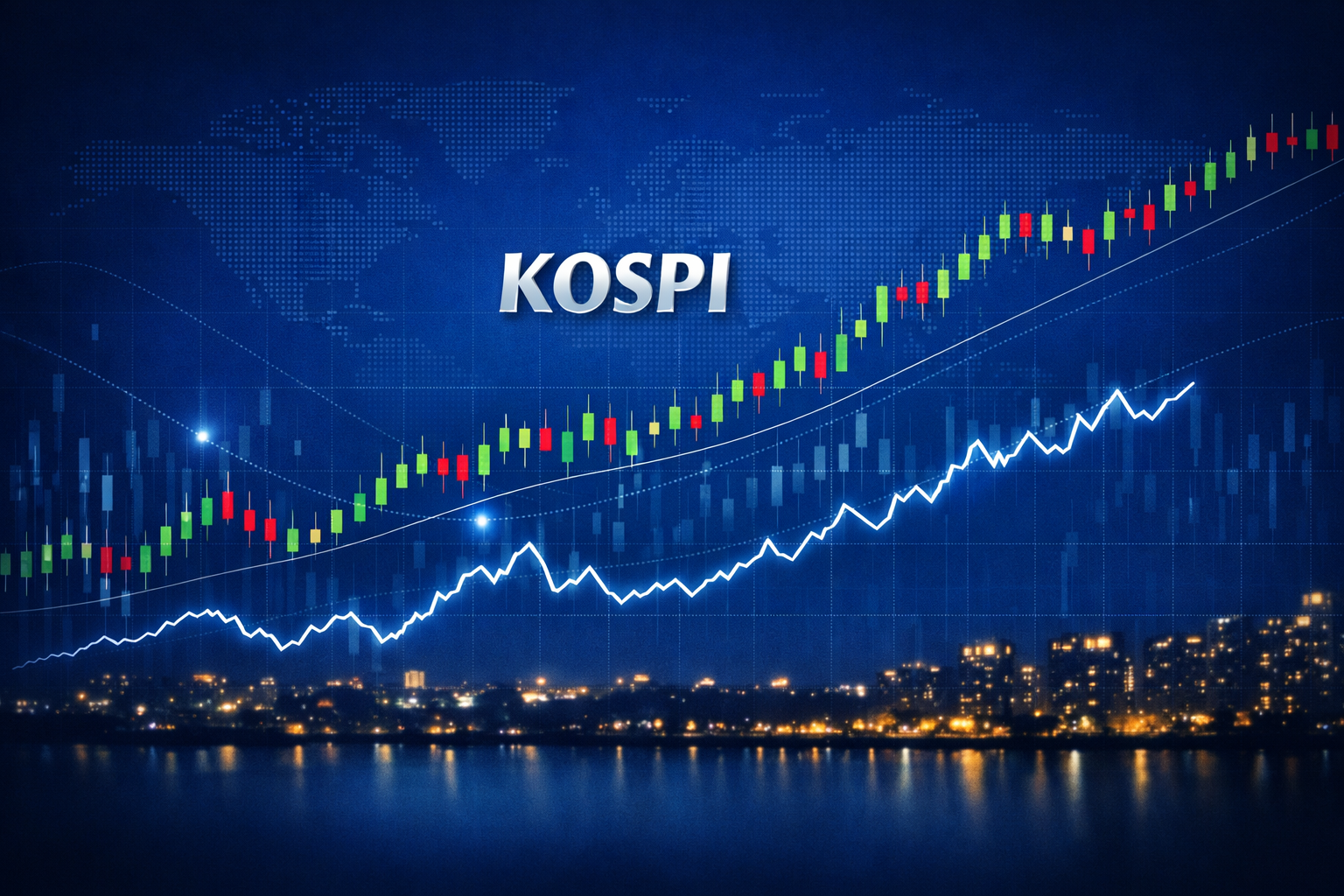
SEOUL, South Korea — South Korea’s benchmark KOSPI index plunged again Wednesday, falling 409.52 points, or 5.35 percent, to 7,246.79, extending a punishing two-day rout that has now wiped out a significant portion of the index’s extraordinary gains from earlier this year, as investors continued dumping shares in chipmakers Samsung Electronics and SK Hynix.
Wednesday’s decline followed an even more dramatic session Tuesday, when the KOSPI plunged more than 8 percent intraday and triggered South Korea’s sixth circuit breaker of the year, halting trading for 20 minutes after the index fell below key psychological levels in rapid succession. Tuesday’s session ultimately closed down 4.91 percent, but the selling resumed almost immediately Wednesday, with the index opening sharply lower and continuing to slide through the afternoon session, according to Korean market data.
The renewed selloff has come despite, and in some ways because of, historically strong earnings results from Samsung Electronics, the country’s largest company and a dominant force within the KOSPI index. Samsung reported preliminary second-quarter operating profit of 89.4 trillion won, or approximately $58.6 billion, a nearly 19-fold increase from the same period last year and a figure that exceeded consensus analyst estimates. Rather than lifting the broader market, the announcement triggered what traders described as a classic “sell the news” reaction, with investors concluding that expectations for the AI-driven memory chip boom had already been fully priced into share values well before the results were formally announced.
Samsung Electronics and SK Hynix, which together account for roughly 53 percent of the KOSPI’s total market capitalization, bore the brunt of the selling pressure across both sessions. On Tuesday alone, Samsung shares fell as much as 9.75 percent while SK Hynix tumbled 10.58 percent, with foreign and institutional investors net-selling a combined total exceeding 3.5 trillion won, or roughly $2.3 billion, even as retail investors stepped in as net buyers in an unsuccessful attempt to defend the market against the broader wave of selling. SK Square and Samsung Electro-Mechanics posted even steeper declines, falling 13.11 percent and 11.82 percent respectively during Tuesday’s rout.
Advertisement
Analysts at Samsung Securities pointed to three primary factors behind the sharp pullback. The first was straightforward profit-taking following an extraordinary run in memory semiconductor stocks, with Samsung Electronics and SK Hynix shares having soared 177 percent and 305 percent respectively during the first half of 2026. The second factor centered on growing concern that memory semiconductor companies may have already reached peak profitability, with some investors betting that year-on-year earnings growth will slow in the second half of the year due to a high base-effect comparison against this year’s exceptionally strong results. The third and most significant factor, according to the firm’s analysis, involved broader doubts about the long-term sustainability of artificial intelligence infrastructure investment worldwide, with the delayed initial public offering of OpenAI and Meta Platforms’ expansion into cloud computing cited as additional negative signals weighing on sentiment toward AI-linked companies globally.
The scale of Tuesday’s volatility was reflected in South Korea’s fear gauge, the Kospi 200 Volatility Index, known as VKOSPI, which spiked to 85.88 during the session, a reading reflecting extreme investor anxiety. The tech-heavy KOSDAQ index also fell sharply, closing down 3.64 percent at 816.21, while South Korea’s won weakened against the U.S. dollar, settling at 1,524.20 won per dollar.
Tuesday’s circuit breaker marked the 12th such trading halt in South Korean market history and the first in seven trading sessions since a similar episode on June 26. According to the Korea Exchange, a Level 1 circuit breaker is triggered when the KOSPI falls at least 8 percent from the previous day’s close and remains at that level for one minute, automatically suspending trading in all stocks for 20 minutes to help cushion the market from severe shocks. A more severe Level 2 halt would be triggered by a 15 percent decline, while a full Level 3 shutdown of trading for the remainder of the day would require a 20 percent drop, thresholds Tuesday’s session did not reach.
The rout in South Korea has rippled across the broader Asia-Pacific region, contributing to declines in Japan’s Nikkei 225, which fell more than 2 percent Tuesday to 68,256.96, its steepest drop in weeks, as chip-related suppliers including Kioxia Holdings, SUMCO and Taiyo Yuden each fell more than 11 percent. Hong Kong’s Hang Seng Index and mainland China’s Shanghai Composite posted more modest declines of 0.51 percent and 1.26 percent respectively, suggesting the most acute selling pressure remained concentrated in markets with the heaviest direct exposure to memory chip and semiconductor equipment companies.
Advertisement
Despite the severity of the two-day selloff, some analysts have pushed back against the notion that the underlying memory semiconductor cycle has peaked. Samsung Securities said it does not believe the current AI investment cycle has run its course, forecasting that the market could demonstrate renewed resilience if major U.S. technology companies reaffirm their AI investment plans during upcoming earnings reports later this month. The firm noted that even after roughly 150 trillion won in net selling by foreign investors during the first half of 2026, the overall proportion of foreign ownership within the KOSPI has actually increased, from 36 percent at the start of the year to around 40 percent, suggesting continued underlying confidence in Korean equities among international investors despite the recent volatility.
The KOSPI’s dramatic swings this year have also been amplified by structural factors specific to the South Korean market. According to Finimize, margin borrowing in KOSPI shares stood at 29.7 trillion won as of the Friday before the selloff began, close to a late-June record, raising the risk that sharp declines could trigger cascading margin calls and forced selling, further amplified by daily-reset leveraged exchange-traded funds that mechanically sell more of the underlying stocks following steep down days.
Even accounting for this week’s sharp losses, the KOSPI remains up substantially for the year, having posted the strongest growth rate among major global stock indices during the first half of 2026, rising roughly 100 percent on the strength of robust memory semiconductor performance. Whether Wednesday’s continued decline represents a healthy correction within that broader rally, or the start of a more prolonged reassessment of AI-related valuations across the region’s technology sector, remains a central question for investors as they await further signals from upcoming earnings reports at major U.S. technology companies later this month.



















































You must be logged in to post a comment Login